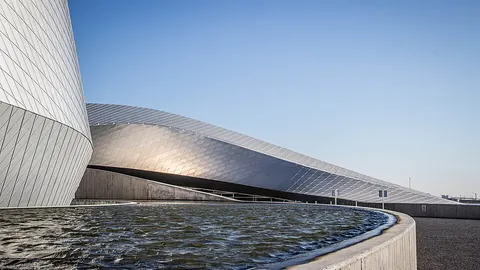
Many architects seek to create buildings that are both modern and meaningful, a challenge that often leaves them searching for inspiration. David Chipperfield Architects mastered this blend, renowned for their thoughtful approach to design.
Our article delves into how Chipperfield's work can inspire your own designs by emphasizing history and innovation together. Discover the secrets behind his architectural mastery—read on!
Key Takeaways
- David Chipperfield has won the Pritzker Architecture Prize in 2023, which shows he's a top architect.
- Their buildings are famous for their simple style and use of light. They often mix new ideas with old places.
- Chipperfield cares about making buildings that last and fit into their environment well.
- The company works with other experts to make sure each building is done really well.
- Projects like the River and Rowing Museum, Neues Museum, and Hepworth Wakefield gallery show their skill.

Early Career and Major Projects
David Chipperfield's ascent in the architecture world stems from a repertoire of projects that blend functionality with artistic vision, showcasing their unique ability to marry space with purpose.
River and Rowing Museum (UK)
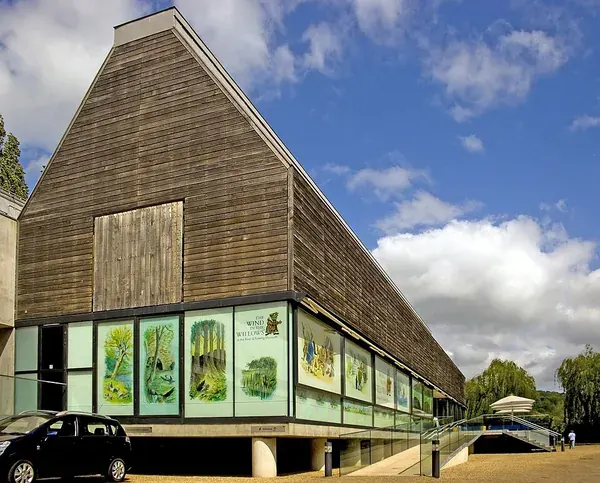
Located in the picturesque town of Henley-on-Thames, UK, the River and Rowing Museum, designed by David Chipperfield Architects, is a celebration of both the natural environment and the cultural heritage of rowing.
Completed in 1998, this award-winning structure elegantly fuses modern design with sensitivity to its riverside setting. The museum’s exterior, with its timber-clad façades, echoes the texture of the surrounding trees and water, blending effortlessly with the landscape. Internally, its spacious galleries, filled with natural light, offer immersive exhibits on the history of rowing, the River Thames, and the town of Henley.
The building's design cleverly navigates the challenges of a flood-prone site, making it a remarkable example of architecture that respects and responds to its natural surroundings. Its innovative, sustainable design and thematic focus make it a unique cultural destination, attracting visitors globally to explore the intertwined narratives of rivers, rowing, and the environment.
Des Moines Public Library (US)
The Des Moines Public Library, designed by David Chipperfield Architects, is a landmark of contemporary architecture in Iowa, USA. This project, completed in 2006, spans 110,000 square feet and is renowned for its innovative design and sustainability.
The building's striking facade, made from locally sourced copper and glass, reflects the changing Iowa skies, blending seamlessly with its urban environment. Inside, the library boasts open, airy spaces flooded with natural light, enhancing the reading experience.
Its eco-friendly features include a green roof and energy-efficient systems, making it a paragon of modern, sustainable architecture. This library is not just a repository of books; it's a testament to the harmonious blend of aesthetics, functionality, and environmental responsibility.

Museum of Modern Literature (Germany)
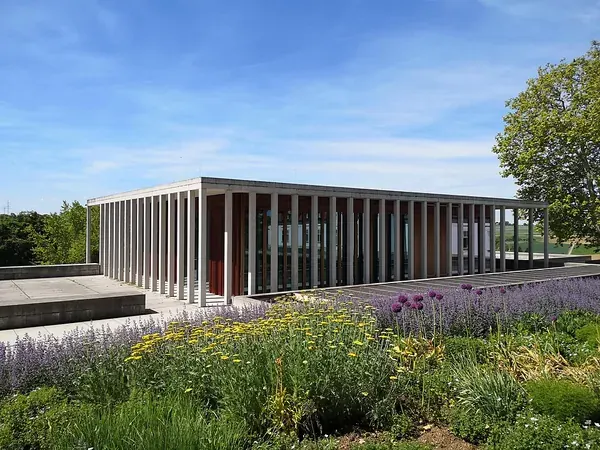
The Museum of Modern Literature, nestled in the scenic town of Marbach am Neckar, Germany, is a masterful creation by David Chipperfield Architects, completed in 2006.
This architectural gem, perched atop a rock plateau, overlooks the Neckar Valley, offering breathtaking views. Its design is a harmonious blend of simplicity and elegance, featuring limestone exteriors that resonate with the area's historical context.
Inside, the museum houses an impressive collection of 20th-century literary works, displayed in serene, well-lit spaces that encourage contemplation and appreciation. The building’s minimalist aesthetic, combined with its functional clarity, makes it a standout example of modern museum architecture. It's not just a home for literature but an embodiment of the cultural and intellectual spirit of the era it represents, making it a significant cultural landmark in Germany.
America's Cup Building (Spain)
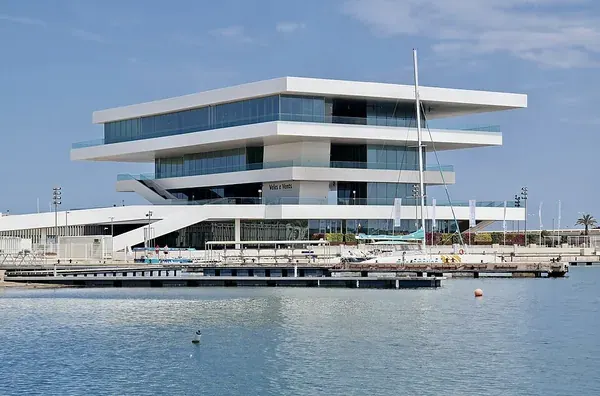
The America's Cup Building, known as 'Veles e Vents,' located in Valencia, Spain, is an iconic structure by David Chipperfield Architects, completed in 2006.
Designed for the 32nd America's Cup, this maritime building is a symbol of modernity and innovation. Its bold, minimalist design features large, horizontal platforms that extend over the port, offering panoramic views of the sea and the sailing action.
The building's strikingly simple geometric forms, clad in white and accented with wood, create a striking contrast against the blue Mediterranean backdrop. Internally, its open, fluid spaces are adaptable for various events, embodying the dynamic spirit of the prestigious sailing competition.
Veles e Vents has since become a vibrant social hub for the city, merging functional elegance with a strong sense of place, making it a landmark in contemporary nautical architecture.
Neues Museum (Germany)
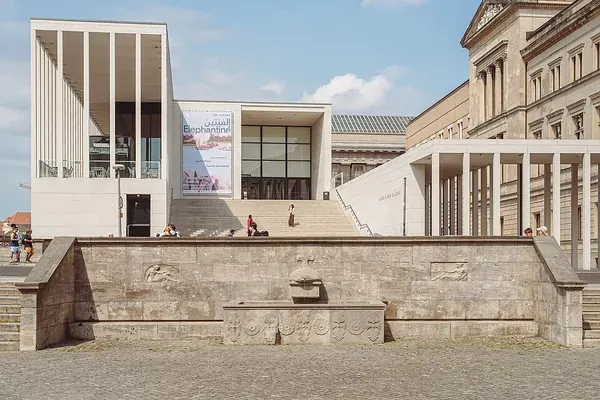
The Neues Museum in Berlin, Germany, is a remarkable architectural restoration and extension project by David Chipperfield Architects, completed in 2009. This 19th-century building, severely damaged during World War II, was meticulously restored to blend historical integrity with contemporary design.
Chipperfield's approach respected the building's past, conserving remaining structures and filling in the gaps with modern yet understated elements. The use of materials like recycled bricks and new structures similar in spirit to the original design creates a seamless dialogue between old and new.
The museum houses a rich collection of antiquities, showcasing a synergy of historical treasures within an architectural narrative that speaks volumes of Berlin's layered history. The project, a testament to sensitive architectural intervention, has been celebrated for its thoughtful preservation and innovative design, bridging the gap between Berlin's past and present.
Recent Projects
David Chipperfield's mastery of architecture continues to flourish through their recent endeavors that showcase a harmonious blend of contemporary design and local context. These sophisticated projects, extending across various regions and functions, collectively demonstrate the architect’s commitment to creating public spaces that are both aesthetically pleasing and socially inclusive.

The Hepworth Wakefield Gallery (UK)
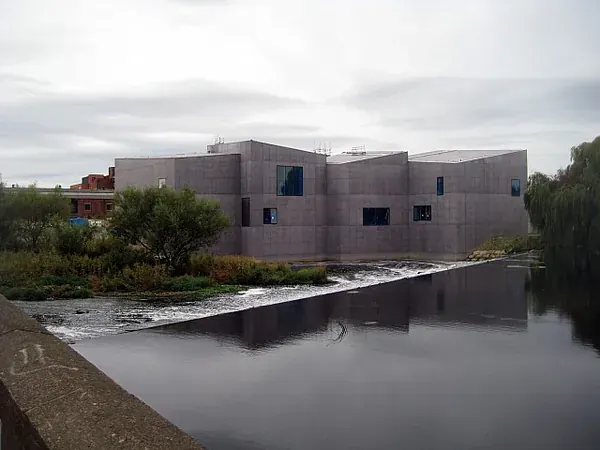
The Hepworth Wakefield gallery, situated in West Yorkshire, UK, is an exemplary work of modern museum architecture by David Chipperfield Architects, opened in 2011. Celebrating the region's artistic heritage, particularly the work of sculptor Barbara Hepworth, the gallery stands as a bold, geometric structure on the River Calder's edge.
Its trapezoidal concrete towers, characterized by a rugged, textured finish, reflect the industrial landscape of Wakefield. The interior, with its spacious, light-filled galleries, creates an inspiring backdrop for the display of contemporary art and sculpture.
The building’s design thoughtfully connects with its surroundings, featuring large windows that frame views of the river and historic waterfront. This architectural marvel not only provides a stunning home for art but also acts as a catalyst for the region's cultural regeneration, making it a significant addition to the UK's cultural landscape.
City of Justice Complex (Spain)
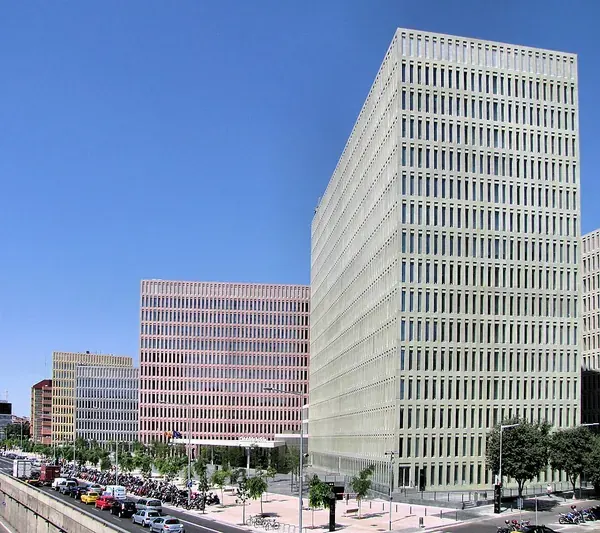
The City of Justice Complex in Barcelona, Spain, is a monumental project by David Chipperfield Architects, completed in 2009. This vast complex, spanning over 240,000 square meters, revolutionizes the concept of judicial architecture.
Comprising nine buildings interconnected by a continuous public walkway, the complex unifies all of Barcelona's legal departments previously scattered around the city. Its design features a series of simple, elegant forms with a uniform external appearance, creating a sense of unity and order. The use of natural light and open spaces inside promotes transparency and accessibility, mirroring the ideals of the justice system.
The buildings, clad in a distinctive combination of glass and various shades of gray concrete, are set in a landscaped park, offering a serene environment for both professionals and the public. This project stands as a significant urban development, symbolizing modernity, efficiency, and the principles of justice in the heart of Barcelona.
Saint Louis Art Museum expansion (US)
The expansion of the Saint Louis Art Museum, completed in 2013, is a striking addition to the cultural landscape of St. Louis, Missouri. This project seamlessly integrates the new East Building with the original 1904 Beaux-Arts structure, respecting its historical context while introducing a contemporary architectural language.
The expansion, characterized by its understated elegance and geometric clarity, features a façade of polished, dark concrete panels and large expanses of glass, creating a dialogue between the old and new. The interior continues this theme, with spacious, light-filled galleries that enhance the viewing experience. This addition not only significantly increases the museum's exhibition space but also includes public amenities, creating a more welcoming and accessible environment for visitors.
The expansion elegantly balances the need for modern facilities with a sensitive approach to the museum’s historic setting, making it a notable example of contemporary museum design.

Turner Contemporary Gallery (UK)
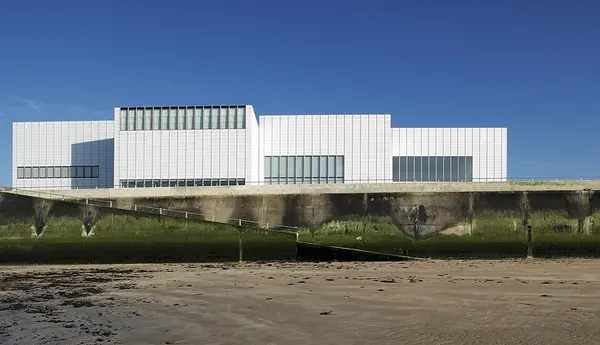
The Turner Contemporary Gallery, located in the historic seaside town of Margate, UK, is a significant cultural landmark inaugurated in 2011.
This contemporary art gallery, named after the renowned painter J.M.W. Turner, presents a modernist façade of stark, white volumes, contrasting beautifully with the coastal landscape. Its strategic positioning on the seafront not only pays homage to Turner’s fascination with light but also revitalizes the town’s seafront.
Large windows frame stunning views of the sky and sea, integrating the natural beauty into the gallery experience. The interior spaces are versatile and welcoming, providing an ideal backdrop for a diverse range of contemporary artworks. The gallery's design, with its emphasis on simplicity and transparency, fosters a deep connection between art, place, and community, making it a hub for cultural activity and regeneration in Margate.
Colección Jumex (Mexico)
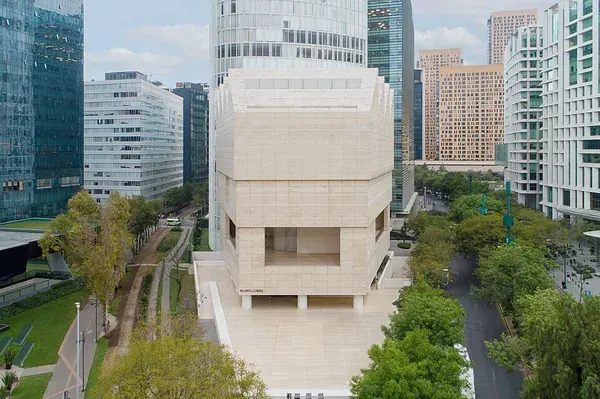
The Colección Jumex in Mexico City is a striking example of contemporary museum architecture, designed by David Chipperfield Architects and opened in 2013. As the main platform for the Jumex Contemporary Art Collection, the largest private contemporary art collection in Latin America, the building stands as a beacon of cultural significance.
Its distinctive saw-tooth roof and minimalist façade of white concrete and travertine stone create a standout presence in the bustling urban landscape. The interior, characterized by spacious, light-filled galleries, offers an immersive experience for art enthusiasts. The museum's design cleverly balances simplicity and sophistication, providing an ideal canvas for exhibiting a diverse range of contemporary art.
Beyond its role as an art venue, the Colección Jumex also serves as a vital community space for educational programs and cultural events, reflecting its commitment to fostering art appreciation and public engagement in the heart of Mexico City.
Style and Philosophy
David Chipperfield's architectural approach embodies a refined simplicity, where each design decision is driven by an ethical commitment to the project's context and purpose. Their work, marked by a harmonious blend of light and materials, showcases a philosophy that values both the aesthetic elegance of minimalism and the practicality of sustainable integration within its environment.
Use of light and materiality
David Chipperfield Architects masterfully play with light and materials to craft exceptional spaces. They select each material with precision, ensuring a perfect fit, as if anticipating how sunlight will illuminate a wall or how shadows will sweep across a floor.
This approach imbues their buildings with a sense of life, enabling them to communicate without words. Their designs demonstrate the profound impact of simplicity: a plain wall transforms as light dances across it throughout the day.
In their buildings, the interplay of light and shadow is a constant, mesmerizing feature. Moreover, their commitment to using high-quality, durable materials ensures that their structures not only look impressive but also remain robust over time.

Minimalist approach
David Chipperfield Architects adopt a minimalist approach in their building designs, favoring simplicity and clarity with clean, straight lines. Their designs are uncluttered, exuding a sense of openness and tranquility. They skillfully eliminate any superfluous elements to create spaces that are pure and easily comprehensible.
Their work highlights the aesthetic value of empty space in design, where even minimal details acquire significance, adding a subtle elegance to their structures. The interplay of light and shadow is a central aspect, bringing vitality to the materials used. Architects observe how Chipperfield's team elicits profound emotions using fundamental shapes and the manipulation of light.
Integration with the surrounding environment
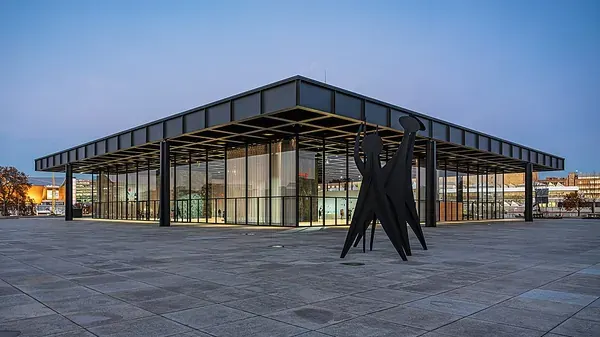
David Chipperfield Architects excel in ensuring that their buildings harmonize with their surroundings. Their designs are deeply considerate of existing elements, such as trees, historical structures, and urban dynamics.
They craft new spaces that seamlessly integrate with and complement their environment. This thoughtful approach allows their work to enhance the beauty of a location without detracting from its historical or natural essence. Their projects exemplify how innovative concepts can be introduced while respecting and honoring the past.
They strike a balance between preserving the status quo and adapting spaces to better serve contemporary needs. Each building they design appears as a cohesive part of a larger narrative, rather than an isolated structure. Chipperfield's philosophy centers on the idea that every design should not only contribute to the story of its area but also be sustainable and beneficial for the planet.

Attention to detail
David Chipperfield Architects' work exemplifies meticulous attention to detail. Their use of simplistic designs and crisp lines crafts spaces that are not only aesthetically pleasing but also comfortable to inhabit. Every aspect of their buildings is crafted with precision, from the selection of materials to the way natural light permeates each room. This dedication ensures that the spaces they create are enjoyable and inviting.
In their architectural practice, Chipperfield's team skillfully blends traditional and contemporary ideas. They place a high value on creating enduring structures that harmoniously integrate with their environment. Their focus on detail results in modern creations that resonate well with both current and future contexts.
Next, we will explore the awards that David Chipperfield Architects have received and their influential role in transforming the field of architecture.

Awards and Impact
David Chipperfield's architectural work has not only garnered prestigious accolades such as the Pritzker Architecture Prize but has also significantly shaped contemporary design dialogue, inspiring architects worldwide to push the boundaries of innovation.
David Chipperfield Architects have been recognized with numerous prestigious awards over the years:
- Pritzker Architecture Prize (2023): This is one of the most prestigious awards in architecture, often referred to as the Nobel Prize of the field.
- AIA New York Design Award (2022): The Bryant
- RIBA Royal Gold Medal (2011): Awarded by the Royal Institute of British Architects, it's one of the highest honors in British architecture.
- European Union Prize for Contemporary Architecture – Mies van der Rohe Award (2011): This award recognizes excellence in contemporary architecture.
- Heinrich Tessenow Medal (1999): A German architecture award honoring simplicity in architecture.

Ongoing projects and future plans
Building on a foundation of teamwork, David Chipperfield Architects sets its sights on new horizons. The firm is actively working on projects around the world, showing no signs of slowing down.
With offices in key cities like London, Berlin, and Milan, they are well-placed to take on more projects in Europe and beyond.
The team keeps making plans for iconic places and important old buildings. They aim to keep growing their global reach with diverse projects that show off their dedication to detail and love for history's landmarks.
Each project ahead promises to add to the rich legacy already shaping the future of architecture.
Legacy and impact on the architecture industry
David Chipperfield's ongoing projects point toward a future where his influence on the architecture industry continues to grow. Architects everywhere draw inspiration from his minimalist designs that skillfully integrate with their surroundings. Each structure he creates respects both history and modern needs, setting a standard for heritage protection.
Chipperfield's receipt of the Pritzker Prize is more than just an award; it highlights his architectural legacy and underscores the importance of thoughtful urban planning. He challenges others in the field to consider how buildings contribute to civic life.

Rhino for Architects Course
Give your architectural skillset a major boost with the Rhino for Architects Course. Get over 60 hours of focused training tailored specifically for architects. Master commands and techniques to model, render, and animate architectural visualizations at the highest level. Click below for more information and watch your designs come alive!