Architects often seek inspiration to push the boundaries of design and urban space. MVRDV, the Dutch architectural studio, stands out for its revolutionary work originating in Rotterdam and spreading worldwide.
This article will delve into MVRDV's approach, showcasing how they tackle modern architecture’s challenges with creativity and sustainability. Discover a world where buildings breathe innovation and urban landscapes inspire awe.
Key Takeaways
- MVRDV is a Dutch architecture studio known for bold and innovative designs that blend green spaces with urban living.
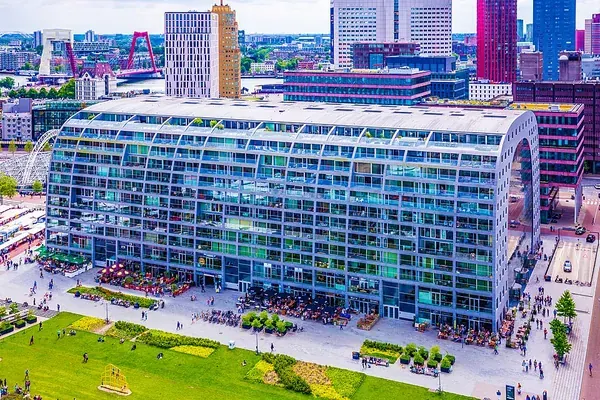
- Their work includes the Markthal in Rotterdam, which combines homes, shops, and a market under one arch with art-covered walls.
- The firm uses eco-friendly materials and aims to create buildings that are good for our planet while being fun and useful for people.
- They have expanded globally, with offices in Rotterdam, Shanghai, and Paris, working on projects like Shenzhen Terrace and The Canyon in San Francisco.
- MVRDV collaborates internationally to create better city neighborhoods through unique design solutions that address local needs.

Brief Overview
MVRDV, a visionary Dutch architectural studio, has redefined urban landscapes globally with innovative solutions that challenge conventional design paradigms. As self-proclaimed 'city doctors,' they diagnose and treat spatial ailments to revitalize and transform urban environments through their cutting-edge architecture.
History
In 1993, three ambitious architects named Winy Maas, Jacob van Rijs, and Nathalie de Vries formed a company that would push the limits of modern architecture. They called their new venture MVRDV.
The firm quickly stood out with its bold approach to building design. Each project aimed to blend sustainability with innovation.
The team at MVRDV believes in making places that are kind to the earth while serving people in a smart way. Their buildings often include green spaces where communities can come together.
Every design is about more than just looks; it's also practical and welcoming for all who use it. This balancing act of eye-catching style and usefulness has made them known as 'city doctors,' healing urban spaces with fresh ideas. Take this former oil refinery in Hangzhou, China, that MVRDV transformed into an energy-neutral park.

MVRDV's role as 'city doctors'
MVRDV works like city doctors. They help cities fix up old spaces, breathe new life into tired buildings, and make neighborhoods fun and lively again. Think of a place that people don't enjoy much.
MVRDV can turn it into a spot everyone loves. They mix smart design with nature to create places where folks want to live, play, and work. Their team listens to what communities need. Then they come up with fresh ideas that are good for the planet too. If a neighborhood is sad and empty, they figure out how to bring it back to life in cool ways.
From adding more parks to making buildings where you can shop, eat, and live all in one — they do it all! Plus, their plans invite everyone in the community to join the fun.
Key Characteristics of MVRDV's Architectural Style
MVRDV's architectural style stands as a beacon of contemporary creativity, distinguished by its bold approach to urban challenges. This distinctive signature not only redefines skylines but also reshapes the dialogue between society and space through groundbreaking aesthetics and functionality.
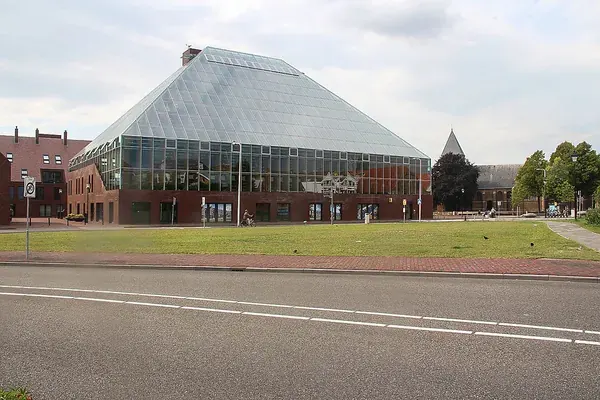
Sustainability
Sustainability is at the heart of MVRDV's work. Their buildings use less water and energy, helping to make cities clean and healthy. Every project brings something special: gardens on roofs, walls that breathe, and smart systems to share resources.
Architects look to MVRDV as a leader in green design. They mix fun spaces with nature, making buildings not only beautiful but also kind to the earth. Using eco-friendly materials, they are part of the change towards better cities that give back more than they take.
Innovative use of space and materials
MVRDV takes smart steps to make buildings that are good for the planet and use space in clever ways. They mix different things like shops, homes, and parks all in one building. This way, they make cities more fun and full of life without taking up too much room.
MVRDV's work shows how to build cool stuff using less stuff from the Earth.
They choose materials that don't hurt our world as much. For example, wood instead of metal or concrete because trees can grow back again. Their ideas help cities grow up instead of out so we have more room to play and live.
MVRDV makes sure each project is very special but still cares about our planet and its future.
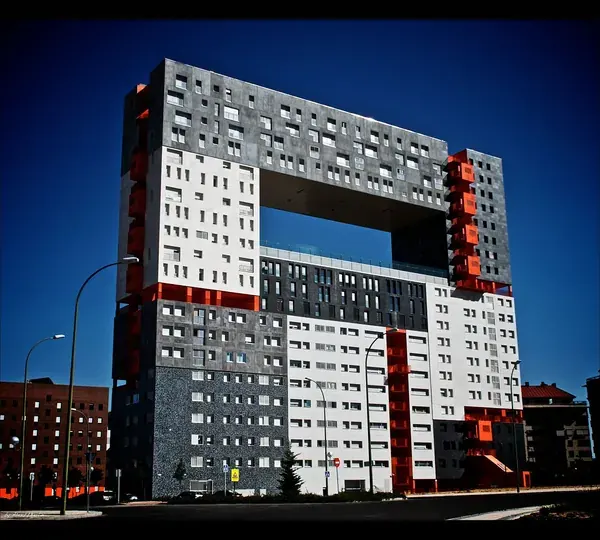
Unique, playful, and adventurous design concepts
MVRDV takes their innovative approach a step further by adding fun and daring ideas into their buildings. They make places where people stop and look up in wonder. Their work often looks like something from a storybook, with bold colors and shapes that seem to play tricks on your eyes.
These designs are not just meant to be different; they invite you to explore and enjoy the space around you. This shows how MVRDV mixes imagination with smart building design.
Integration of mixed-use spaces in their designs
MVRDV designs buildings that serve more than one purpose. They make places where people can “live, work, and play” all together. This helps cities feel alive and keeps them from getting too crowded.
Imagine a building like a big house with its own park on top. People in the city can shop on the first floor, go to an office on the second floor, and then relax in green spaces up high.
Because of how they build things, MVRDV makes sure these mixed-use spots fit nicely into neighborhoods.
Now let's take a look at some cool projects by MVRDV that you might not know about yet.
Recent and Notable Projects
MVRDV's recent endeavors, marked by audacious designs and pioneering sustainability efforts, showcase an expanding global portfolio that invites architects to explore a future where buildings are not just structures but influential societal catalysts.
Tianjin Binhai Library
Tianjin Binhai Library is an iconic cultural center in Tianjin, China. This futuristic library immediately captivates visitors with its luminous, cave-like atrium, where undulating, terraced bookshelves ripple from floor to ceiling in a continuous, flowing landscape. This innovative interior blurs the lines between stairs, seating, and storage, creating a truly social space that invites exploration and community interaction.At its heart lies "The Eye," a magnificent spherical auditorium from which the waves of shelves radiate outwards, forming a breathtaking centerpiece. This central sphere even informs the building's exterior, creating an eye-shaped opening in the louvered glass facade. Spanning five levels and 33,700 square meters, the library is a cornerstone of the Binhai Cultural Center masterplan. More than just a repository for books, this MVRDV masterpiece redefines the modern library as a dynamic "urban living room". The Tianjin Binhai Library stands as a global landmark of visionary architectural design, celebrated for its immersive and unforgettable interior experience that has captured the world's imagination.

Gemini Residence
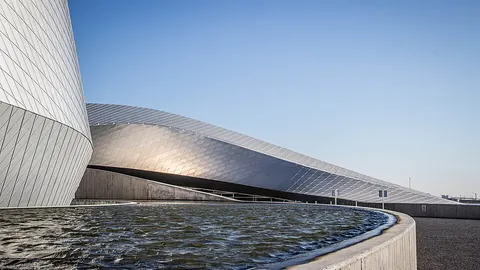
Gemini Residence is a remarkable example of architectural transformation and adaptive reuse in Copenhagen, Denmark. Originally two massive waterfront seed silos known as the Frøsilo, this project pioneers a new approach to residential conversion. Rather than carving dark apartments from the thick concrete walls, MVRDV ingeniously "hung" the residential units on the exterior of the silo structures. This radical move ensures every home is flooded with natural light and enjoys panoramic views of the city and harbor, while preserving the raw, industrial character of the original buildings.This innovative strategy transforms the massive, hollow interiors into a breathtaking, full-height central atrium. Capped with a translucent Teflon roof, this spectacular cathedral-like lobby serves as the building's communal heart, with suspended staircases and access bridges connecting the two towers.The Gemini Residence is a landmark of sustainable urban regeneration, celebrated globally for its creative upcycling of post-industrial heritage. It stands as a testament to MVRDV's ability to create unique, vibrant living spaces by rethinking existing structures, offering a blueprint for the future of urban housing.

Valley in Amsterdam
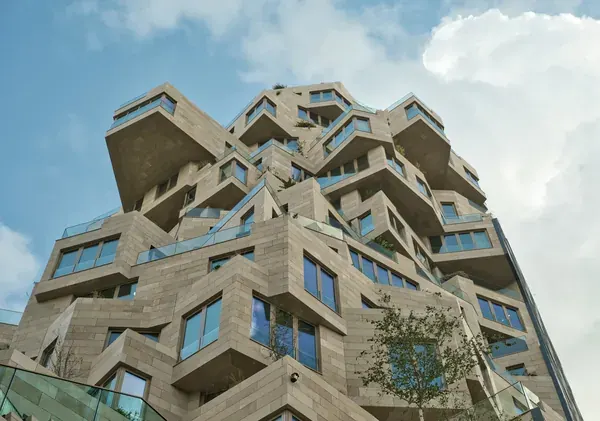
Valley in Amsterdam is a standout building that mixes places to live and work with greenery. It has 75,000 square meters of space and is right in the Zuidas Central Business District.
MVRDV designed this for OVG Real Estate with an eye-catching terraced look. Plants grow all over its outside walls, making it seem like a big garden rising into the sky.
This construction shows off modern architecture at its best, offering innovative techniques to mix offices and homes. It brings nature into urban areas in new ways people love. Its design lets everyone enjoy open spaces while they work or live there, filling the city's skyline with life and color.

The Markthal
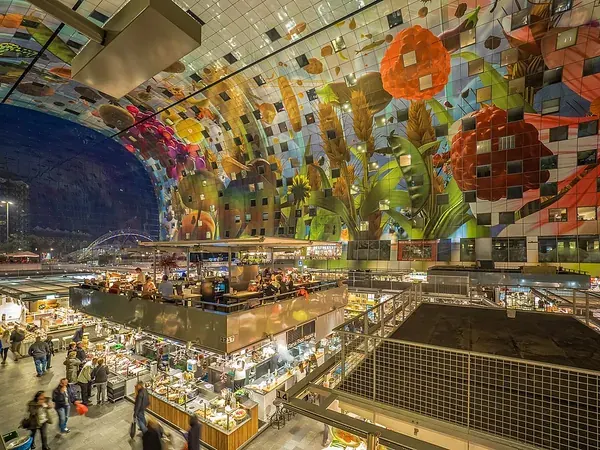
The Markthal in Rotterdam isn't just a building; it's an architectural masterpiece that stands out for its innovative design. MVRDV has made this urban development a sight to see, with its huge size of 105,000m2.
It combines homes, shopping areas, and food markets all under one large archway. This creates a modern space where people can live, shop, and eat.
Inside the Markthal is like stepping into another world with bright colors and art that covers the walls and ceiling. The artwork shows giant fruits, vegetables, seeds, fish - making you feel like you're walking through a painting about food! Architects around the world look at this as an example of how buildings can be fun and useful at the same time.

Seoullo 7017 Skygarden
MVRDV's Seoullo 7017 Skygarden is a landmark achievement in urban regeneration and a celebrated example of adaptive reuse in Seoul, South Korea. This visionary project masterfully transformed a derelict 1970s highway overpass into a vibrant 983-meter-long elevated park. Functioning as both a lush pedestrian bridge and a public arboretum, the Skygarden features a living library of native Korean plants, creating a green ribbon that weaves through the dense urban fabric. By converting aging infrastructure into a dynamic public space, MVRDV not only designed a beautiful piece of landscape architecture but also a vital connector for the city, boosting local economy and pedestrian mobility. As a powerful model for sustainable urban design, the Seoullo 7017 Skygarden demonstrates how cities can reclaim and revitalize obsolete structures, turning them into green, social, and ecological assets for everyone.

Glass Farm
Glass Farm stands out in the Netherlands as a public building unlike any other. Its outer walls shine with images of a traditional farmhouse, all made from glass. This design turns heads and makes people think differently about what buildings can look like.
MVRDV used glass in a new way to make this happen.
Architects find Glass Farm exciting because it changes old ideas about how to use materials and space. It's not just pretty to look at; it also gets us thinking about future possibilities for our work.

MVRDV’s Global Presence
Witnessing an architectural symphony that resonates across continents, MVRDV has firmly established its global footprint, bringing visionary urban solutions to cities worldwide.
Through strategic office expansions and dynamic international collaborations, the firm shapes skylines and communities far beyond its Dutch origins.
Expansion of offices
MVRDV is growing fast. They now have big offices in Rotterdam, Shanghai, and Paris. Each place helps them reach more of the world with their designs.
Having offices around the globe lets MVRDV work on cool projects everywhere. Their team can share ideas across countries and learn from different places. This way, they keep making buildings that amaze people all over the world.

Impact and collaborations worldwide
As MVRDV grows, its reach extends across the globe. The firm works with many countries and cultures. This means they change how they design to meet different places' needs. They have built cool buildings all over the world.
Their work shows when they help plan new areas in cities. For example, in San Francisco's Mission Rock neighborhood, they teamed up with other big design firms like Studio Gang and Henning Larsen to make sure everything fits well together.
This kind of teamwork makes neighborhoods better for everyone who lives there or visits them.
Rhino for Architects Course
Give your architectural skillset a major boost with the Rhino for Architects Course. Get over 60 hours of focused training tailored specifically for architects. Master commands and techniques to model, render, and animate architectural visualizations at the highest level. Click below for more information and watch your designs come alive!