Are you curious about the innovative works that are transforming contemporary urban design? Consider OMA, a prominent architectural firm known for pushing boundaries since 1975. This blog will unravel their philosophy and take you on a tour of some of OMA's most iconic projects to inspire your own work in architecture. Ready for an enlightening journey?
Key Takeaways
- OMA is a leading design group that has been making buildings since 1975. They use fresh ideas and daring shapes in their work.
- The top builders at OMA are Rem Koolhaas, Ellen van Loon, Shohei Shigematsu, and David Gianotten, among others. Each one brings new concepts to the world of city design.
- Some of OMA's latest works include sets for Prada shows, an art museum in Buffalo, and a learning place in Chicago.
- Bold forms, cultural ties, and tight spaces are major parts of OMA’s designs. This lets them make fun places that still feel right inside the cityscape.
- Famous projects by OMA have changed cities across the globe. For example: CCTV Headquarters in Beijing is a loop-shaped skyscraper; Casa da Música in Porto offers space for music performances; the Netherlands Embassy in Berlin showcases a unique spatial arrangement.
A Brief History of OMA
OMA started up in the year 1975. World-class architect, Rem Koolhaas put it together with Elia and Zoe Zenghelis and Madelon Vriesendorp. They had big ideas for buildings and cities. Since then, OMA has grown all over the globe.
OMA works within the normal rules of architecture and city planning but always brings something fresh into its designs.
Global presence
OMA is known all over the world, just like other Dutch architectural studios. They have offices in many big cities. You can find them in Rotterdam, New York, Beijing, Hong Kong, and Doha. Their work has made them well-known around the globe.
OMA has left its mark across the whole globe through its skill and success in architecture.
Key Architects and Leaders
Discover the creative minds at OMA's helm, including Rem Koolhaas' thought-provoking designs and Ellen van Loon's functional aesthetics.
These innovators and their unique styles are shaping contemporary urban design. Explore more about their creative genius in the following section!
Rem Koolhaas
Rem Koolhaas is a big name in the world of design. His work is global, with offices in places like New York and Hong Kong.
Known for his bold style, Koolhaas plays a key role in deconstructivist architecture. His designs often break rules to make new forms that get you thinking.
Not just an architect, he also writes often on topics like city planning and design, and has a Pritzker Prize under his belt!
Fun fact - he was also Zaha Hadid's professor.

Ellen van Loon
Ellen van Loon is a top builder at OMA. She joined the group in 1998 and became a partner in 2002. Her work stands out for smart design and sharp building skills.
In 2023, Ellen took on a new role as head of the jury for the RIBA Stirling Prize – an award for excellent buildings. Her creative vision keeps bringing fresh ideas to OMA's work all over the world.
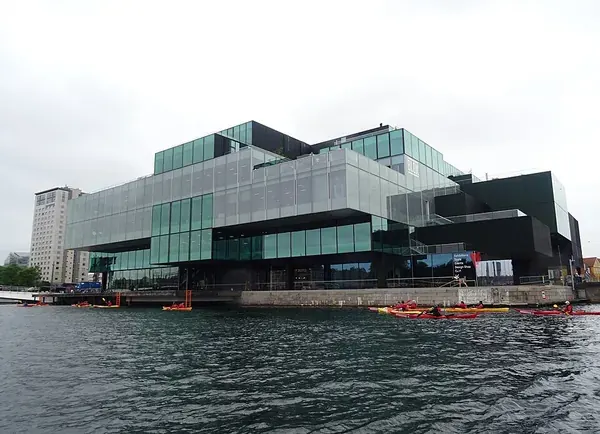
Ellen pushes past the regular ideas with her designs. One example of her work is Blox, a mixed-use structure in Copenhagen.
Shohei Shigematsu
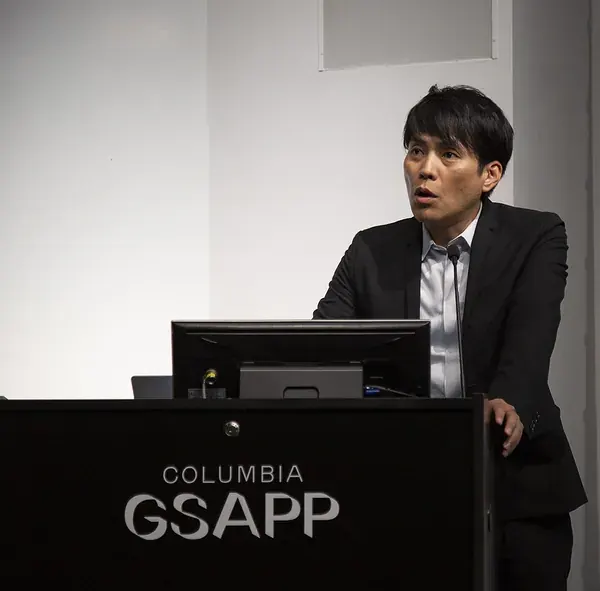
Shohei Shigematsu plays a big role at OMA. He joined them in 1998 and grew to become a partner by 2004 out of OMA’s New York office. This puts him at the center of many important projects, such as the CCTV headquarters in Beijing - a true show of his skills.
Recent Projects
The Office for Metropolitan Architecture (OMA) has demonstrated its proficiency in innovation with several projects recently, including the Taipei Performing Arts Center and Audrey Irmas Pavilion.
In addition to these, OMA was responsible for the Buffalo AKG Art Museum project that successfully blended traditional museum designs with modern aesthetics.
Taipei Performing Arts Center
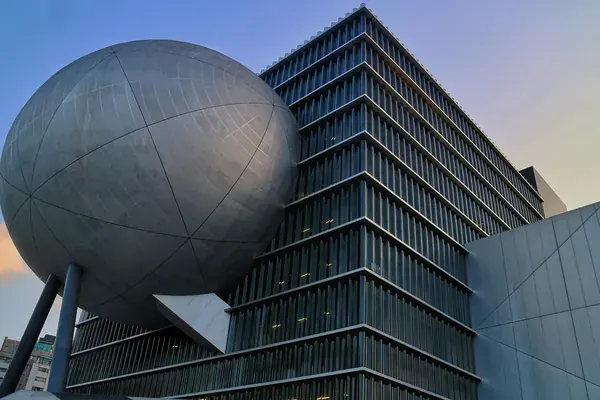
OMA’s Taipei Performing Arts Center, led by Rem Koolhaas and David Gianotten, is a radical reinvention of the modern theater. Located in Taipei’s vibrant Shilin district, the complex is defined by three distinct auditoriums that plug into a central corrugated-glass cube: the iconic spherical 800-seat Globe Playhouse, the 1,500-seat Grand Theatre, and the flexible Blue Box.
The building’s most revolutionary feature is the “Super Theatre”, a massive, experimental space created by combining the Grand Theatre and Blue Box, allowing for unprecedented stagecraft and new forms of performance.
More than just a venue, TPAC stands as a dynamic cultural machine designed to challenge theatrical conventions and connect performance directly with the public life of the city.
Audrey Irmas Pavilion
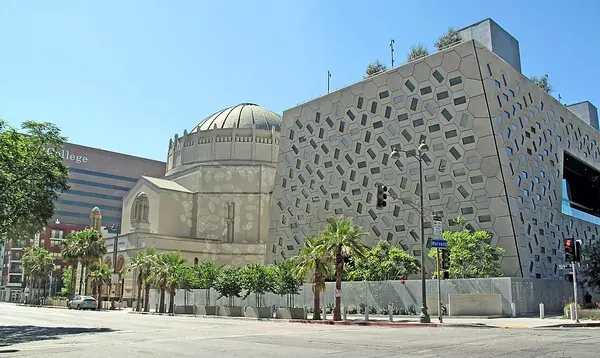
The Audrey Irmas Pavilion stands as a transformative addition to the Wilshire Boulevard Temple in Los Angeles.
This 55,000-square-foot structure balances modernity with tradition, featuring a unique sloping façade that leans away from the existing 1929 Byzantine-Revival sanctuary to honor its historic significance.
Wrapped in hexagonal stone and glass panels, the pavilion creates a distinct visual identity along the iconic Wilshire Boulevard. The building functions as a versatile civic and religious hub, housing a chapel, sunken garden, and rooftop terrace designed to foster community connection.
As OMA’s first cultural project in California, the Audrey Irmas Pavilion is a landmark of contemporary religious architecture, providing a dynamic space for gathering, celebration, and cultural engagement in the heart of the city.
Buffalo AKG Art Museum
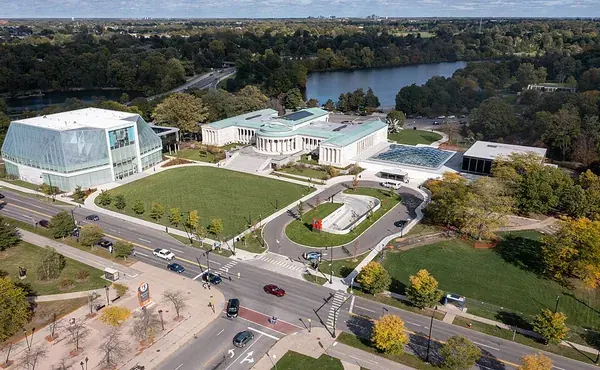
The Buffalo AKG Art Museum is a big project for OMA. This museum shows OMA's way of working with urban architecture. It also needed $230 million to make it happen.
Under Shigematsu’s direction, OMA changed how the campus looks and feels. Now, it puts people and art first. The Buffalo AKG Art Museum epitomizes OMA's commitment to enriching public spaces through aesthetically pleasing and functional designs.
Architectural Philosophy and Approach
OMA’s architects experiment with bold geometric forms and cultural context integration. Find out how they masterfully merge multiple functions into densely compact spaces, constantly redefining our understanding of urban design.
Dive deeper to unravel the secrets behind their innovative approach.
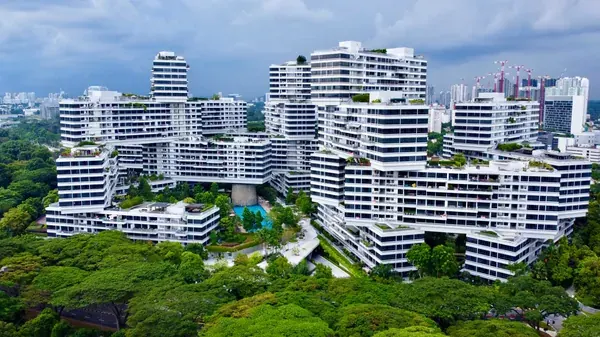
Focus on experimentation and innovation
OMA brings new ideas to the world of urban design. They play with bold shapes and trailblazing features in their work. Their buildings are not just pretty on the outside, they also make sense for the city around them.
The team at OMA uses creativity and inventiveness to find fresh answers to old questions. Instead of sticking to what is safe, they take leaps into novelty and avant-garde ideas.
Their style shows how forward-thinking can solve big city problems like space needs or traffic flow. Progressive methods help them create spaces that people love while still fitting within an urban setting. Unconventional solutions from OMA have proved effective time after time when dealing with these real-world issues.
In their quest for innovation, each project becomes an experiment - a way of testing untested waters in design and function alike – thus keeping up with the fast pace of contemporary challenges presented by today's sprawling metropolises.
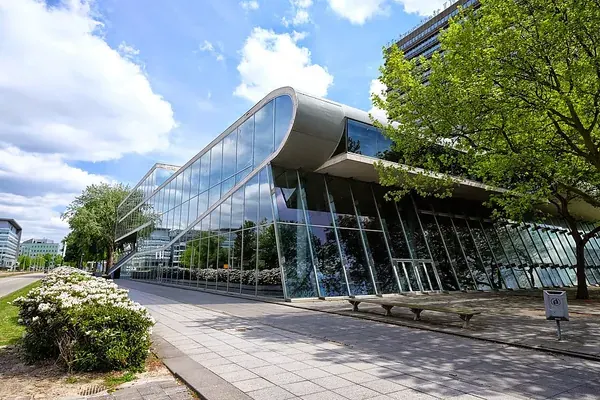
Use of bold geometric forms
Bold geometric forms are key in OMA designs. Squares, circles, and triangles show up a lot. These shapes make the buildings look strong and clear. The Bauhaus style also uses these shapes a lot.
It's not just about looks though. These bold shapes often hold public spaces or parts of city plans. They give life to complex urban areas. Each shape adds more than form; it brings purpose too.
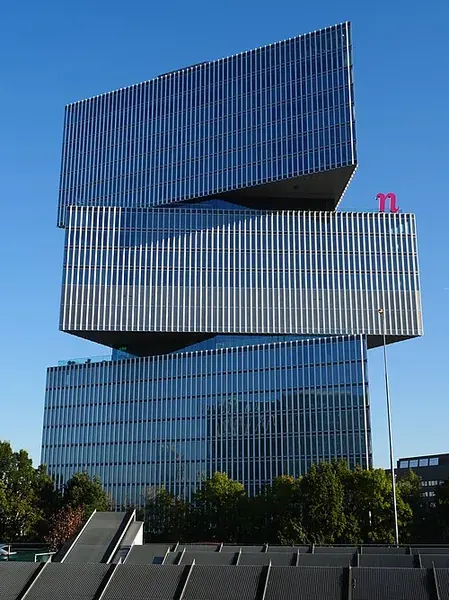
Combining functions into dense spaces
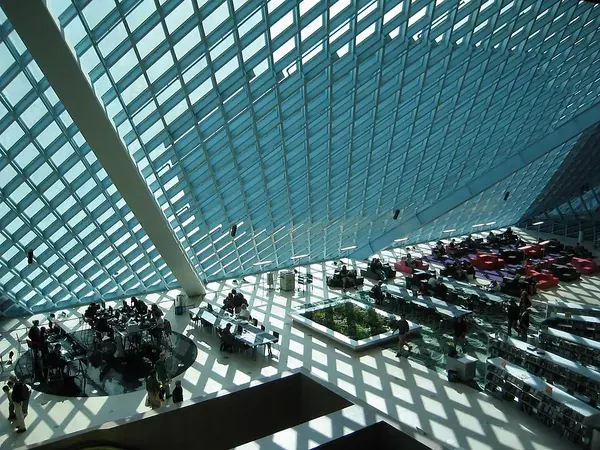
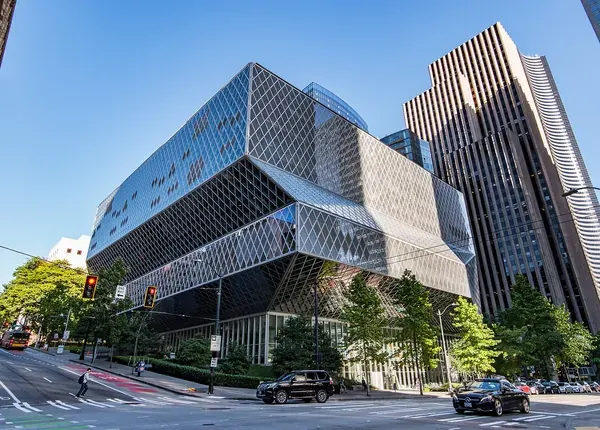
OMA uses a smart way to arrange city space. They put many functions together in tight areas. This lets them explore and reorder our living places in new ways. For example, the Seattle Central Library shows this idea well.
It has different spaces that all work together closely. This design method makes OMA's works stand out in today's urban planning world. The use of dense spaces also matches OMA's love for bold shapes and cultural ties in their designs.
Most Iconic Projects
Explore OMA's far-reaching influence in urban design through their most iconic projects like the imposing CCTV Headquarters in Beijing, the multifaceted Casa da Música in Porto, Netherlands Embassy in Berlin with its unique spatial arrangement, and the Seattle Central Library that revolutionizes public space utility.
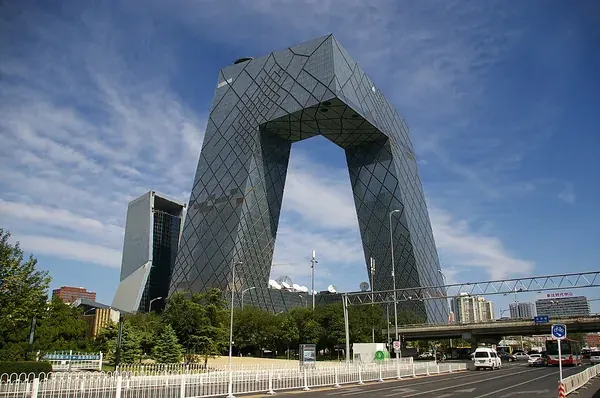
CCTV Headquarters, Beijing
The CCTV Headquarters, Beijing is a work of art. It has a strange shape like a looped skyscraper. Its build took about 10 years. This building was OMA's first big job in China. The lobby is huge and links to the subway in Beijing.
The total number of storeys is 41 which makes it very high at 768 feet tall! A lot goes on inside this large building as it covers over five million square feet for TV show making, live shows, and office jobs.
Casa da Música, Porto
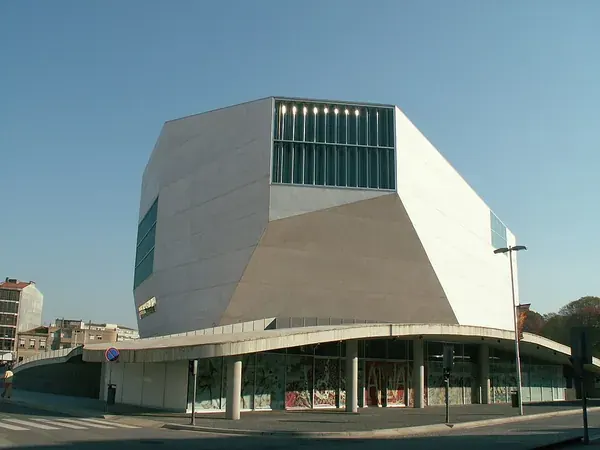
Casa da Música in Porto is a unique piece of architecture. The concert hall sits on the historic Rotunda da Boavista. It offers a space for the National Orchestra of Porto.
Built as part of the Porto 2001 initiative, this concert hall opened its doors in 2005.
This striking structure ranks high among Porto's contemporary designs. Its fresh and bold look sets it apart from other concert halls around the world. As a landmark and cultural center, Casa da Música has become an icon within Portuguese architecture, setting new standards for performing arts venues everywhere.
Netherlands Embassy, Berlin
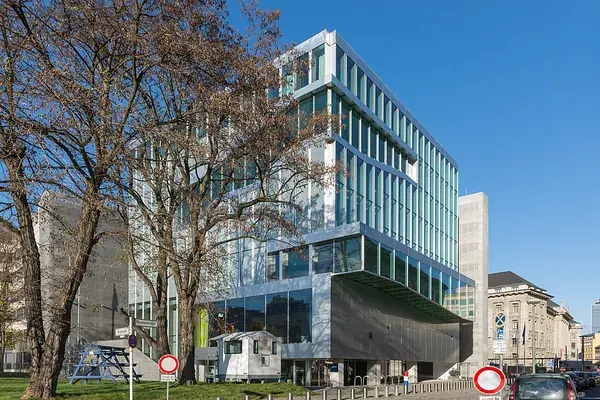
The Dutch Embassy in Berlin shows the true skill of OMA Studio. In 1997, Rem Koolhaas took charge of this project. The old building was gone, and a new one had to rise. A contest chose his plan for the embassy. He made a neat cube that showed off Berlin in new ways.
By 2003, work on it was done. Now, it stands as a key point of OMA's style and talent in design. This wasn't their only mark on Berlin either; they also worked hard on fixing up Kaufhaus des Westens (KaDeWe).
Seattle Central Library
The Seattle Central Library is known far and wide. This tall city building is 11 stories high, reaching a height of 185 feet.
OMA used glass and steel to make it stand out. This library isn't like the rest. In fact, many people look at it in new ways, making use of its design for study. Its look is so unique that some people say it stands as a sign of the urban world around it.
The parts that hold up the walls show how buildings can take on all shapes and sizes.
With a lineup of exciting upcoming projects like the 11th Street Bridge Park and Discovery Partners Institute Headquarters, OMA continues to push the boundaries of architectural design, promising a blend of historic reverence and modern innovation in their future endeavors.
FAQs
1. What is OMA in urban design?
OMA is a famous company that designs buildings, cities, and more.
2. Why are the works of OMA so special?
OMA's works stand out because they use fresh ideas and designs that are different from others.
3. Can I view some of OMA's urban design projects?
Yes, you can visit their website or go to places where their projects have been built to see their work.
4. Does OMA work on small or large-scale city plans?
OMA works on both small and large-scale city plans depending on the project needs.
5. Who leads the team at OMA for designing cities?
The team at OMA has many leaders who work together to make great designs.

Grasshopper Complete Course
Give your architectural skills a boost with the Grasshopper Complete Course. Get over 50 hours of comprehensive Grasshopper training tailored for architects. Learn to generate and iterate designs faster. Click below for more information and streamline your workflows!