
In today's bustling urban landscapes, creating spaces that blend beauty with environmental consciousness is a towering challenge for architects. Sasaki stands tall as a beacon of innovative design, merging aesthetics with sustainable principles to reshape how we experience our surroundings.
Our exploration will reveal how the firm's legacy is guiding future generations in crafting communities that are not only pleasing to gaze upon but also kinder to our planet. Dive into Sasaki's world and be inspired by a vision crafted for tomorrow’s earth.
Key Takeaways
Sasaki merges beauty with sustainable design, touching lives globally.
- The firm brings architects, planners, and engineers together to build lasting spaces.
- They use regenerative design for ecological and community resilience.
- Projects like Lake Monona Waterfront Master Plan highlight their green innovation.
- Awards recognize Sasaki's leadership in changing urban environments.
Company Background
Delving into the rich tapestry of Sasaki's history, we uncover a legacy rooted in the synthesis of aesthetic vision and environmental consciousness. Born from a desire to harmonize human spaces with nature, this esteemed firm has flourished into an international beacon of design excellence across continents.
History of the firm
Hideo Sasaki founded the design firm that bears his name, paving a path for modern architecture. His philosophy of integrated design brought different disciplines together under one roof.
Architects, landscape architects, planners, and engineers all collaborated closely at Sasaki to create holistic projects. This approach broke new ground in how spaces are designed and experienced.
Sasaki's legacy thrives on its commitment to authentic and equitable design that inspires people everywhere. The firm draws from its rich history to tackle urban redevelopment with creativity and social purpose.
Its interdisciplinary expertise continues to shape landscapes around the world while focusing on sustainability and resilience.
Expansion and global offices
As Sasaki's influence grew, so did its physical presence. The firm established offices across the United States in Boston, Denver, and New York. These locations enable Sasaki to tap into diverse markets and local expertise.
They also serve as hubs for collaboration with clients and partners.
Sasaki didn't stop at the US borders; it went global by setting up an office in Shanghai. This international move expanded their global footprint, allowing them to engage with projects on different continents and cultures.
Their worldwide operations reflect a commitment to impacting communities far beyond their initial roots.
Architectural Style and Innovation
Sasaki stands at the intersection of creativity and environmental stewardship, crafting spaces that resonate with both aesthetic appeal and functional innovation. With a keen focus on ecological responsibility, their designs embody the synthesis of beauty and sustainability—pushing boundaries to redefine our experience of the built environment.
Interdisciplinary expertise
Sasaki stands out with a team of experts in various fields. Architects, interior designers, urban planners, and engineers all work together here. They combine their skills to create spaces that are beautiful and functional.
This approach means looking at a project from many angles. Landscape architects make outdoor spaces inviting while graphic designers add visual appeal.
Their collaborative approach ensures every aspect of design gets attention. The firm believes in working closely with clients and communities too. By doing this, they make sure their projects meet real-world needs and blend seamlessly into their surroundings.
Sasaki's knack for interdisciplinary expertise results in innovative architecture that lasts for years to come.
Sustainability and resilience
Sasaki designs buildings and spaces that last. They use regenerative design to make sure nature can heal itself. Their projects often focus on green infrastructure to help cities stand up better to climate change.
For instance, the Lake Monona Waterfront Master Plan may weave in features that fight flooding and pollution.
They also build for a community’s future needs. In New Orleans, their Lincoln Beach Redevelopment Plan is about creating a space where the city can grow safely and sustainably. Their work at Ellinikon Park earned them an award for thinking big about how parks can help people and planet stay healthy together.
Social purpose
Sasaki designs places that empower communities and respect the environment. They focus on social responsibility, creating spaces where everyone feels welcome. Their projects often help revive neighborhoods and bring people together.
By using inclusive design, they ensure public spaces serve all members of a community.
The firm believes in environmental stewardship as a core value. They work on urban planning with care for cultural preservation and sustainability. These efforts lead to better cities that honor history and look after our planet's future.
Sasaki is dedicated to collaborative approaches for equitable development, making sure their impact lasts for generations.
Recent Projects
Sasaki's recent endeavors continue to push the envelope in blending environmental sustainability with cutting-edge design. Their innovative projects are transforming spaces into vibrant, eco-friendly communities that epitomize their commitment to excellence and social responsibility.
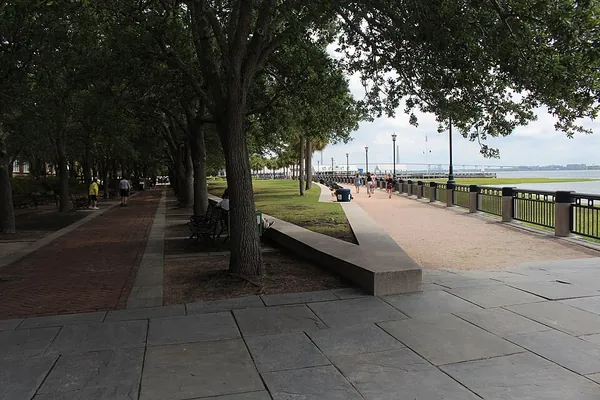
Lake Monona Waterfront Master Plan
The Lake Monona Waterfront Master Plan brings new life to Madison's lakeside. Sasaki focuses on creating a beautiful and functional public space that people can enjoy year-round. Their design enhances the cityscape and invites nature into daily life.
The plan includes improving the shoreline, building parks, and promoting sustainable practices.
Paths for walking and biking will connect different areas along the waterfront. Green spaces will give residents places to relax and play. This project showcases Sasaki’s commitment to blending environmental design with community needs.
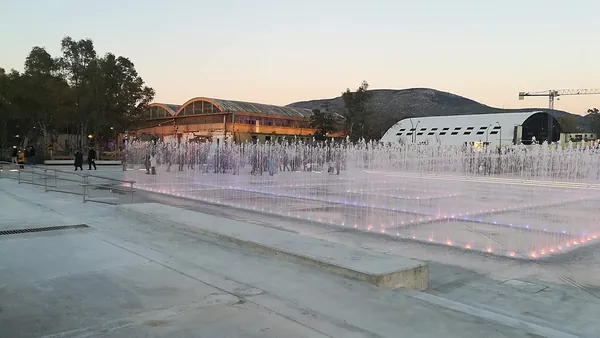
Ellinikon Park
Sasaki has created Ellinikon Park, a transformative urban park project. This landscape design turns an old airport site into a huge green space in Athens, Greece. The firm's work here focuses on environmental impact and sustainable development.
They blend ecological restoration with green infrastructure to craft a public recreation area for everyone.
The park sparks community engagement through its thoughtful use of land. It champions both people and nature with its commitment to public space and resilience. Sasaki's efforts at Ellinikon have earned the prestigious 2023 Fast Company World Changing Ideas Award, celebrating innovation that positively shapes our world.
Notable Projects
SUncover how Sasaki's innovative designs, from the revitalized landscapes of Bruce C. Bolling Building to the ecological haven of Chengdu Panda Reserve, have garnered global acclaim and reshaped our interaction with urban environments—dive into their storied creations to experience a masterclass in environmental design excellence.
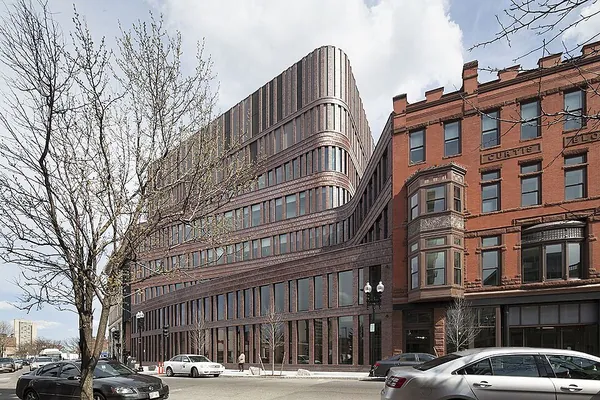
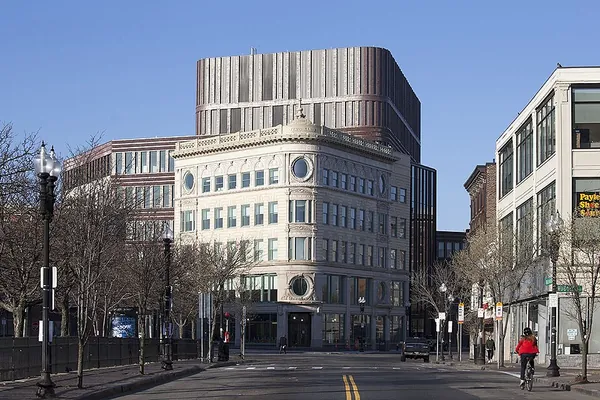
Bruce C. Bolling Building
The Bruce C. Bolling Building stands out in Sasaki's portfolio for blending diverse perspectives and disciplines in architecture. It embodies their commitment to creating equitable and inspiring community spaces.
This building showcases how deep engagement with clients and communities can lead to transformative urban development.
Sasaki earned awards for the design of this architectural landmark, reflecting their innovation and impact on society. The Bruce C. Bolling Building is part of projects like the Lincoln Beach Redevelopment Plan, proving Sasaki’s dedication to meaningful urban redevelopment plans that serve humanity well into the future.
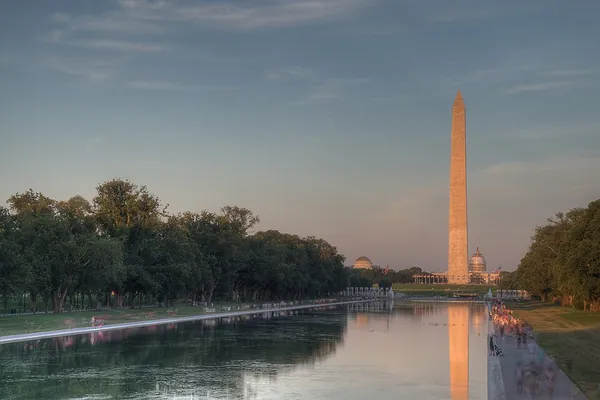
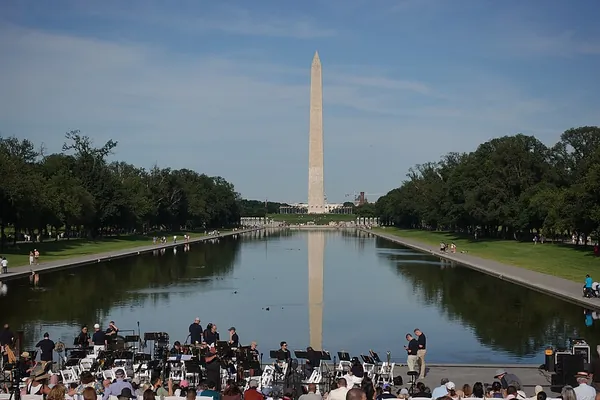
Lincoln Memorial Landscape and Reflecting Pool
Sasaki's work on the Lincoln Memorial Landscape and Reflecting Pool stands as a testament to historical preservation and landscape architecture. They crafted a space that honors history while meeting modern needs for public space design.
The reflecting pool mirrors the grandeur of the monument, offering visitors a place to reflect amidst the bustling city.
This project showcases Sasaki's ability to blend monumental restoration with contemporary urban development. Their approach balances respect for the past with functionality for today’s visitor.
With community engagement at its core, Sasaki ensures that such historic sites remain relevant and accessible in our ever-evolving urban landscapes.
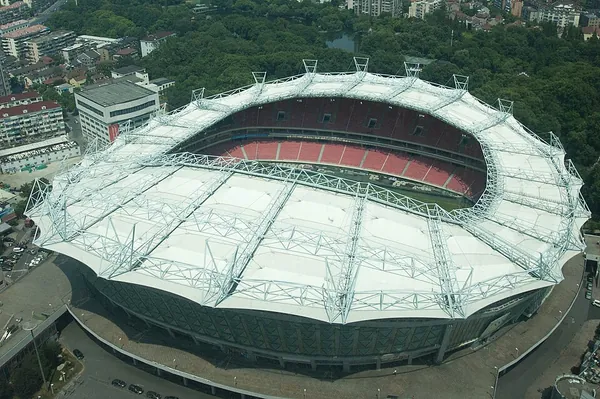
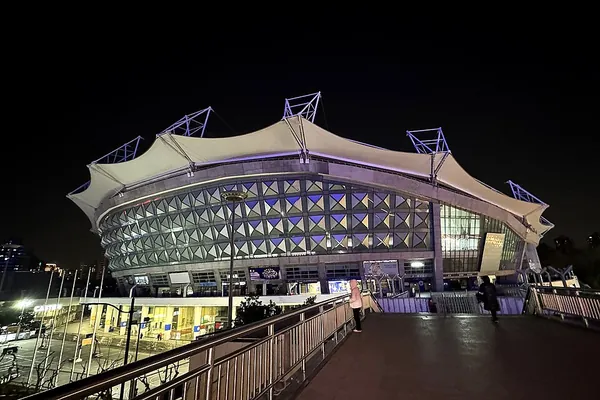
Hongkou Stadium
Sasaki’s visionary redesign of Hongkou Stadium in Shanghai represents a global benchmark for sustainable architecture and urban design. By transforming a traditional sports venue into a multi-use "urban living room," Sasaki emphasizes transit-oriented development (TOD) and ecological connectivity. The project seamlessly integrates the stadium with the adjacent Luxun Park, expanding vital green infrastructure within a dense metropolitan area.
Key features include an elevated "active ring" that promotes pedestrian mobility and a carbon-conscious approach to retrofitting existing infrastructure. As a leader in sustainable planning, Sasaki replaced surface parking with lush landscapes and community hubs, ensuring the site remains active 365 days a year rather than only on match days.
This project showcases how the firm utilizes data-driven design to harmonize sports, culture, and nature, creating a resilient urban ecosystem that prioritizes human wellness and environmental stewardship in the heart of Shanghai.
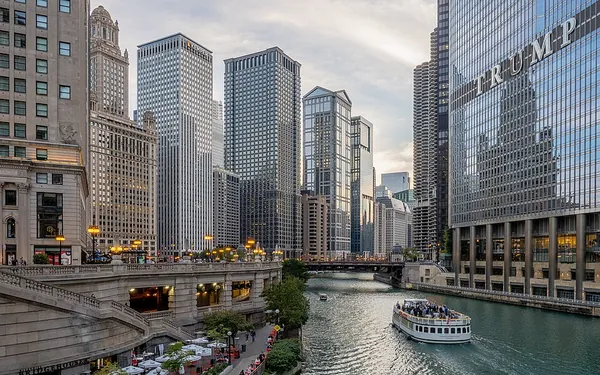
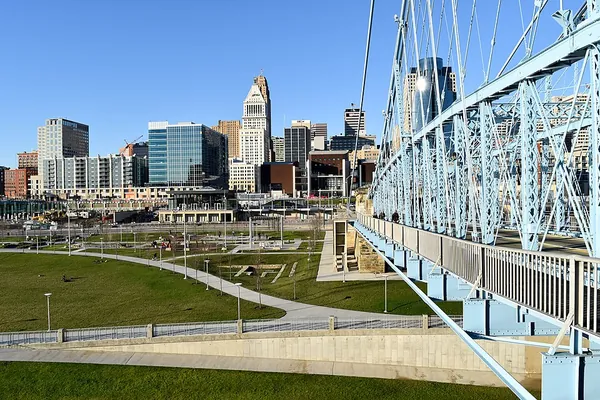
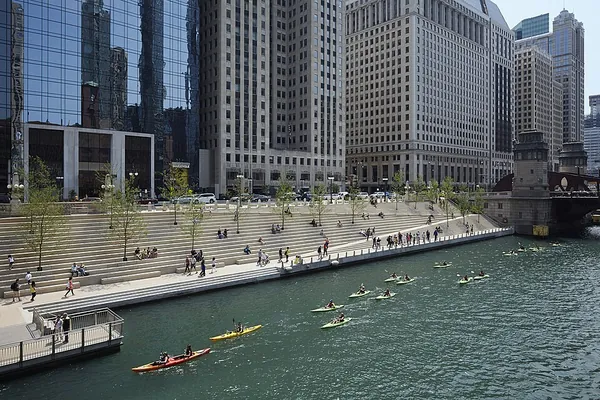
Chicago Riverwalk
The Chicago Riverwalk, a transformative project led by Sasaki and Ross Barney Architects, stands as a premier example of resilient urban design and ecological restoration. By reclaiming a former industrial shipping canal, Sasaki reimagined a neglected waterway as a vibrant public realm that reconnects the city with the Chicago River. A hallmark of the project’s sustainability is the integration of "fish hotels"—submerged habitat fins and floating gardens that support aquatic biodiversity in a dense urban setting.
The design prioritizes flood-resilient infrastructure, utilizing durable materials and specialized civil engineering to ensure the walkway remains functional after water levels fluctuate. As a leader in sustainable landscape architecture, Sasaki incorporated green infrastructure and permeable surfaces to improve stormwater management.
This award-winning waterfront development serves as a global model for climate-adaptive urban planning, demonstrating how underutilized transit corridors can be converted into ecologically rich, pedestrian-friendly spaces that enhance both human wellness and environmental health.
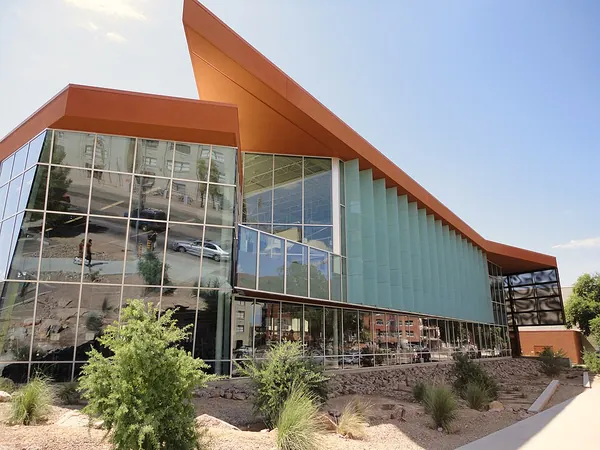
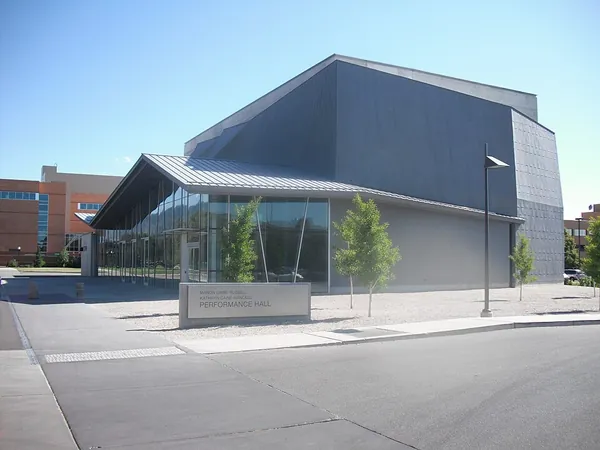
Utah State University Performance Hall
Sasaki’s design for the Utah State University Performance Hall in Logan, Utah, is an award-winning example of high-performance architecture and sustainable campus planning.
Renowned for its world-class acoustics and striking aesthetic, the facility features a distinctive zinc-clad exterior and a warm, resonant wood interior, showcasing the firm’s commitment to durable material selection and long-term environmental stewardship. The project utilizes a "box-within-a-box" construction technique to provide superior sound isolation while optimizing the building envelope for thermal efficiency.
As a leader in institutional design, Sasaki integrated the hall seamlessly into the university’s arts district, prioritizing pedestrian connectivity and natural daylighting through its expansive glass-walled lobby. This design reduces reliance on artificial lighting and enhances occupant wellness.
By balancing technical acoustic precision with ecological sensitivity, the Utah State University Performance Hall remains a benchmark for sustainable cultural infrastructure, demonstrating how world-class performance venues can achieve both aesthetic brilliance and environmental responsibility.
Awards and Recognition
Sasaki's team takes pride in their achievements, gaining honors that highlight their innovative designs. They've snatched prestigious accolades such as the Athletic Business Awards for excellence in sports and recreational facility design.
The company's creative solutions for urban spaces earned a Fast Company World Changing Ideas Award, showing its impact on future city landscapes. Their work continues to shine at award ceremonies like the AIA New England Architecture Awards, where they stood out among peers in 2023.
Their latest triumph includes Ellinikon Park's recognition by industry leaders, celebrating Sasaki's commitment to reshaping environments through exceptional planning and design. These awards reflect the firm's dedication to integrating sustainability with function, blending natural elements into urban settings seamlessly.
Architects around the world look up to Sasaki for setting standards of excellence and inspiring a new wave of environmental aesthetics.
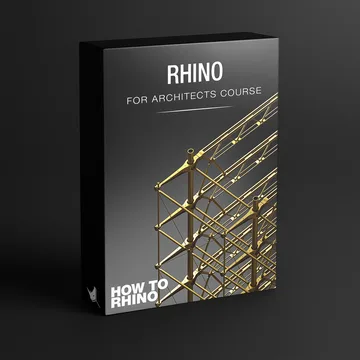
Rhino for Architects Course
Give your architectural skillset a major boost with the Rhino for Architects Course. Get over 60 hours of focused training tailored specifically for architects. Master commands and techniques to model, render, and animate architectural visualizations at the highest level. Click below for more information and watch your designs come alive!


.jpg)