Architectural enthusiasts often struggle to find true innovation in building design. Enter Sou Fujimoto Architects, a firm that redefines the boundaries between natural and artificial spaces.
This article unveils their cutting-edge projects and philosophy, guiding you through an exploration of architectural marvels. Discover inspiration at every corner—read on!
Key Takeaways
- Sou Fujimoto Architects began in Tokyo in the year 2000 and creates unique designs that blend buildings with nature.
- The founder, Sou Fujimoto, grew up in Hokkaido and is inspired by both Japanese traditions and famous architects like Le Corbusier.
- They have completed diverse projects around the world including the House of Music in Budapest and L’Arbre Blanc Residential Tower in Montpellier.
- Their work has won many awards like the Golden Lion at Venice Biennale and Building of the Year 2020 from ArchDaily for Amant Art Campus NY.
- Innovative design features include using glass walls for House NA to connect residents with their surroundings.
History and Background of the Firm
Embarking on a journey through the architectural landscape, one discovers Sou Fujimoto Architects – a firm that began as a singular vision and has since evolved into an emblem of innovation.
This Tokyo-based practice traces its roots back to the early 2000s, emerging from the mind of its eponymous founder to challenge convention and transform our engagement with space, following in the steps of Kengo Kuma, another Japanese-based architectural firm that expanded its' influence worldwide.
Beginnings
In 2000, Sou Fujimoto Architects embarked on their journey to redefine Tokyo's skyline. Their ambition was to introduce distinctive and groundbreaking designs that would not only stand out but also harmonize with the natural environment, enhancing the quality of life for people.
This guiding principle propelled them to undertake exciting projects globally, partnering up with different specialists. These partnerships resulted in the creation of spaces where aesthetics and practicality coalesced, producing designs that were not only visually appealing but also functionally relevant for urban environments and their inhabitants.
Evolution of the firm
Initially a modest setup with grand visions, Sou Fujimoto Architects quickly gained recognition for transforming imaginative ideas into tangible structures that resonated with people.
Over time, the firm expanded its team and forged collaborations with renowned entities like Sirius Lighting Office and Tanakagumi Construction, which propelled their creative aspirations into reality. This expansion enabled the firm to delve into diverse explorations, experimenting with various materials such as glass, timber, and polycarbonate in their architectural endeavors.
They drew inspiration from the works of other esteemed architects, seamlessly blending these influences with their unique style. Consequently, their buildings evolved beyond mere structures to become embodiments of innovation and aesthetic appeal, showcasing a harmonious blend of design concepts and material innovation.
Sou Fujimoto
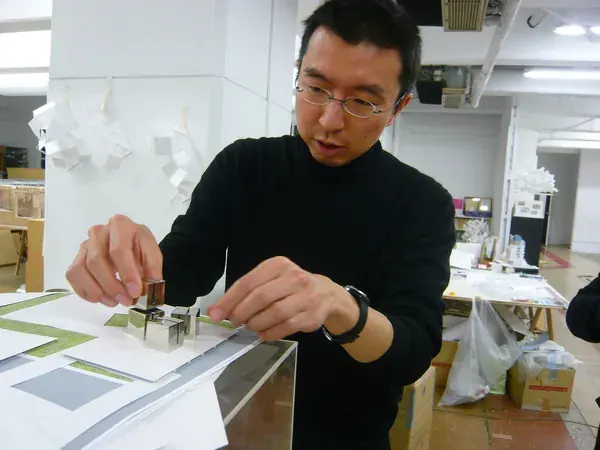
At the core of Sou Fujimoto Architects is its founder, Sou Fujimoto, whose innovative approach seamlessly blends nature and architecture. Fujimoto's unique spatial understanding, shaped by his upbringing amidst Hokkaido's vast landscapes and forests, leads to a fusion of simplicity and complexity in his designs. His works are distinguished by their harmonious integration with the environment and are further inspired by architectural greats like Le Corbusier and Mies van der Rohe, as well as the serene aesthetics of Kazuyo Sejima and the lighting expertise of Alberto Campo Baeza.
Fujimoto's forward-thinking design philosophy envisions buildings that transcend traditional confines, offering novel experiences through a blend of cross-cultural design elements. Fujimoto's attention to detail in his projects narrates stories from various cultures, creating spaces where distinct worlds converge.
Let's now delve into some of the recent projects undertaken by Sou Fujimoto Architects.
Recent Projects
Diving into the latest ventures, Sou Fujimoto Architects continues to push boundaries with cutting-edge designs that captivate both the public and architectural communities alike. These recent projects showcase a harmonious blend of nature and innovation, emphasizing a future where architecture becomes an intrinsic part of our everyday landscapes.
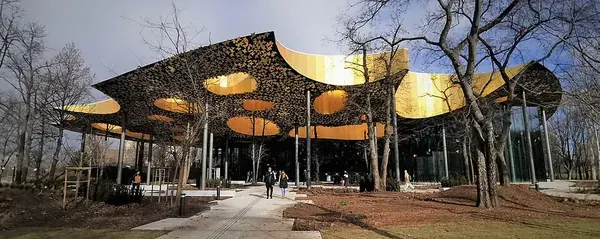
House of Music, Budapest
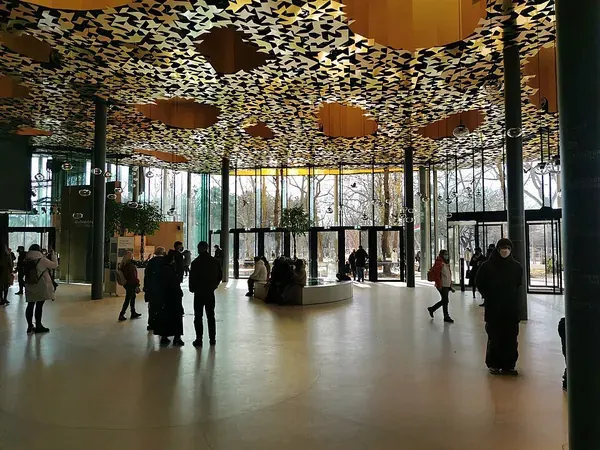
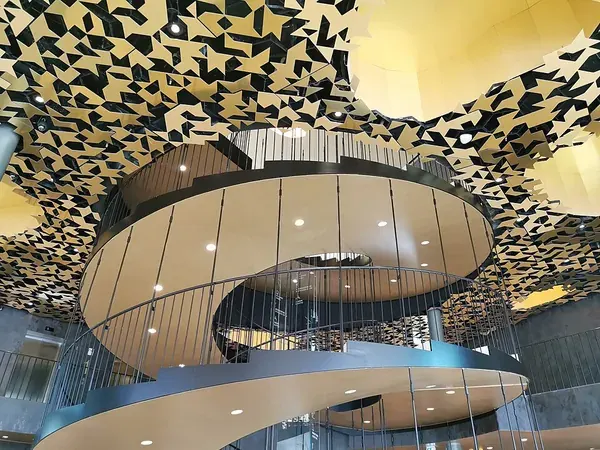
The House of Music in Budapest, a project spearheaded by Sou Fujimoto Architects, stands as a significant cultural landmark in the city, dedicated to the celebration and exploration of music and sound. Completed in 2022 as part of the Liget Budapest Project, this architectural marvel is strategically nestled within the City Park of Budapest, Hungary. It not only serves as a museum but also as a dynamic space for interaction and engagement with music.
The design of the House of Music is ecologically mindful, incorporating an innovative heating and cooling system that primarily utilizes geothermal energy and other renewable sources.
In essence, the House of Music in Budapest is not just a building; it is a fusion of nature, sound, light, and architecture, offering visitors a unique artistic experience and a new perspective on music-making and its impact on our lives.
The Grand Ring
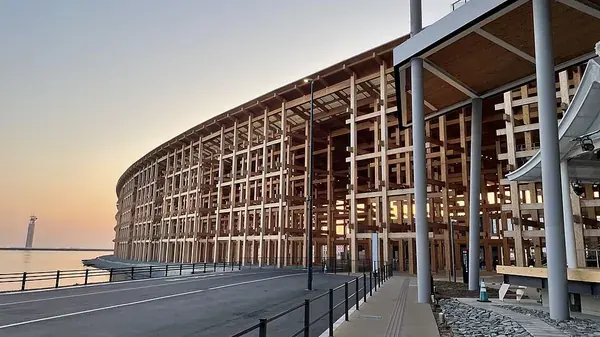
The Grand Ring serves as the spectacular centerpiece of the upcoming Osaka Expo 2025. This colossal timber structure, boasting a circumference of nearly two kilometers, is set to become one of the world’s largest wooden buildings.
Functioning as the masterplan's primary circulation path, the ring symbolizes global unity under "One Sky," physically connecting diverse national pavilions within a single, continuous loop.
The project showcases Fujimoto’s unique ability to merge modern architecture with traditional Japanese craftsmanship. The structure utilizes a complex timber lattice inspired by the historic "nuki" joinery of Kyoto’s Kiyomizu-dera Temple. This permeable grid blurs the boundaries between inside and outside, a hallmark of Fujimoto’s design philosophy.
By featuring a walkable green roof and a shaded promenade, The Grand Ring stands as a monumental achievement in sustainable design, redefining the scale and ambition of contemporary timber architecture.
Notable Projects
In the realm of architectural innovation, the works of Sou Fujimoto stand as monuments to creative brilliance; each project a testament to his unique vision. From intertwining nature with architecture in harmonious symphony to redefining urban landscapes, these notable ventures encapsulate the spirit of progressive design that challenges conventional boundaries.
Serpentine Gallery Pavilion
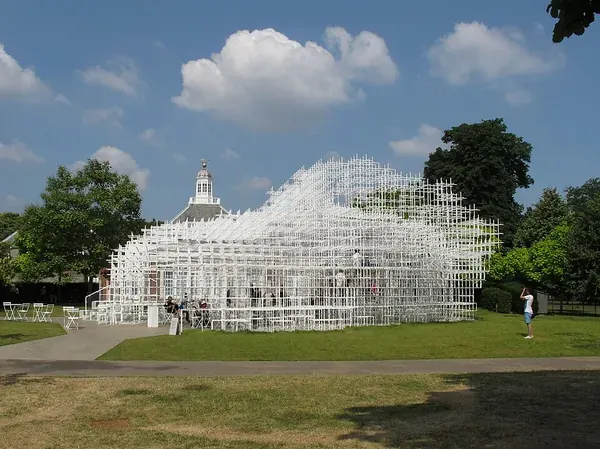
The Serpentine Gallery Pavilion, crafted by Sou Fujimoto Architects, stands as a landmark of innovative building in London's art scene. It sprawled across the lawn at Kensington Gardens in 2013, its grid structure blending a complex web of steel with a delicate transparency.
This unique structure was more than just an exhibit space; it served as an airy social setting where nature and architecture met harmoniously. The pavilion showcased how creative design can transform common materials into stunning spaces.
Each year, a different architect is chosen to bring their vision to life for this London Pavilion project. Sou Fujimoto's take on the Gallery architecture delivered an unforgettable mesh of intricate patterns that invited sunlight during the day and glowed softly at night.
Visitors wandered through what felt like clouds made from metal – an experience connecting them with both sky above and ground below, highlighting architectural creativity at its finest.
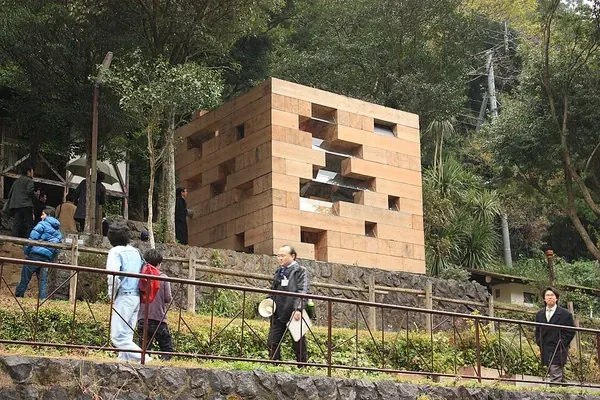
Final Wooden House
Completed in 2008, the Final Wooden House in Kumamoto is a radical experiment by Sou Fujimoto Architects that redefines the limits of timber architecture. Moving beyond traditional post-and-beam construction, this bungalow is built entirely from massive, stacked 350mm cedar blocks.
The design eliminates the conventional distinction between floors, walls, and ceilings, treating the wood as a single, continuous medium that functions simultaneously as structure, insulation, and furniture.
This project perfectly illustrates Fujimoto’s concept of "primitive future," creating an ambiguous, cave-like topography. The stepped timber profile allows users to inhabit the space intuitively; a level that serves as a floor can instantly become a chair, a desk, or a shelf.
By stripping architecture down to its raw material essence, the Final Wooden House challenges our perception of domestic space, standing as a world-renowned masterpiece of minimalist design and spatial innovation.
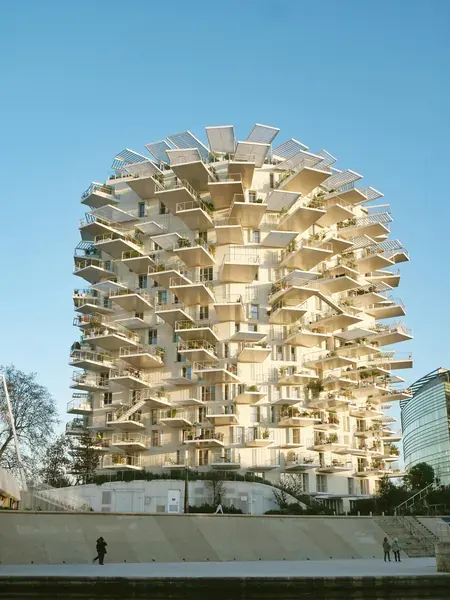
L’Arbre Blanc Residential Tower
Shifting focus to residential design, the L’Arbre Blanc Residential Tower in Montpellier stands tall as a testament to Sou Fujimoto’s creative prowess. This striking building has become an icon of modern architecture, with its unique shape and design that challenges traditional forms.
Balconies stretch out like branches of a tree, offering residents not just a place to live but an experience that merges nature with city life. The tower changes the skyline with its bold form and serves as a shining example of how buildings can be both functional and beautiful.
L’Arbre Blanc pushes architectural boundaries by blending indoor spaces with the outdoors through expansive balconies and terraces. Residents enjoy views of Montpellier from these high perches, much like sitting on tree limbs looking over the landscape.
The project highlights how cutting-edge concepts can create structures that are both visually stunning and deeply connected to their environment – all while maintaining everyday usability for those who call it home.
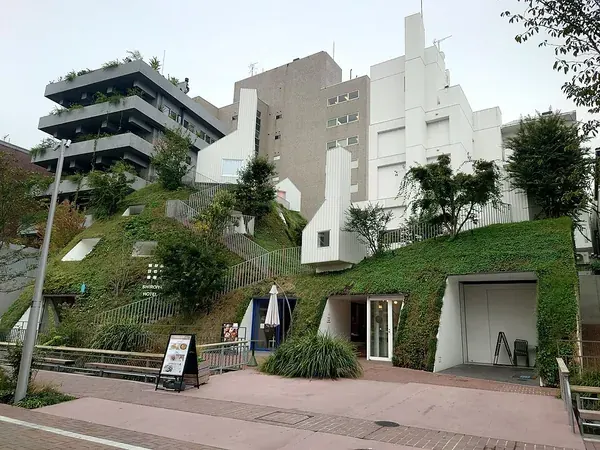
SHIROIYA Hotel
The SHIROIYA Hotel represents a remarkable fusion of history and contemporary design, located in Maebashi, Japan. The project involved the dramatic renovation of a 1975 building that previously housed a ryokan inn, which has been transformed into the four-level Heritage Tower.
This transformation entailed an extensive excavation of the interior to expose a minimalist concrete frame and create an industrial-edged atrium.
A notable component of the project is the Green Tower. This structure, reminiscent of a hill stands as a testament to Fujimoto's emphasis on creative collaboration, combining aesthetics and values to achieve harmony and diversity.
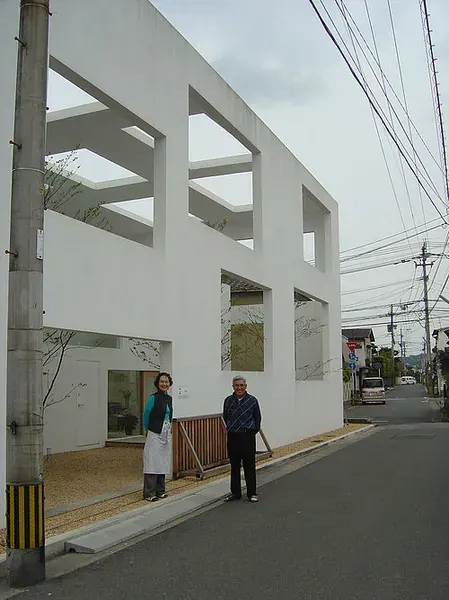
House N
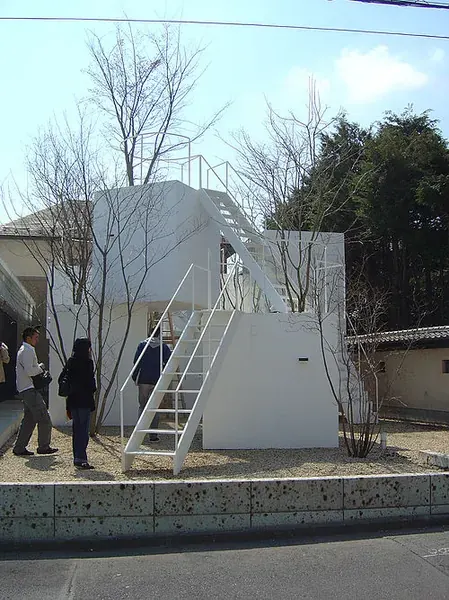
Completed in 2008, House N in Oita is a seminal work by Sou Fujimoto Architects that radically reimagines the relationship between the city and the private home.
This experimental residence is defined by its unique "nested box" structure, consisting of three progressive reinforced concrete shells layered like Russian Matryoshka dolls.The design exemplifies Fujimoto’s signature philosophy of blurring the conventional boundaries between interior and exterior spaces.
The outermost shell features large, unglazed openings that welcome natural light and vegetation, creating a semi-public garden zone that acts as a transitional "intermediate space." By dissolving the rigid walls typical of minimalist architecture, House N creates a gentle gradient of privacy rather than a strict barrier.
This project remains a global icon of contemporary Japanese residential design, challenging traditional concepts of enclosure and offering a bold new model for living in harmony with the urban environment.
Explore More Architects
If you enjoyed learning about Sou Fujimoto, explore more visionary firms:
- Junya Ishigami + Associates: Delicate, nature-inspired architecture from Japan
- Toyo Ito and Associates: Pioneering the fusion of nature and modernism in Japanese architecture
- MVRDV: Dutch firm known for creative, unconventional building design
Model innovative architectural forms with the Rhino for Architects Course. Learn professional 3D modeling from scratch.
Rhino for Architects Course
Give your architectural skillset a major boost with the Rhino for Architects Course. Get over 60 hours of focused training tailored specifically for architects. Master commands and techniques to model, render, and animate architectural visualizations at the highest level. Click below for more information and watch your designs come alive!