Understanding the connection between a building and its surrounding environment can be quite challenging for architects. Steven Holl Architects excels in this area, using a phenomenological approach that emphasizes human experience and perception.
This article will dive into how their unique blend of philosophy and design creates spaces that truly resonate with users on many levels. Discover the magic behind their methods – let's take a closer look!
Key Takeaways
- Steven Holl Architects started in 1977 and is known for buildings that fit their environment and help the planet.
- They design with light, shape, and natural features to make spaces feel alive for people using them.
- Their projects like Kiasma Museum and Chapel of St. Ignatius show how they mix art, learning, and nature.
- The firm works with groups to protect the environment and uses green ideas in their buildings.
- Steven Holl has won big awards like the AIA Gold Medal for his long work in architecture.
Overview of the company
Steven Holl Architects stands as a beacon of innovation in the realm of contemporary architecture, weaving philosophical depth into tangible spaces. With its rich heritage and expansive global footprint, this firm crafts structures that resonate with their surroundings while embracing ecologically sound practices.

Brief history
Steven Holl Architects was founded by Steven Holl in 1977. Steven Holl, an American architect, established the firm to pursue his unique vision of architecture.
The firm started modestly but steadily gained recognition for its innovative approach. Since then, the firm has grown under the leadership of Steven Holl and his partners—Noah Yaffe, Roberto Bannura, and Dimitra Tsachrelia.
They have built a name for thoughtful architecture that stands out.
Global presence
Throughout the 1980s and 1990s, the firm's reputation grew, both in the United States and internationally. They began to take on larger, more complex projects. This period was marked by a series of competition wins and successful projects that helped establish Steven Holl as a significant voice in contemporary architecture.
One of the early significant projects includes the Amerika-Gedenkbibliothek International Library Design Competition win in 1988, an expansion and renovation project in Berlin.
In the late 1990s and early 2000s, the firm expanded its global reach, opening an office in Beijing. This expansion marked a new era for Steven Holl Architects, allowing them to engage with a diverse range of cultures and architectural challenges.
Philosophy and Architectural Style
At the heart of Steven Holl Architects lies a deep-seated belief in architecture that resonates with human experience—a philosophy where every space is more than mere structure but a sensory dialogue between the inhabitant and their environment.
Their approach weaves together the tangible and intangible, crafting spaces that not only exist in the physical realm but also engage with memory, time, and perception.
Contextual Sensitivity
Each project by Steven Holl Architects is deeply rooted in its context. This means not only a physical response to the site's topography and surroundings but also a cultural, historical, and environmental sensitivity. They seek to create buildings that resonate with their surroundings and communities, often integrating local materials and traditions.
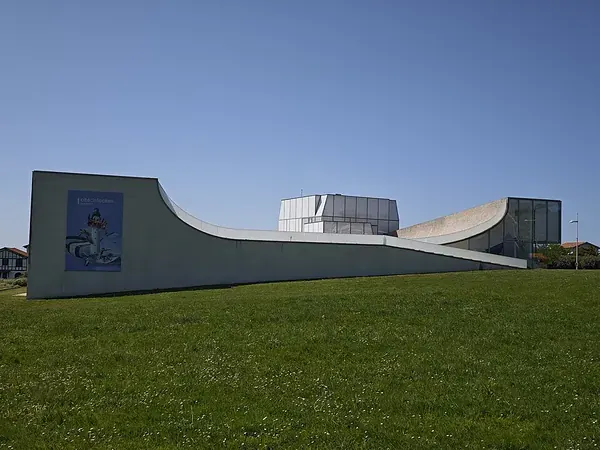
Central to their design philosophy is the manipulation of space and light. Steven Holl Architects are known for their mastery in shaping space and capturing natural light in a way that enhances the architectural experience. Their designs often feature dynamic light plays, creating atmospheres that change with the time of day and weather conditions.
Ecologically responsible design
Sustainability is a core component of their philosophy. Steven Holl Architects integrate sustainable technologies and design methods to minimize environmental impact.
Their commitment to sustainable design goes beyond energy efficiency, encompassing the broader aspects of ecological responsibility and the well-being of occupants.

Environmental preservation organizations
Building on the foundation of ecologically responsible design, Steven Holl Architects takes their commitment to environmental stewardship outside the drafting room. They play an active part in groups that work hard to keep our landscapes and wild places safe.
This dedication is clear from early days when one of the firm's founders, Steven Holl himself, helped start a group called Environmental Works at his university back in 1970.
Their work shows they care about more than just making buildings—they want to make a difference for our planet too. The team joins and helps lead efforts with various organizations that focus on keeping nature healthy.
Whether it's through creative architecture or getting involved with these important groups, Steven Holl Architects stands strong for caring for our world while building beautiful spaces for people to enjoy.
Notable Projects
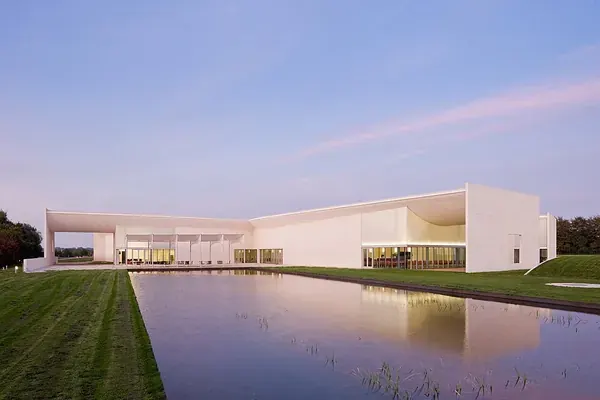
Steven Holl Architects has left an indelible mark on the architectural landscape through a series of transformative edifices that embody their unique phenomenological approach; each project stands as a testament to the firm's commitment to harmoniously blending spaces with human experience.
Delve into these creations, where sensory constructs and philosophical intents are not merely abstract concepts but tangible realities experienced by visitors and inhabitants alike.
Kiasma Museum of Contemporary Art
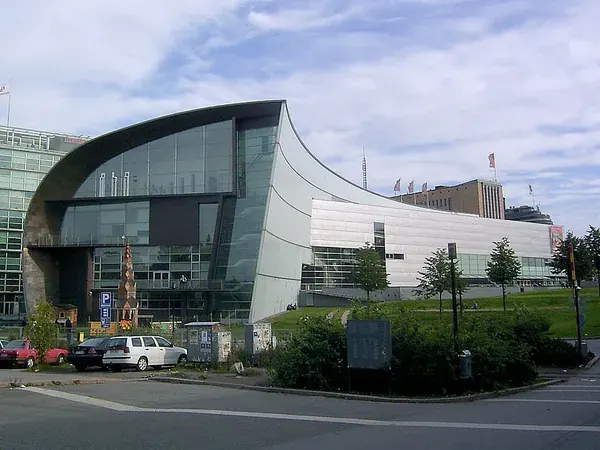
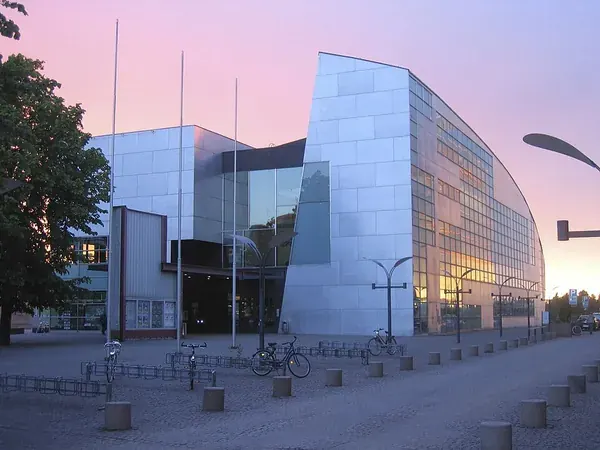
The Kiasma Museum of Contemporary Art stands out in Helsinki, catching the eye with its bold curves and playful use of natural light. Steven Holl Architects designed this modern art museum to blend art with life.
Here, visitors experience contemporary art exhibitions in a space that feels alive—a place where every corner offers a new perspective.
This notable project showcases the firm's dedication to exploring how spaces can touch our emotions. The design invites you into an architectural exploration that wraps cutting-edge architecture around thought-provoking artworks.
It's not just about seeing art; it's about feeling it through the building itself.
Chapel of St. Ignatius, Seattle University
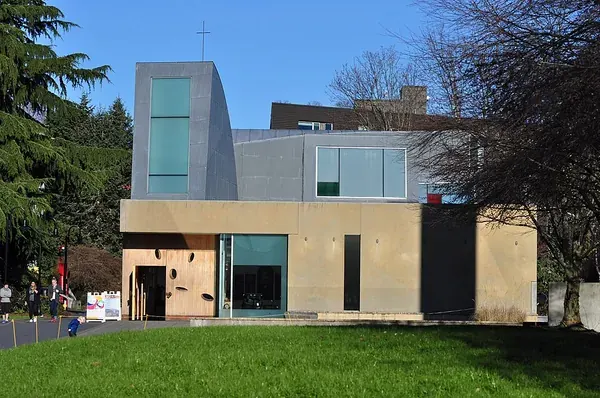
Steven Holl Architects created a special place at Seattle University with the Chapel of St. Ignatius. This building is more than just walls and windows. It's a place that touches the spirit.
Light plays a big part in its design, making the space feel alive and changing throughout the day.
People notice how well this chapel fits into its surroundings. It shows Steven Holl's care for nature and his smart use of land. The team worked together to make sure everything about this project was kind to our planet while creating a peaceful spot for prayer and reflection.
Bellevue Arts Museum
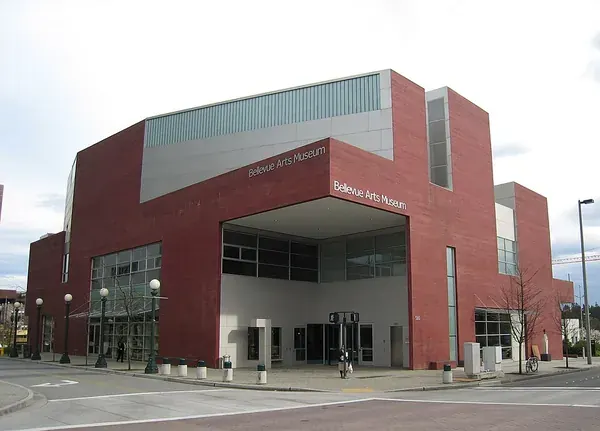
Moving on from the Chapel of St. Ignatius, another gem designed by Steven Holl Architects is the Bellevue Arts Museum. This place marries art and architecture in a unique way. The museum showcases contemporary art, craft, and design through exciting exhibitions.
It’s a cultural space where artistic expression thrives.
The building itself speaks to innovative architecture with its creative design that plays with light and shapes. Visitors experience visual arts in new ways here. In every corner, there's something that makes you think or feel differently about space and form.
This approach aligns perfectly with Steven Holl's phenomenological method where experiencing the building becomes as important as seeing the exhibits inside it.
Simmons Hall
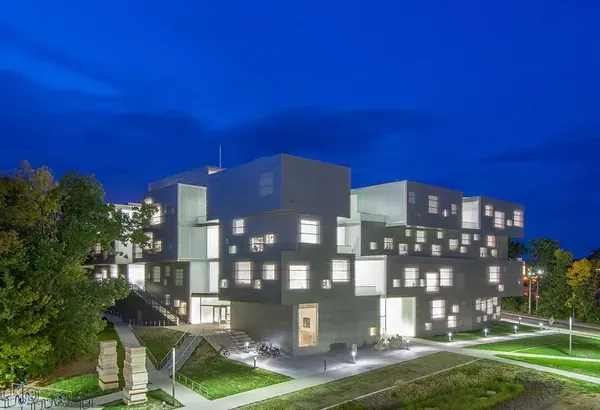
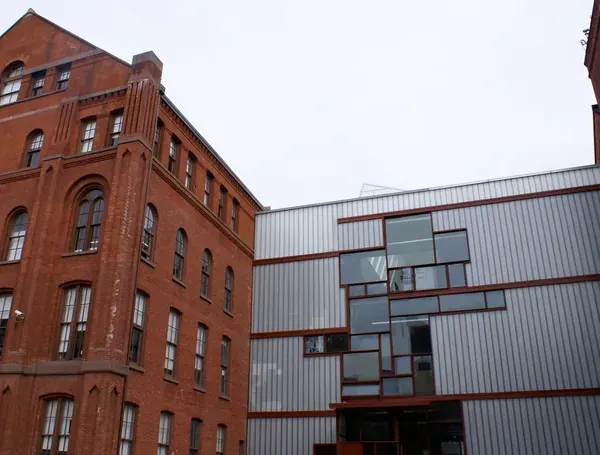
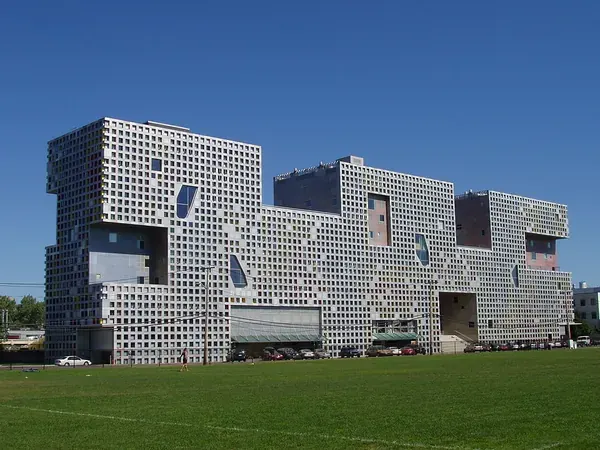
Simmons Hall at the Massachusetts Institute of Technology is an exemplary work of modern architecture. Completed in 2002, this dormitory is renowned for its distinctive design, featuring a box-like structure punctuated by approximately 5,500 small windows that create a unique pixelated aesthetic.
The building's innovative use of space, light, and communal areas reflects Holl's commitment to creating functional, interactive environments. With its striking appearance and thoughtful integration of living and communal spaces, Simmons Hall not only provides a residence for students but also contributes significantly to the architectural landscape of MIT.
This project exemplifies Holl's unique approach to blending form, function, and context in architectural design.
Linked Hybrid complex
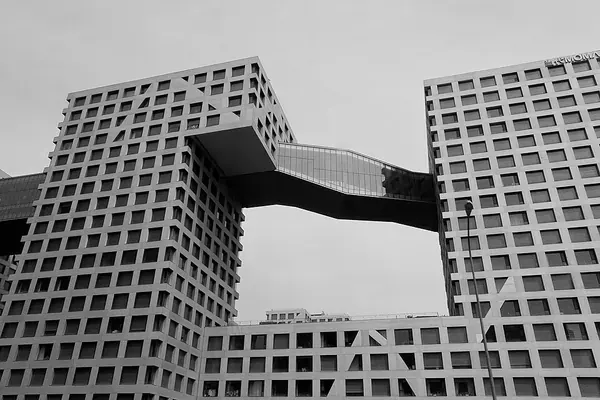
The Linked Hybrid complex in Beijing, completed in 2009, is a striking example of innovative urban architecture. This mixed-use development is notable for its series of eight interconnected towers, creating a dynamic vertical community.
The towers are linked by sky bridges, which house various public amenities, fostering a sense of community among residents. The design emphasizes environmentalsustainability, featuring green spaces, a geothermal heating and cooling system, and a greywater recycling system. This project stands as a testament to Holl's vision of integrating architecture with urban living, promoting connectivity, sustainability, and community engagement in a modern urban context.
The Linked Hybrid complex is not only a residential and commercial space but also a landmark in contemporary architectural design, showcasing a blend of technological innovation and ecological sensitivity.
Lian Chang, CC BY 2.0, via Wikimedia Commons
The Reid Building
Just as the Linked Hybrid complex shows Steven Holl Architects' talent for big projects, The Reid Building takes their skills to arts and educational spaces. This building stands out because it uses new ideas in its design while being careful about fitting in with its surroundings.
It's a place where students can learn and create art, set up to inspire them every day.The Reid Building shines as an example of smart, green building methods and design for a specific purpose. Every part of this project was thought through carefully to make sure it fits the firm's style for concept-driven architecture on a large scale.
With awards and features in magazines, The Reid Building proves that imaginative design can also be practical and good for our planet.
Recent Projects
BIn delving into the innovative visions of Steven Holl Architects, one discovers not only remarkable structures but a dedication to integrating new spaces within the historical and cultural tapestry of their surroundings—discover more about how recent endeavors continue this dynamic architectural conversation.
The REACH
The REACH at the John F. Kennedy Center for the Performing Arts is a transformative expansion that redefines sustainable urban design in Washington, D.C.
This innovative project consists of three "luminous" pavilions connected beneath a sweeping 4.6-acre landscape, creating a seamless link between the historic theater and the Potomac River.
As a masterclass in sustainable architecture, The REACH features the largest green roof in the District, which provides natural insulation and manages 100% of the site's stormwater runoff. The project utilizes advanced geothermal energy systems to efficiently heat and cool its subterranean rehearsal and performance spaces.
By employing "voided slab" concrete technology and high-performance translucent glass, Holl’s design maximizes natural light while significantly reducing the building's carbon footprint.
This LEED Gold-certified addition proves that world-class cultural institutions can prioritize environmental stewardship while providing flexible, porous spaces for community engagement.
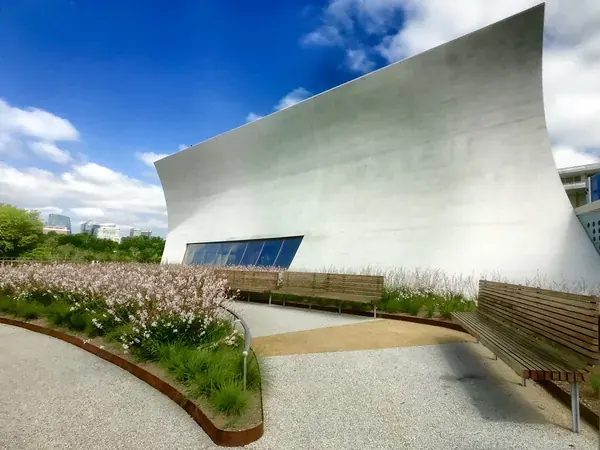
"Kennedy Center's new REACH addition" by vincentspix is licensed under CC BY 2.0
Nancy and Rich Kinder Museum
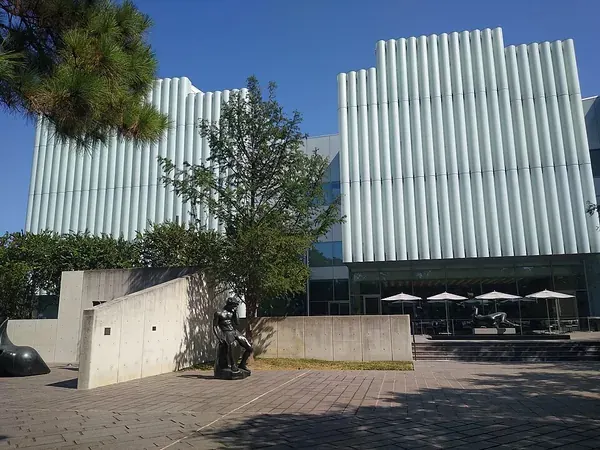
The Nancy and Rich Kinder Museum Building, part of the Museum of Fine Arts, Houston (MFAH) us an addition to the museum, characterized by its remarkable porosity, with the ground floor opening at all elevations. It features seven garden courtyards that slice through the perimeter, defining entry points and punctuating the elevations, thereby integrating nature seamlessly into the architectural design.
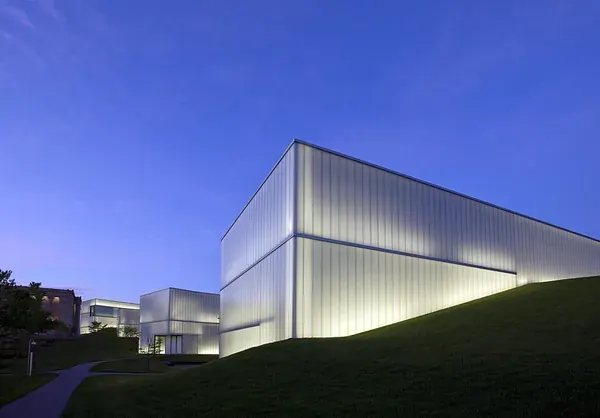
The Kinder Building’s exterior is noteworthy for its vertical, translucent-glass tubes that clad the façades, contributing to the building's luminescent quality, especially at night. This design aligns with Steven Holl's philosophy of creating architecture strongly connected to its context through the manipulation of space, light, and materials.
Hunters Point Library
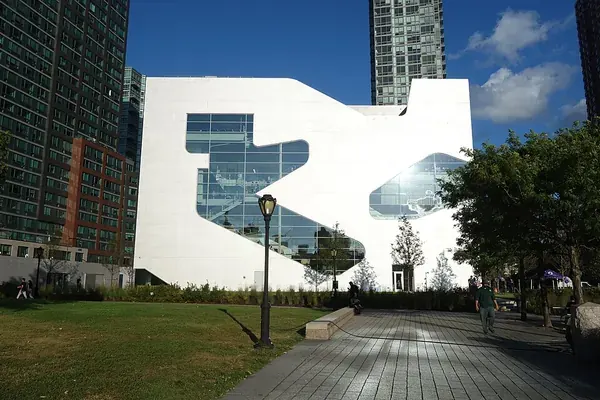
The Hunters Point Library in Long Island City, New York is an exceptional example of modern library architecture.
The library, completed in 2019, is part of a broader redevelopment of the Queens waterfront, adding a significant cultural and community space to the area.
The library's design is a departure from traditional library models, offering a diversity of spaces ranging from intimate reading areas to active gathering spaces. Its aluminum-painted concrete shell serves as both an exterior facade and a load-bearing structure. This innovative design omits the need for curtain walls and columns, allowing for sculpted cuts in the facade that reveal the movement of people within and frame expansive views of the Manhattan skyline.
One of the library's standout features is a ground-level auditorium, providing a public meeting and events space. The building also includes an outdoor amphitheater, further extending its community engagement.
Recognitions
Steven Holl Architects has earned many honors for their work. They stand out as leaders in the architecture world. Steven Holl received the prestigious AIA Gold Medal in 2012, honoring his lifetime of notable contributions to architecture.
In 2014, Steven was awarded the Praemium Imperiale Award for Architecture by the Japan Art Association, a global prize recognizing lifetime achievement in arts not covered by Nobel Prizes.
The firm's projects have been recognized with National AIA Design Awards multiple times, showing their consistent excellence in design. Many buildings designed by Steven Holl Architects have won awards from international organizations, highlighting their impact around the world. The American Academy of Arts and Letters gave Steven their Arnold W. Brunner Memorial Prize in Architecture, which is a big deal for architects who make art through building design.
These recognitions show how much people value what Steven Holl Architects does for modern buildings. Their work makes a mark on cities and communities everywhere.
Rhino for Architects Course
Give your architectural skillset a major boost with the Rhino for Architects Course. Get over 60 hours of focused training tailored specifically for architects. Master commands and techniques to model, render, and animate architectural visualizations at the highest level. Click below for more information and watch your designs come alive!