In the world of modern architecture, it's easy to feel lost among the concrete jungles. Studio Libeskind stands out for its belief that every building should inspire hope. This blog will take you through their uplifting designs and how they change cityscapes with optimism.
Dive in—unexpected wonders await!
Key Takeaways
- Studio Libeskind was founded by Daniel and Nina Libeskind in 1989, known for mixing complex ideas with emotions in their designs.
- Their buildings like Sapphire in Berlin and Vitra in São Paulo show bold, story - telling architecture that plays with light and shapes.
- The CityLife Master Plan is changing Milan with towers, green spaces, and linking districts into a lively community area.
- The Jewish Museum in Berlin and the Memorial at the Tree of Life Synagogue are places where architecture helps people remember history and offers hope.
- Daniel Libeskind's work has been recognized worldwide for its impact on history, culture, urban development, humanitarian concerns, and innovation.
Company Profile
Studio Libeskind stands as a testament to architecture that intertwines form, function, and philosophy. Founded by the visionary Daniel Libeskind, the firm is known for its dynamic approach and willingness to push boundaries in architectural design, embracing complexity with an optimistic fervor that transcends mere structures to reflect broader narratives of human experience.

History
Studio Libeskind, an influential figure in contemporary architecture, was founded by Daniel Libeskind in 1989 in Berlin, Germany. The inception of the studio marked a pivotal moment in the architectural world, as it was closely tied to Libeskind's first major international success – winning the competition for the design of the Jewish Museum in Berlin. This victory catapulted both Libeskind and his studio into the international spotlight, showcasing a unique architectural language that intertwined complex geometric shapes and emotive narratives.
The Berlin-based studio, initially a small and relatively unknown entity, quickly gained renown for its avant-garde and deconstructivist style, challenging traditional architectural norms. Libeskind's works are known for their angular forms, intersecting planes, and the incorporation of voids as architectural elements, all of which contribute to his signature aesthetic.
Since its inception, Studio Libeskind has expanded its global footprint, undertaking a diverse range of projects, including cultural institutions, commercial buildings, residential towers, and urban master plans.
Architectural style
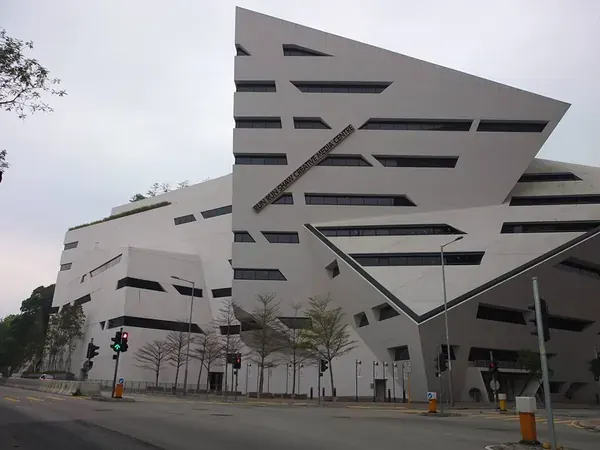
Studio Libeskind's architectural style is distinguished by its dramatic, bold, and often unconventional approach, blending the realms of art, philosophy, and architecture in a way that is both visually striking and emotionally engaging.
A signature aspect of the studio's work is its use of angular and fragmented forms, which are not merely aesthetic choices but often serve as metaphors or narratives embedded within the architecture. These dynamic forms often challenge traditional architectural norms and conventions, creating spaces that are both visually distinctive and deeply meaningful.

Studio Libeskind's architectural style is characterized by a deep engagement with the cultural and historical context of each project, an expressive use of form and material, and a commitment to creating spaces that are not just architecturally innovative but also rich in meaning and human experience. This unique approach has positioned the studio as a trailblazer in contemporary architecture, continually pushing the boundaries of what is possible in the built environment.

Notable Projects
Studio Libeskind has left an indelible mark on the global landscape, crafting spaces that both challenge and delight the senses; their portfolio spans from sculptural residential towers to master plans that reshape entire city districts.
Each project embodies a narrative — a distinctive tale etched in steel, glass, and concrete — showcasing not just buildings but beacons of cultural dialogue and architectural ingenuity.
Jewish Museum Berlin
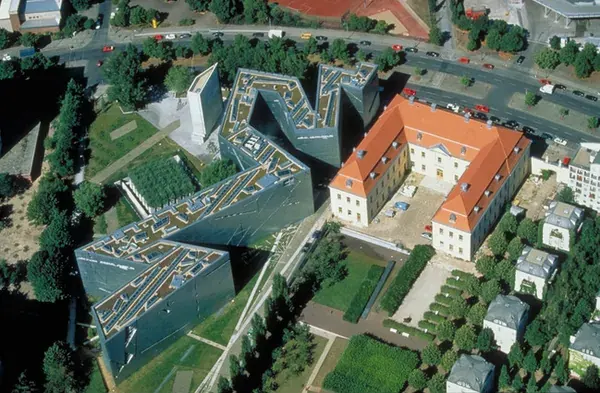
As a masterpiece of deconstructivist architecture, the Jewish Museum Berlin stands as the defining work of Daniel Libeskind and Studio Libeskind. Opened in 2001, this titanium-zinc landmark invites visitors to experience two millennia of German-Jewish history through a visceral spatial narrative.
Libeskind’s design, titled "Between the Lines," utilizes a zig-zagging floor plan and deep architectural "voids" to symbolize the cultural vacuum created by the Holocaust. The building’s disorienting angles, the unheated Holocaust Tower, and the Garden of Exile create a profound emotional journey that transcends traditional museum design.
By integrating the physical structure with the weight of memory, the Jewish Museum Berlin remains one of the world's most significant examples of memorial architecture. Its striking facade and immersive interior make it a must-visit destination for those exploring Berlin architecture and the enduring legacy of Jewish culture in Germany.
CityLife Residences
CityLife Residences in Milan, Italy completed in 2004, showcases the studio's expertise in blending contemporary architectural design with the historical context of its surroundings. Situated in the Fiera Milano district, the residences form part of a larger urban redevelopment project that reimagines the city's historic fairgrounds.
Each building is crowned with double-height penthouses, further exemplifying the blend of luxury and avant-garde design that characterizes Studio Libeskind's approach to residential architecture.
CityLife Residences thus stand as a testament to Studio Libeskind's ability to harmoniously integrate contemporary design into historic urban fabrics, creating living spaces that are both visually captivating and deeply rooted in their cultural context.

Haeundae Udong Hyundai I’Park
Haeundae Udong Hyundai I’Park, completed in 2011 in Busan, South Korea, is a striking example of Studio Libeskind's visionary approach to high-rise architecture. As the tallest residential tower in Asia at the time of its completion, the project is a landmark in Studio Libeskind's portfolio, illustrating their flair for creating sculptural, impactful urban structures.
The project encompasses a complex of residential towers, a hotel, an office tower, and a retail building, collectively forming a significant mixed-use development along the waterfront.
The project's curvilinear geometry not only contributes to its aesthetic appeal but also serves a sustainability strategy by modulating natural light. The design's interaction with the surrounding environment, particularly the way it harnesses and reflects the natural elements, is a testament to Studio Libeskind's commitment to creating buildings that are in dialogue with their settings.

Reflections at Keppel Bay
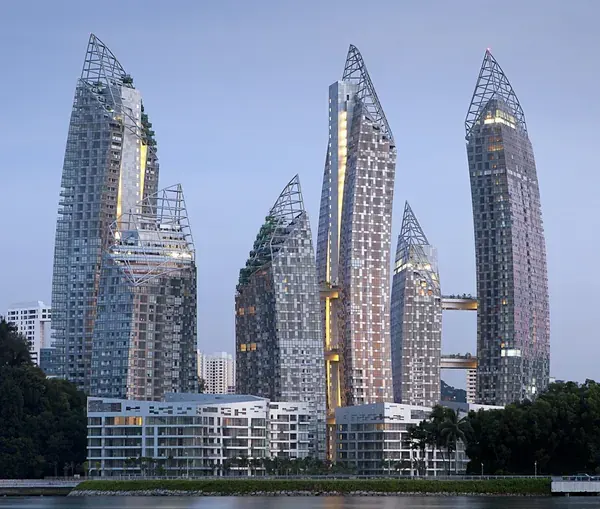
Reflections at Keppel Bay creates a stunning silhouette on the Singapore skyline, marking Studio Libeskind’s first major residential project in Asia. Redefining luxury waterfront living, this iconic development consists of six curved high-rise towers and 11 low-rise villa blocks located at the entrance to Keppel Harbor.
https://creativecommons.org/licenses/by-sa/3.0/deed.en
Daniel Libeskind designed the structures with alternating heights and sloping rooflines, connected by dramatic sky bridges that offer panoramic views of Sentosa and the sea.
The shimmering double-curvature glass facades create a sense of movement, distinct from typical vertical skyscrapers. Awarded the BCA Green Mark Gold for sustainable architecture, the complex blends high-density housing with artistic form.
For admirers of modern architecture and premium real estate, Reflections at Keppel Bay stands as a testament to Libeskind’s ability to transform a residential master plan into a world-class architectural sculpture.
Bord Gáis Energy Theatre
The Bord Gáis Energy Theatre serves as the dynamic cultural anchor of Dublin’s Grand Canal Dock district, showcasing a theatrical approach to urban design.
Completed in 2010, this 2,111-seat venue is characterized by a striking, tilted glass facade that creates a transparent transition between the public plaza and the grand lobby.
Unlike the fortress-like nature of traditional auditoriums, the structure acts as a "stage" for the city itself, illuminating the waterfront at night with its dramatic, angular geometry. Inside, the performing arts center prioritizes world-class acoustic engineering, offering an exceptional setting for Broadway musicals, ballets, and concerts.
As a catalyst for urban regeneration, this architectural landmark highlights Daniel Libeskind's versatility, successfully merging commercial theatrical requirements with a bold, civic-minded vision. It remains a pivotal example of modern Irish architecture and a must-see destination for design enthusiasts visiting Dublin.

Recent Projects
Studio Libeskind's recent endeavors reflect their dedication to creating spaces that intertwine historical narrative with forward-looking design—each project a distinct fusion of memory and innovation.
Nokia Arena
Redefining the cityscape of Tampere, Finland, the Nokia Arena represents a bold feat of engineering and urban revitalization. Completed in 2021, this colossal multi-purpose venue is constructed atop a massive deck spanning the city’s active railway tracks, effectively healing a historic urban rift.
The arena serves as a premier destination for ice hockey, international concerts, and entertainment, capable of hosting 15,000 spectators. Beyond the stadium bowl, the complex integrates a luxury hotel, casino, and conference facilities into a cohesive architectural volume.
The exterior features a distinct, curved screen facade that glows dynamically at night, establishing a new visual landmark for the region. Achieving LEED Gold certification, the project exemplifies sustainable design while anchoring a vibrant new commercial district in Finland’s second-largest city.

Dutch Holocaust Memorial of Names
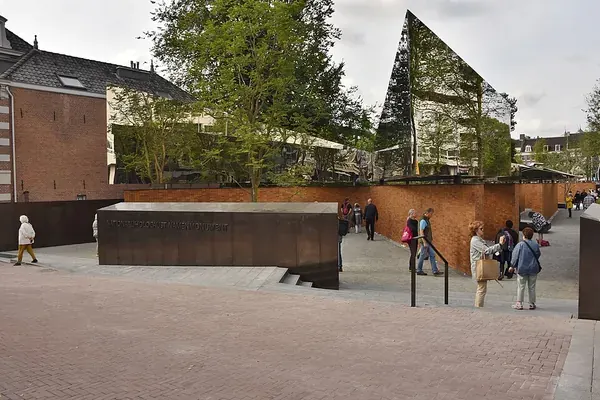
Situated in the heart of Amsterdam’s Jewish Cultural Quarter, the Dutch Holocaust Memorial of Names serves as a poignant physical testament to the 102,000 Dutch victims of the Shoah.
Designed by Daniel Libeskind in collaboration with Rijnboutt, the structure is composed of four distinct volumes that form the Hebrew word le-zekher ("in memory of"). The memorial utilizes a labyrinth of red brick walls, where every single brick is laser-engraved with the name, date of birth, and age of a victim who has no known grave.
Topped with floating, mirror-finished stainless steel forms, the design reflects the surrounding trees and sky, visually bridging the gap between the devastation of the past and the enduring life of the city.
This immersive public memorial provides a space for reflection and remembrance, firmly embedding the history of the Holocaust into the contemporary landscape of Amsterdam.
Impact and Recognitions
Studio Libeskind has been recognized with several prestigious awards that underscore its profound impact on contemporary architecture. Notably, Daniel Libeskind was the first architect to be honored with the Dresden International Peace Prize. This award, bestowed in 2023, acknowledged his significant contributions to memorial architecture, particularly in creating spaces that commemorate the victims of the Holocaust, war, and terror.
The jury lauded Libeskind's architectural framework for remembering these events, emphasizing the importance of such spaces in ensuring that history does not repeat itself. His designs, including the Jewish Museum Berlin and the Imperial War Museum in Manchester, were highlighted for their ability to leave no room for ignorance and relativization.

Their projects transcend the traditional scope of architectural practice, merging art, memory, and community engagement in a manner that resonates globally. This has firmly established Studio Libeskind as a leading voice in the architectural discourse, particularly in the realm of creating spaces that are as much about narrative and memory as they are about form and function.

Rhino for Architects Course
Give your architectural skillset a major boost with the Rhino for Architects Course. Get over 60 hours of focused training tailored specifically for architects. Master commands and techniques to model, render, and animate architectural visualizations at the highest level. Click below for more information and watch your designs come alive!