
If you ever find yourself scratching your head wondering about the differences between the numerous types of Asian architecture buildings – this guide will help you identify the key differences.Without further ado, let’s dive in and explore the different influences that shaped what we know to be ‘Asian architecture’ today.
Is there an Asian Architecture?
First off, what is Asian architecture? Asia is made up of 48 countries: all with their own unique methods of construction & architecture, most of them influenced by ancient religions such as Buddhism, Hinduism and Islam.As Silk Road trade routes flourished and allowed for cultural exchange between countries, these methods of constructing temples, mosques and sanctuaries (explore Persian Architecture for more on Islamic building traditions) gradually spread. Some ideologies have been more influential than others, which explains why we see lots of Buddhist architecture originating in India spreading to far-flung places like Korea, Japan, Cambodia, Indonesia … each with its twist on the original concept.
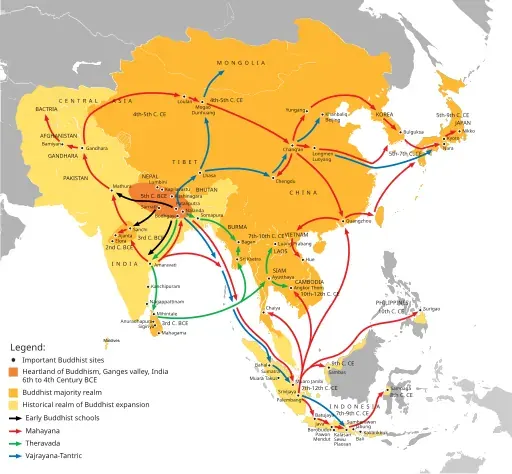
400 – 500 CE
Buddhism spread along Silk Road trade routes to China. Buddhism arrived in Korea and was made the state religion. Buddhism crossed into Japan from Korea, with influence from Korean architecture, and defined early period of Japanese Buddhist architecture. Gupta rulers of north India fused Buddhist practices into their own to form Hinduism.
700 – 800 CE
Buddhism formally established as the state religion in Tibet. Islam’s spread to Xi’an, China where the first Chinese mosque was established.
800 CE
Southeast Asia expanded trade links with China and India; with India predominantly spreading its variants of Buddhism and Hinduism to the Southeast Asia regions. Buddhist and Hindu stone temples were built in Indonesia. Hindu kingdom was founded in Cambodia.
1000 CE
The start of Islam’s spread to Southeast Asia through trade routes from Western Asia to Far East.
Vernacular Architecture
Vernacular architecture simply means architecture originally built during pre-industrial periods by the local people that made use of local materials and resources.These usually refer to ‘everyday’ and practical buildings that catered to domestic life rather than religious & state architecture. Because these buildings served domestic living, they made modest use of locally sourced and readily available materials, with their construction methods evolving over time to respond very well to natural disasters such as floods or earthquakes.Even in countries with similar environments, regional differences in architecture are still observed due to a variety of factors including culture, beliefs, and socio-political decisions, lending to the diversity of what is commonly seen as Asian architecture.
Key Architectural Features of Vernacular Architecture:
Chinese Traditional Architecture
Chinese architecture is influenced by a multitude of ancient philosophical ideas like Wuxing (five elements), Yin and Yang (dualism) and Feng shui (harmonising energies with the surrounding environment).A balanced appearance is very important as it symbolizes harmony – oftentimes elements are arranged to achieve symmetry in all aspects.The quintessential Chinese traditional architecture is defined by populations that resided in large plains where large scale agriculture was possible, hence earth and brickwork were significantly used.
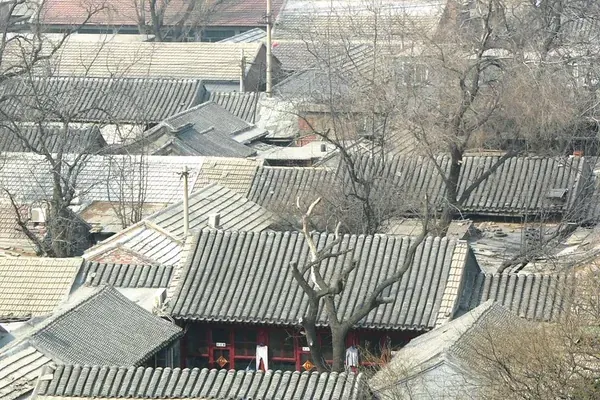
Large singular courtyards are found in Hakka ‘tu lou’ architecture.
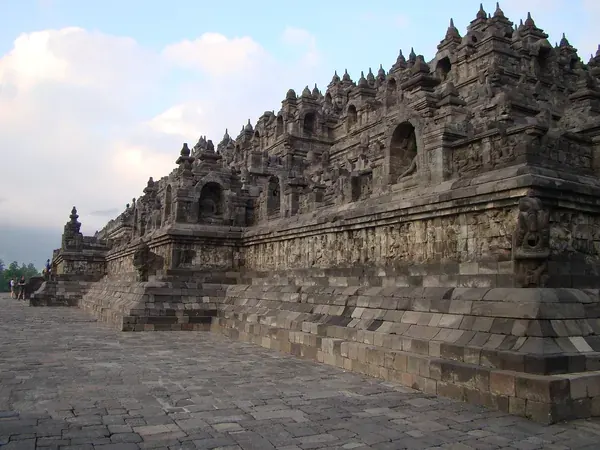
Earthen structures ‘yao dong’ also adopt the use of courtyards while being sunken – ideal for climate control in allowing homes to stay cool in the summer and warm in the winter without a heating system.
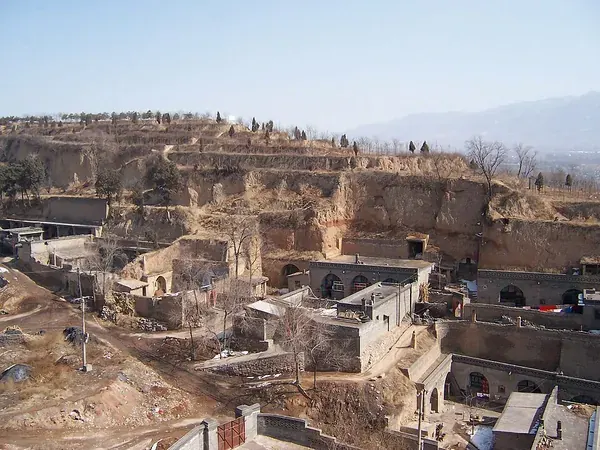
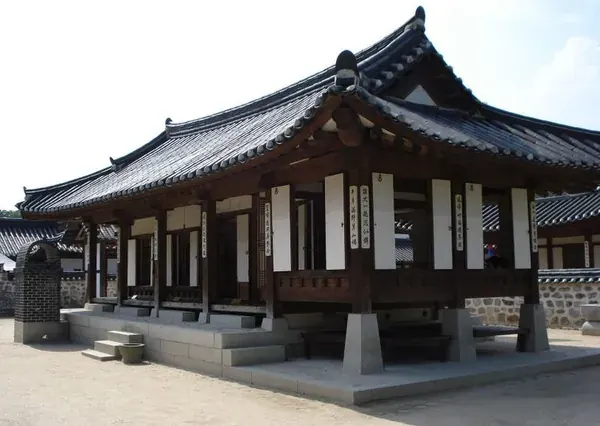
Korean ‘Hanok’ House
Korea’s mountainous region provides building materials such as timber and granite – resulting in a form of architecture defined by stone and woodwork.Korean ‘hanok’ houses were built on elevated platforms due to their innovation of a unique floor heating system ‘ondol’, where the smoke from ovens would run underneath the floors and heat up the room.As this feature only worked on compact spaces, Korean vernacular architecture favoured single storeys.
Japanese ‘Machiya’ House
Japan is situated very closely to tectonic boundaries which makes it more prone to earthquakes; this has defined Japanese architecture to rely on innovative woodwork construction to survive years of earthquakes.Most houses were wood framed with non-loadbearing walls as they did a better job at providing stability. Stone and brickwork were avoided.Japanese homes were designed to be multi-functional, using wood-frame sliding doors with rice-paper panels as dividers between spaces, allowing rooms to be enlarged or closed off depending on the need.
Southeast Asian ‘Rumah Gadang’ House
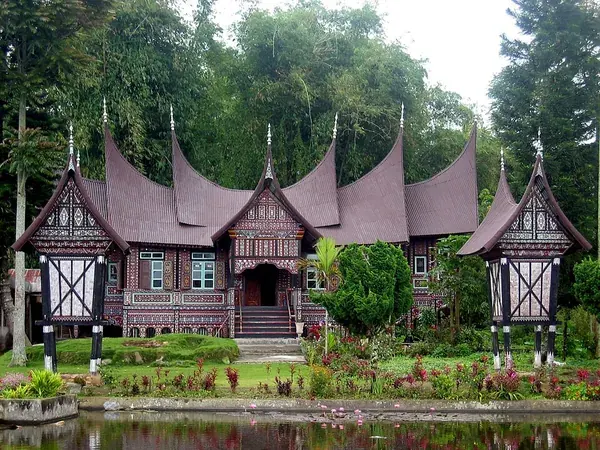
Dramatic roof form and size of the building serves as an identifier of the social standing of the owner, hence buildings are made to be easily extended to reflect expansion of the family size.Most buildings follow their strict local ‘rumah adat’ rules for construction – for example, a tree trunk used as a column should be placed in the same way as it was extracted, with the root end of the trunk facing downwards into the soil.
Southeast Asian Longhouses
Built standing on piles above ground with an extremely durable local wood called bilian, which survives tropical humidity better than iron and is impervious to termites.Elevating these houses allow for protection from flood and heat in the tropical monsoon climate; clustering houses in a long line is more economical than building separate dwellings.Overhanging roof eaves are significant to make for a ‘life’ outside of the private space – usually for socialising & commercial activities.
Religious Architecture
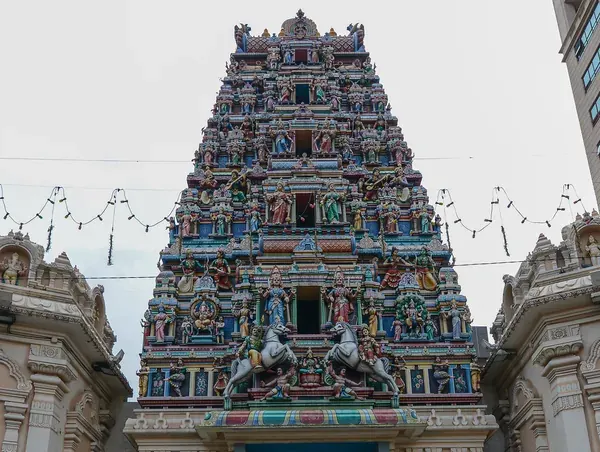
A lot of what we perceive as traditional Asian architecture is influenced by religions stemming from west Asia. By 600 CE, Buddhism from Northern India spread along silk road trading routes to China, which exported its form of Chinese Buddhism into Korea and Japan.At the same time, another form of Buddhism travelled from Southern India to the rest of Southeast Asia, including Sri Lanka, Cambodia, Thailand. Asian architecture in these places took concepts of Buddhism and transformed them along with their local flavor.What we call Hinduism today emerged from 400 CE when the Gupta rulers of North India fused Buddhist practices into their own.Hindu temple architecture and construction was codified in 1100 CE by a written series of technical manuals, incorporating elements of astronomy, sacred geometry, and their own form of ornamentation that differed from traditional Buddhist architecture.Let’s look at the key differences between the religious Asian architecture.
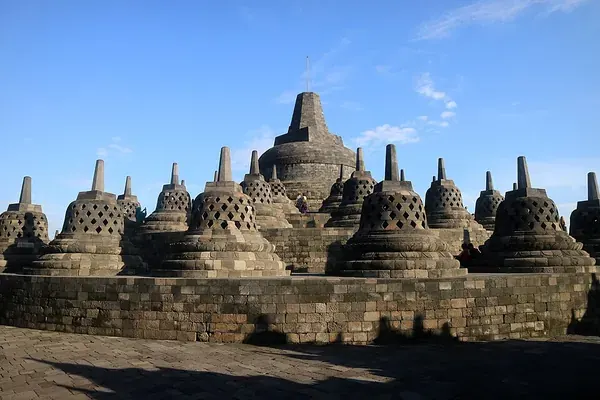
Buddhist Architecture
Hindu Architecture
Notable Examples of Hindu and Buddhist Architecture
Temple complexes are often a mix of the above elements in different regions, assembled according to different regional rules and interpretations of Buddhist and Hindu cosmological concepts and symbolisms of various mandala, including:
Prambanan in Yogyakarta, Indonesia, a Hindu complex that typifies the ‘peaky’ straight-edged pyramidal look of many Hinduist temple architecture
Variants of Buddhist Architecture
Chinese Buddhist Architecture
The Chinese adopted their own ‘Feng shui’ approach to classical Buddhist architecture – temples and palaces would follow have a southern entrance, with the northern half of the compound belonging to the inner court or more private space. Red was commonly used for most part of the building (including walls) and gold for roof tiles.
Pagoda is an evolution of the Indian stupa – a tiered tower with multiple eaves.
Wooden Buddhist monasteries that have survived to today is characterized by low-pitched roof slopes, deep eaves, ‘dou gong’ brackets. The mesh of cross-reinforcements from using radial ‘dou gong’ brackets has allowed it to endure for a millennium unharmed by numerous earthquakes.
Korean Buddhist Architecture
Korea followed principles of Chinese Buddhism but incorporated their own traditional decorative colouring using pinks, greens, and whites.
Japanese Buddhist Architecture
Traditional Japanese Buddhist architecture and Shinto architecture evolved to adapt to Japan’s wetter and more humid climate as compared to China.By 800 CE stopped using heavy materials typical of Chinese Buddhist architecture such as stone, mortar and clay and opted for simple wooden walls, floors and partitions. Native tree species such as cedar, pine and larch were used for structures while brick roofing tiles and cypresses were used for roofs.
Tokyō bracket system found in Sagamiji in Kasai, Hyogo, Japan
Developing their own version of the Chinese ‘dou gong’ structural bracket system called ‘Tokyō’ to support the weight of a visually impressive roof – the eaves usually extend far beyond the walls to cover their verandas.
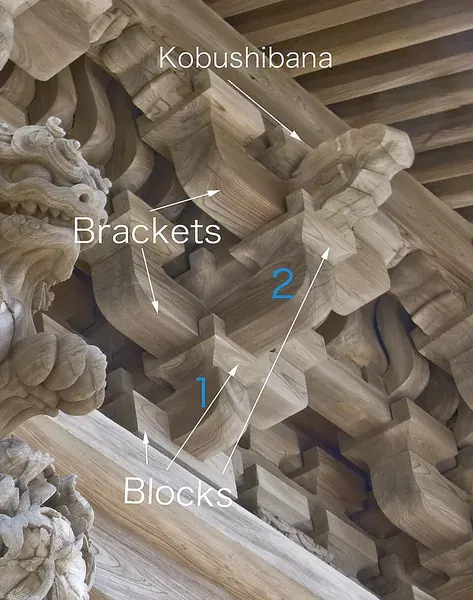
Innovated a style of carpentry joint connection called ‘nuki’ of penetrating tie-beams without the use of steel nails, stabilizing buildings during earthquakes.Flexible inner space divisions: room size can be modified using screens with paper panels or removed entirely
Balinese Hinduist Architecture
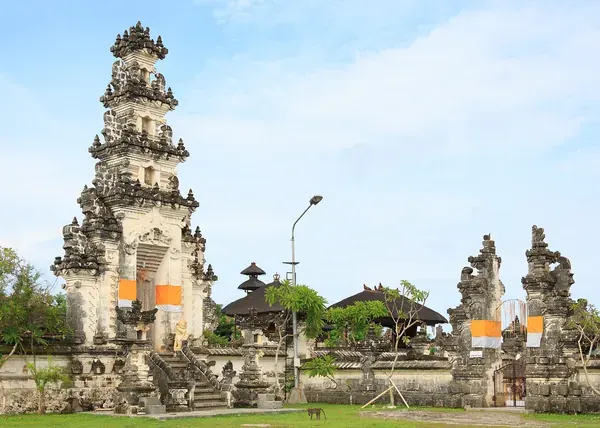
Sequences of courtyards with distinctive gates like ‘candi bentar’ and ‘paduraksa’ mark the threshold into the sacred core of the temple. The ‘paduraksa’ is an adaptation of the classical Indian gopuram.
Islamic Architecture
Muslims do not require a building or consecrated place to worship, but rather Islam is based on five ‘pillars’ and the most important being the five daily prayers performed while facing Mecca.
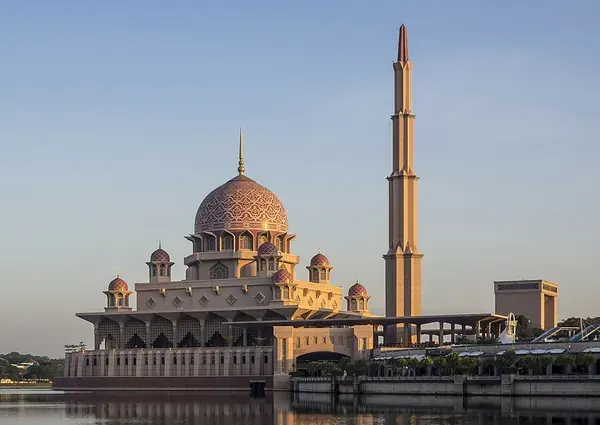
Minaret & domes can be seen in Putra mosque in Putrajaya, Malaysia
While being influenced by Chinese and Mughal architecture, it developed some of its key characteristics:
Conclusion
The vast and diverse expanse of Asia, from the Far East to the Middle East, has fostered an equally varied architectural landscape. From the defining characteristics of religious and vernacular structures to the intricate nuances of regional designs, the history and evolution of Asian architecture narrate a saga of cultural assimilation, adaptation, and creativity.At its core, the architecture of Asia is a testament to the region's ability to amalgamate global influences, be it through the Silk Road or the spread of religions like Buddhism, Hinduism, and Islam. Through time, each region has absorbed these influences, merging them with local traditions and natural conditions to create unique architectural styles.Today, as we stand in the modern age, understanding this architectural heritage is not just an aesthetic pursuit but a way to appreciate Asia's contribution to global design and its continuing influence in the world of architecture. As we continue to forge into the future, one can only anticipate the new forms and ideas that will emerge from this melting pot of cultures, keeping the legacy of Asian architecture ever-evolving and vibrant.
Explore More Architecture Styles
Discover more architectural traditions from around the world:
- Byzantine Architecture: The Silk Road brought cultural exchange between East and West
- Persian Architecture: Where Asian and Middle Eastern building traditions meet
- Architects' Tools: The essential tools every architect needs to study and create
Want to model Asian-inspired architectural forms? Our Rhino for Architects Course teaches you to create complex geometric patterns and organic shapes.

Rhino for Architects Course
Give your architectural skillset a major boost with the Rhino for Architects Course. Get over 60 hours of focused training tailored specifically for architects. Master commands and techniques to model, render, and animate architectural visualizations at the highest level. Click below for more information and watch your designs come alive!