Navigating the rich tapestry of architectural styles can be daunting, especially when deciphering the complex elegance of Mannerism. Born from the Italian "maniera," Mannerism Architecture Style weaves a tale of rebellion against Renaissance conformity.
Our journey through Mannerism will unveil its nuanced characteristics and lasting impact on art and design, providing clarity amidst its sophisticated flair. Discover why architects still admire its innovative spirit.
Key Takeaways
- Mannerism architecture started in Italy around 1520 and was a big change from the calm Renaissance style. It uses twists and surprises to make buildings and art that feel alive.
- Big artists like Leonardo da Vinci influenced Mannerism. Architects would take old ideas but make them new with odd shapes or really fancy details.
- This style isn't just in buildings; it's also in paintings, literature, and music. Mannerism likes things that are complex and full of feeling, no matter what kind of art it is.
- In today's world, some architects still get inspired by Mannerism. They design cool buildings that mix nature with unusual forms.
- Poland has many examples of Mannerist architecture from between 1550 and 1650 where Italian styles mixed with Polish ones to create unique designs.
What is Mannerism Architecture?
Mannerism architecture, a distinctive and complex style emerging from the late Renaissance period, represents a departure from classical norms through its embrace of unconventional forms and inventive spatial treatment.
This movement sought to convey tension and emotion by challenging traditional balance and proportion in artistic expression, laying the groundwork for the Baroque era that followed.
Origin and development
Mannerism architecture began in Italy around 1520, after the High Renaissance. Artists and architects started to change the way they made art. They wanted to try new ideas that were not like the balanced and calm styles before them.
In places like Rome and Florence, famous for their art, mannerism became popular.
This style grew fast until the end of the 1500s. Architects looked at Roman buildings but added twists that made things look different or surprising. They played with shapes, sizes, and even illusions to create exciting spaces.
As mannerism spread through Italy, it changed how people thought about design and led to other styles like Baroque later on.
Characteristics in art and design
Mannerism architecture stands out because of its unique style. It changes the way we think about design with its mix of elegance and bold moves.
- Artificiality is key in Mannerism. Buildings and art pieces don't try to look natural. Instead, they are full of fancy details that catch your eye.
- There's a strong sense of elegance. Architects and artists make things that are graceful and pretty to look at.
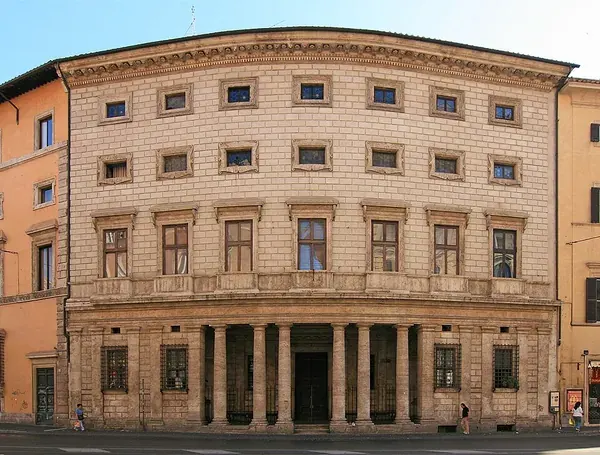
- Mannerist works go against the usual rules. You'll see odd sizes and shapes that surprise you.
- Every detail is styled in a special way. Nothing looks simple or plain; it's all very thought-out and fancy.
- Artists love to make things look bigger or more dramatic than they really are. This exaggerated style makes you feel strong emotions.
- Cultivation of elegance means that every part of a work is made to be the best it can be. This perfection brings beauty to buildings, paintings, and sculptures.
- In this period, people moved away from High Renaissance ideas which liked balance and harmony. Mannerism prefers creativity over following old patterns.
- A big goal in Mannerist design is unity, especially in French Mannerism where everything inside a room fits together perfectly—from walls to furniture.
Influences and role models
The shift from perfect harmony to more expressive forms in architecture did not happen by chance. Great artists like Leonardo da Vinci and Raphael started this change. They were big influences on what became the Mannerism style.
Architects looked back at their work, took ideas and made them into something new.
This new style was a reaction against the strict rules of Renaissance art. Painters had been using harmonious principles in their work, but mannerist architects broke those rules on purpose.
Their buildings played with shapes and spaces in ways that caught your eye and made you think. This bold way of building traveled far, touching styles like Baroque architecture, the Neo-Palladian movement, and Beaux-Arts architecture later on.
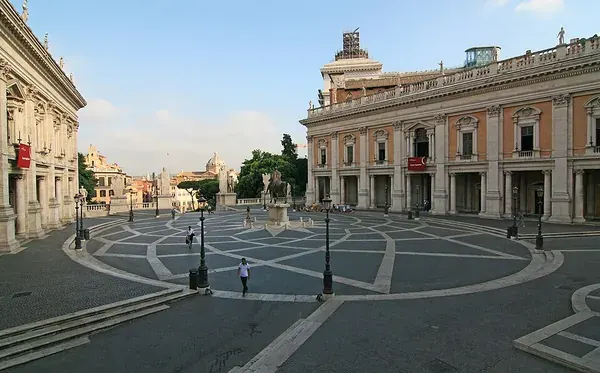
Examples of Mannerism Architecture
Delving into the realm of Mannerism, one encounters a fascinating assembly of visionaries whose works defy the classical norms with their expressive forms and dramatic use of space.
These artisans, through their inventive compositions and peculiar elegance, have etched an indelible mark on the canvas of history, inviting us to explore their unique interpretations and contributions to this enigmatic style.
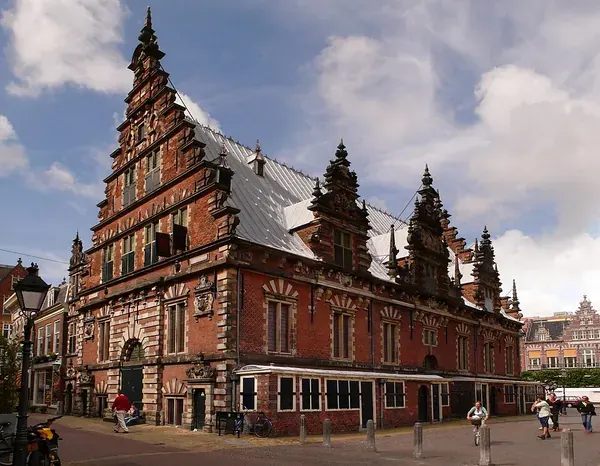
The Palazzo del Te in Mantua
The Palazzo del Te in Mantua, designed by Giulio Romano in 1534, is a quintessential example of Mannerist architecture. Its playful façade, characterized by deliberately distorted classical elements, challenges conventional design norms.
The building's dynamic interior spaces, featuring unique frescoes and innovative use of perspective, exemplify Romano's creative genius, offering architects a rich study in breaking traditional architectural boundaries.
The Laurentian Library
The Laurentian Library in Florence, designed by Michelangelo, stands as a masterful representation of Mannerist architecture. Esteemed by architects for its innovative approach, the library features a dramatic entrance staircase and intricate interior designs that defy classical conventions.
Michelangelo's use of space, along with his unique manipulation of architectural forms, creates a powerful tension and dynamism, making the Laurentian Library a pivotal study in challenging traditional architectural practices.
The Uffizi Gallery
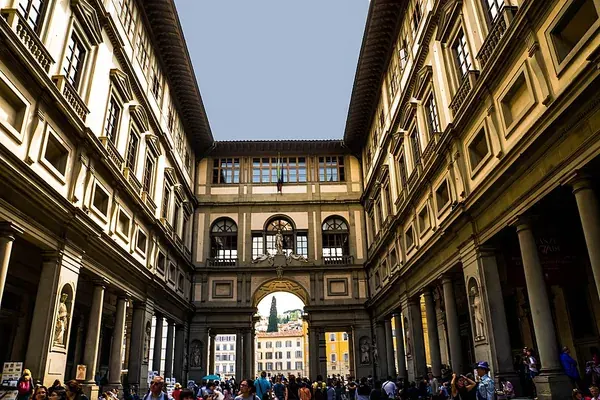
The Uffizi Gallery, designed by Giorgio Vasari in Florence, is a hallmark of Mannerist architecture. Renowned among architects for its elongated corridors and striking façade, the Uffizi reflects a masterful blend of classical and innovative elements.
Vasari's design, emphasizing rhythmic proportions and engaging spatial dynamics, offers a distinctive example of how Mannerism can infuse traditional forms with new vitality and complexity, making it an essential study for architectural exploration.
The Church of San Giovanni Battista
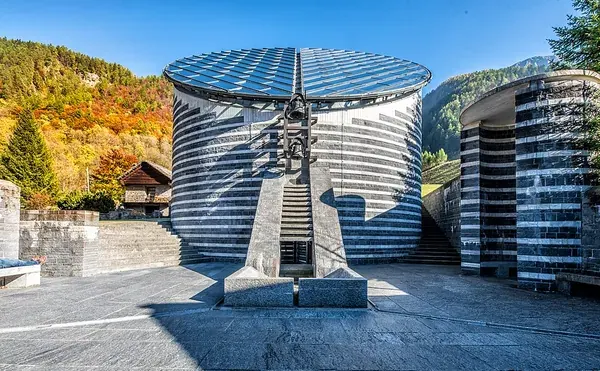
The Church of San Giovanni Battista in Mogno, Switzerland, designed by Mario Botta, is a modern interpretation of Mannerist principles.
Esteemed by architects for its bold geometric design, the church juxtaposes stark black-and-white marble, creating a dramatic interplay of light and shadow.
Botta's approach, integrating contemporary methods with Mannerist-inspired ideas, challenges traditional ecclesiastical architecture, offering a unique perspective on blending historical styles with modern innovation.
Villa Farnese
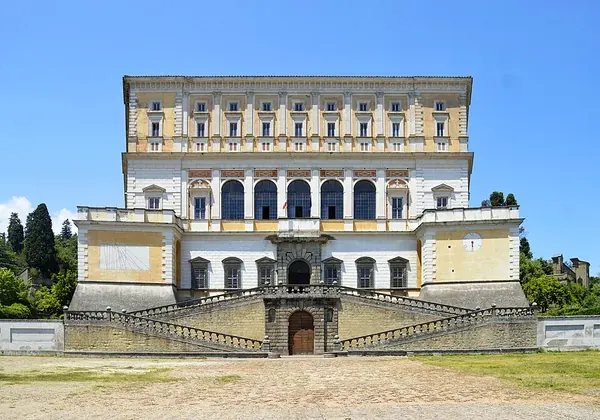
Villa Farnese in Caprarola, Italy, designed by Vignola, is a striking example of Mannerist architecture. Its pentagonal plan and intricate frescoes are of particular interest to architects, showcasing Mannerism's innovative approach to space and form.
The villa's clever use of geometry and perspective, along with its fusion of artistic and architectural elements, offers a compelling study in how Mannerist design principles can create complex and visually stunning structures.
Neo-Mannerism
Neo-Mannerism takes old ideas from Mannerism and gives them a new twist. Artists use this style to make their work stand out in today's world. They play with tradition but add a modern touch.
This style shows up in buildings, art, and even furniture design.
Architects like you see Neo-Mannerism as a way to challenge the usual rules. It combines past styles, like Renaissance beauty, with bold new shapes and colors. This mix creates something fresh yet familiar.
Key examples in Poland
Nature plays a big role in Mannerism, often bringing the outside world into buildings. This idea is also seen in Polish Mannerism where nature and architecture blend.
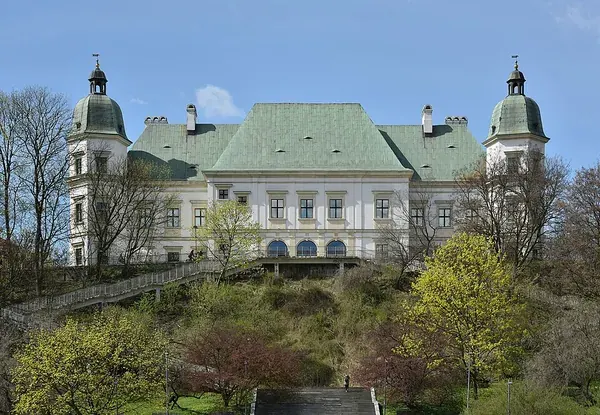
- The grand Ujazdów Castle stands as a prime example of Mannerism in Polish architecture. Italian architects helped design this castle, mixing Polish and Italian styles.
- Another noteworthy structure is the Poznań Town Hall. Here, the Italian influence is clear with its intricate designs and unique roof.
- The Bishop’s Palace in Kielce shows off Mannerist features through its detailed gates and windows that invite nature inside.
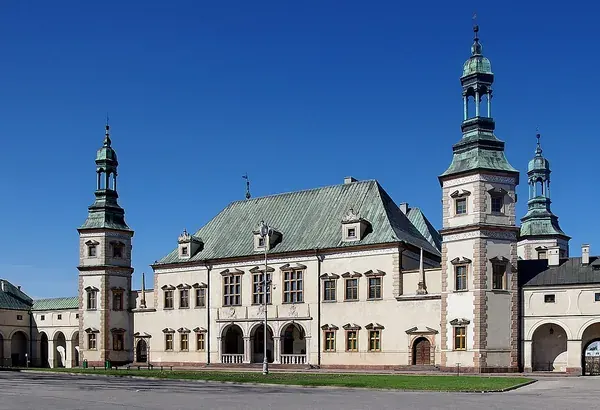
- Villa Decius in Krakow reflects the architectural styles seen during the Polish Renaissance, showcasing balance mixed with Mannerist complexity.
- In Niepołomice, the Royal Castle has striking ornamentation typical for Polish Mannerism, making it stand out from earlier Renaissance works.
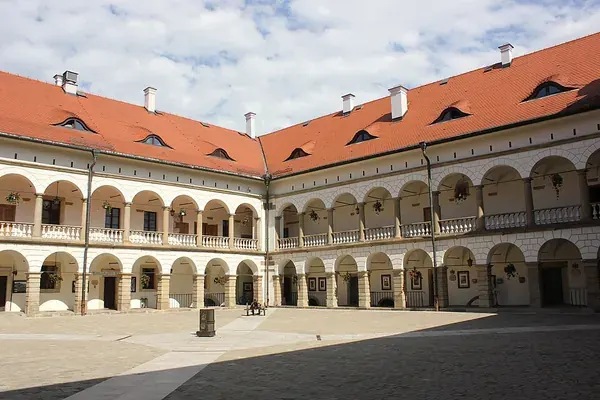
- The Church of SS Peter and Paul in Krakow displays sculpture work by Giovanni Maria Padovano which emphasizes the intense emotion characteristic of Mannerist art.
- A splendid example of residential architecture is Ostrogski Castle (also known as Tarnowski's House) in Warsaw with its ornate facades that draw heavily on Italian prototypes while maintaining a distinct Polish flair.
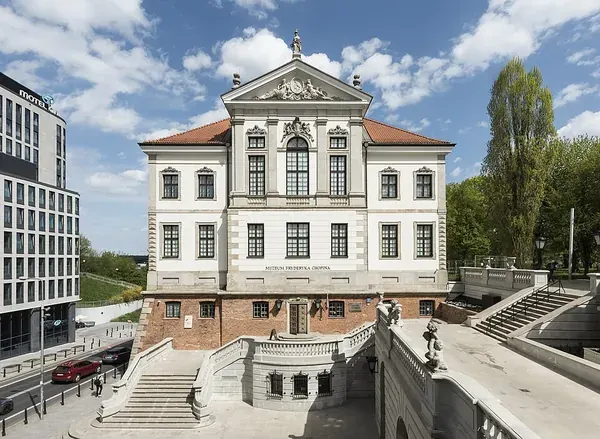

Grasshopper Complete Course
Give your architectural skills a boost with the Grasshopper Complete Course. Get over 50 hours of comprehensive Grasshopper training tailored for architects. Learn to generate and iterate designs faster. Click below for more information and streamline your workflows!