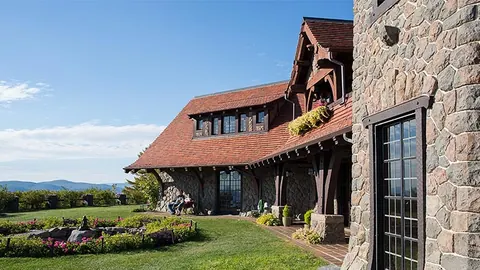
Struggling to pin down the charm of mid-century modern homes? Mid-century modern architecture is celebrated for its timeless elegance, uniting form with function in an accessible way.
This blog will guide you through the distinct elements that make these structures stand out, assisting you in recognizing or creating your own piece of architectural history. Dive in and explore a design era that redefined simplicity and style.
Key Takeaways
- Mid-century modern architecture is about simple designs from the 20th century, focusing on function and connection with nature.
- Clean lines, geometric shapes, and big windows are key parts of this style. They help make spaces look bigger and mix indoor living with the outdoors.
- Famous houses like Farnsworth House and Eames House show off mid-century design. They use materials in new ways to connect people with nature.
- You can find these homes in places like Palm Springs or through real estate agents who know this special style.
- This type of design keeps being popular because it blends cool looks from the past with ways we like to live today.
What is Mid-Century Modern Architecture?
Mid-Century Modern architecture embodies a distinct design revolution that emerged from the cultural rebirth post-Second World War, championing simplicity, connection with nature, and a futuristic outlook.
This architectural style reflects an era of optimism and new-found functionality, characterized by its unique approach to blending indoor spaces with the surrounding environment.
Definition
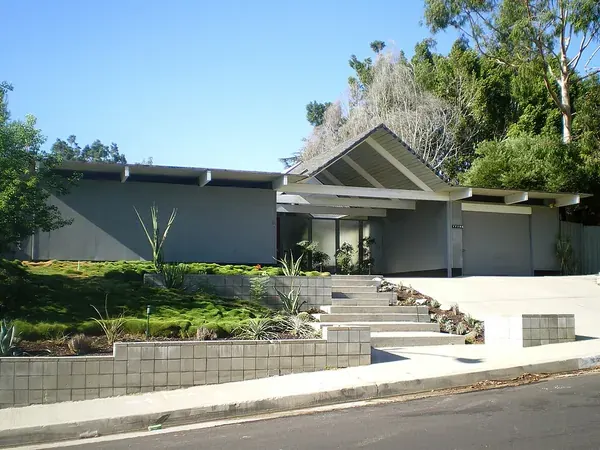
Mid-Century Modern Architecture is about simple, clean designs from the mid-20th century. Buildings from this time were made to be useful and look good without being fancy. They used straight lines and basic shapes.
This style came after World War II, showing hope for the future.
It connects buildings with nature and has fewer things in them on purpose. The idea was to make life better through design that is easy to use and enjoy. Homes often have big windows that go from the floor to the ceiling, letting in lots of light and showing off views of trees and sky.
Brief history
Mid-century modern architecture started to shine after World War II. This style prefers simple designs and natural materials. It grew from early 1900s modernist ideas, using straight and clean lines.
Between the 1930s and 1960s, these buildings rose in number quickly but then became less popular for a while. Recently, people have begun to love this style again because it mixes vintage looks with today's design likes.
Key Elements of Mid-Century Modern Architecture
Delving into the anatomy of Mid-Century Modern architecture reveals an ethos that champions form following function, with an emphasis on simplicity and connection to nature. The design philosophy encapsulates a distinctive blend of practicality and aesthetic charm, often characterized by its intelligent use of materials and harmonious integration between indoor spaces and the surrounding environment.
Clean lines and geometric shapes
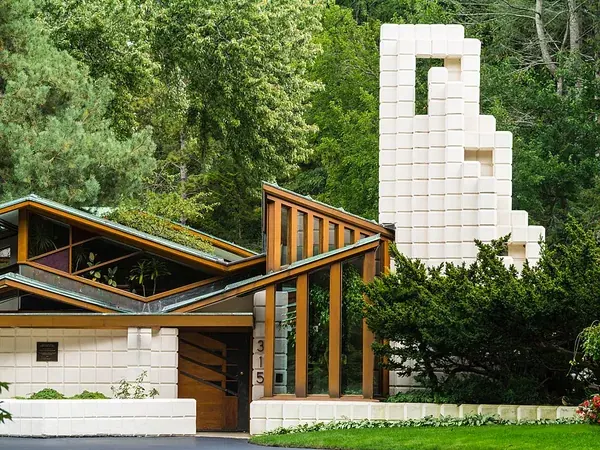
Mid-century modern architecture loves clean lines and simple shapes. Think of buildings and furniture with straight edges, rectangles, and squares. These designs also use curves but keep them smooth and flowing.
Architects during the mid-20th century wanted to make things look clear and easy on the eyes. They chose to use shapes that were basic yet beautiful.
Simple elegance is a big deal in this style. Buildings are not just boxes; they often mix straight lines with organic forms like circles or ovals. This creates a look that feels both natural and modern.
The lines are sleek, making spaces seem bigger and more open. It's all about function—every part of the design has a purpose while still looking good.
Floor-to-ceiling windows
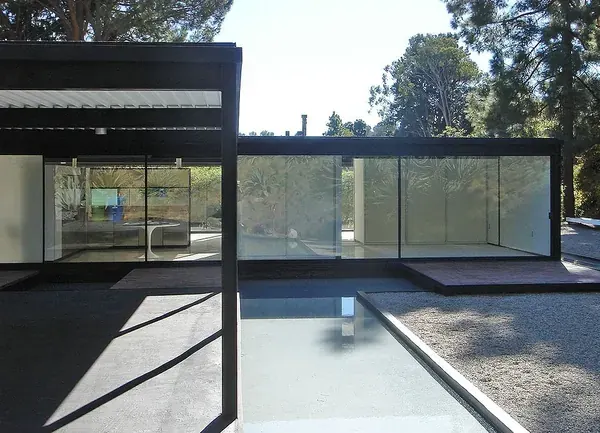
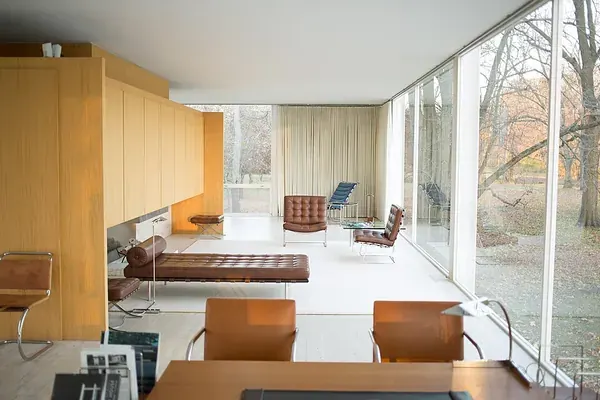
Floor-to-ceiling windows are a big deal in mid-century modern architecture. They let natural light flood into the space and create a smooth flow between indoors and outdoors. This feature not only makes the room look bigger but also brings in views of nature, which is key to this style’s love for blending indoor living with the outside world.
Architects often use these large windows to add character to a building's design. The glass stretches from the floor right up to the ceiling, giving any room an open and airy feel.
This design choice shows off clean lines and simple forms, both important parts of mid-century modern looks. Houses with these windows seem more connected to their natural surroundings, making them calm places to be.
Changes in elevation
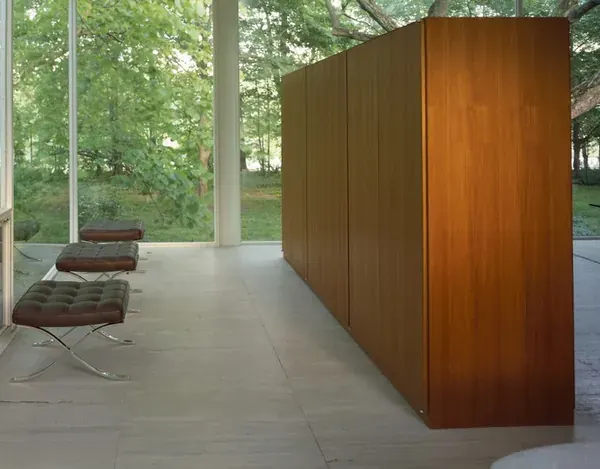
Just as large windows blend indoor and outdoor spaces, changes in elevation play a key role in mid-century modern architecture. These small steps between rooms create split-level areas that make each space feel special.
Houses often have partial walls or cabinets that add to the sense of different levels. This design choice does more than just look nice; it makes the flow from room to room smooth and easy.
Stairs are not only for moving up a floor. In these homes, short staircases connect living spaces, giving the house an open feel. The stairs help link places together without closing them off from each other.
With this setup, you can see from one area into another, which makes everything seem connected and whole. Changes in elevation bring beauty and smart design to houses, showing just how important good planning is for making spaces work well together.
Minimal decoration
Mid-century modern architecture loves a clean and simple look. Think sleek, with no extra stuff just lying around. This style uses space well, making it feel open and easy to live in.
The focus is on strong lines and shapes that stand out without needing lots of decoration.
This design celebrates beauty in the basics—like organic materials and neutral colors. Furniture and walls don't have fancy details but are smooth and straightforward instead. Each piece has a job to do and looks good doing it, showing off functional spaces with style.
Access to the outdoors
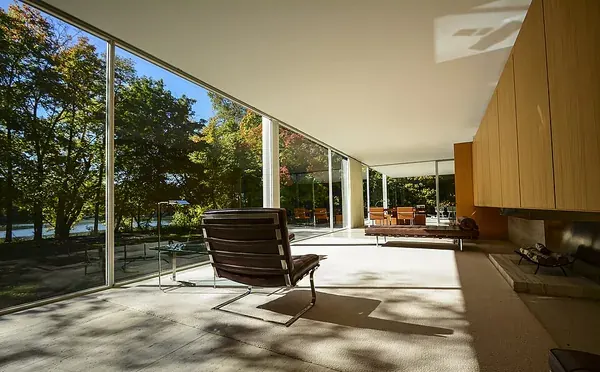
Moving beyond minimal decoration, mid-century modern homes embrace nature. They often have big windows that stretch from the floor to the ceiling. This lets lots of light in and offers views of trees, gardens, and skies.
Living spaces flow easily into patios or gardens, making it feel like inside and outside are one.
Houses from this time were built with the idea that being outside is good for you. Doors in many rooms lead out to nature. This design invites people to step outside and enjoy fresh air anytime they want.
It's like having a bit of the park at home!
Famous Examples of Mid-Century Modern Architecture
Mid-Century Modern architecture boasts iconic structures that have etched their distinct style into history, serving as quintessential representatives of the era's aesthetics and philosophies.
These masterpieces highlight how architects of the time harmonized form with function, marrying clean lines and organic shapes with innovation in design.
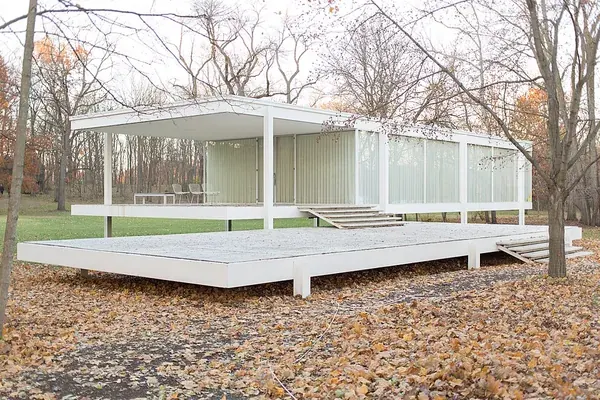
Farnsworth House
Farnsworth House stands as a striking example of modernist design. Created by the famous architect Mies van der Rohe, this house changed how people saw minimalist architecture. It's all about simple elegance and connecting with nature.
Big windows from floor to ceiling let the light in and make you feel like outside and inside are one big space.
Mies designed Farnsworth House for Edith Farnsworth to be her country retreat. Their teamwork turned tough at times, but still made an architectural masterpiece that lasts to this day.
The place shows off clean lines and is known around the world for its timeless design. It has become a key piece in American architecture history books because it uses new building ways so well with its style and setting.
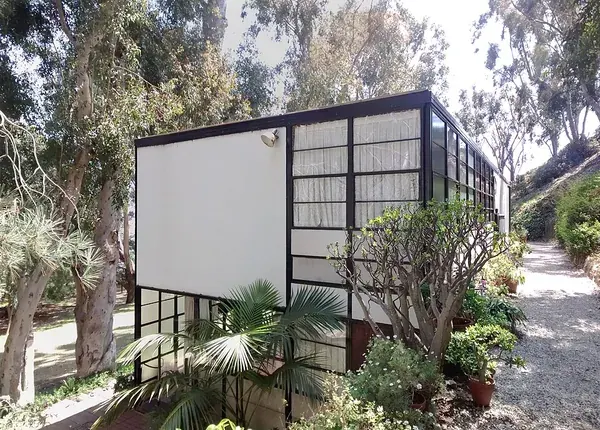
Eames House
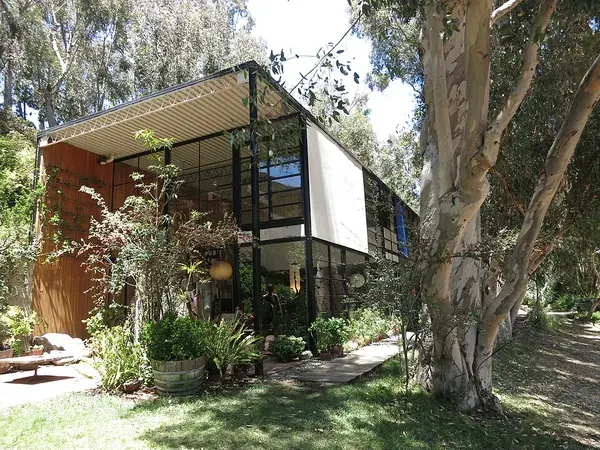
Moving from the Farnsworth House, another icon in mid-century modern architecture is the Eames House. Nestled in Pacific Palisades, this house stands as a classic example of residential design that emerged after World War II.
Charles and Ray Eames merged their talents to create a space filled with clean lines and geometric shapes. They wanted a home that was close to nature, so they included floor-to-ceiling windows and outdoor access points.
The preservation plan by the Eames Foundation helps keep this architectural landmark alive for future generations to study and enjoy. Architects praise the house for its innovative use of materials and reflecting a design philosophy that values both form and function.
The structure's clever changes in elevation make it more than just a building; it's an experience in modernist design sensibilities thoughtfully woven into every detail.
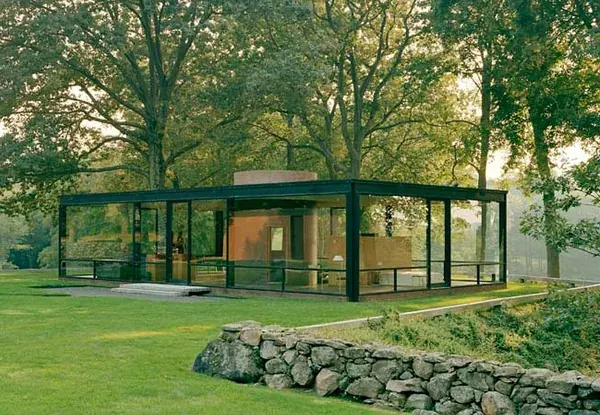
Glass House
The Glass House stands as a masterwork of mid-century modern architecture. Built in 1949 by architect Philip Johnson, this house shines in Fairfield County for its transparent walls and sleek design.
It's much more than just a home; it's an example of how cutting-edge materials can create a space that blends with the outdoors. The structure is famous for bringing the International Style into American homes.
Visitors to the Glass House can see how smart design makes insidhttps://commons.wikimedia.org/wiki/File:Relacion_con_la_quebrada.jpge and outside seem like one big space. Johnson played with clear shapes and clean lines to make something both simple and amazing.
This house tells us that less is often more in designing beautiful spaces where people love to live. Architects study the Glass House even today because it shows off minimalist architecture at its best.
Stahl House
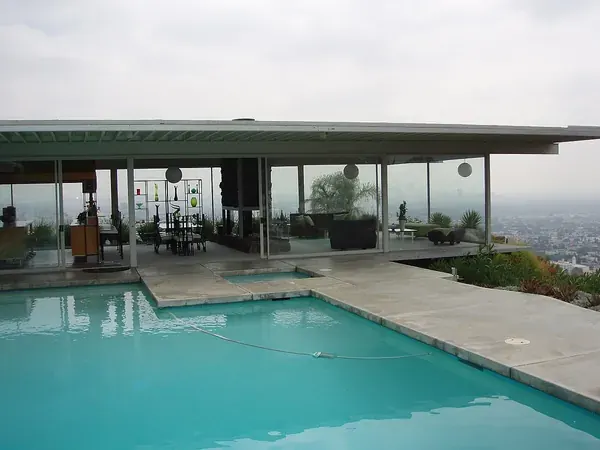
Stahl House stands as a shining example of mid-century modern design perched in the Hollywood Hills. It shows off what makes this style special: huge glass walls and clever overhanging parts that seem to float.
This house, also called Case Study House #22, is a sight to see. It mixes indoor spaces with the world outside in a way that's smart and beautiful.
People from all around come to see Stahl House because it's so famous for its looks and how it fits so well with Southern California architecture. Just like the Eames House, Stahl House has big windows that give a great view and make you feel like you're part of the landscape.
Next up, let’s take a look at another architectural gem: Kaufmann Desert House.
Kaufmann Desert House
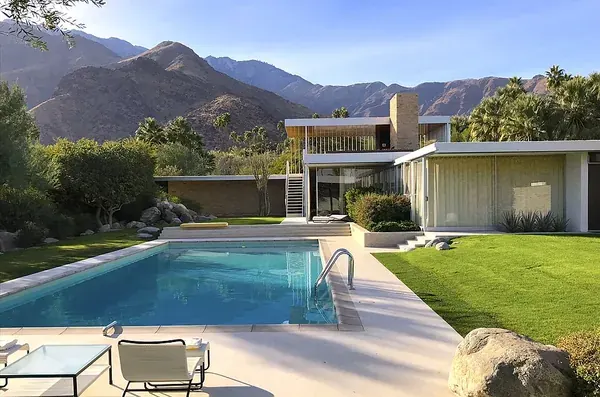
Moving from the iconic Stahl House, another key player in mid-century modern architecture is the Kaufmann Desert House. Built in 1946 by Richard Neutra, this house stands out as a masterpiece of modernist design.
Its open floor plan and clean lines define the minimalist aesthetic that is central to this architectural style. The Kaufmann Desert House showcases an innovative approach to postwar living with its seamless flow between indoors and outdoors.
In Palm Springs, the house has become a landmark for its classic use of glass, connecting people with their surroundings in new ways. Architects admire how Neutra’s design promotes harmony with nature through large windows and simple yet sleek forms. This home remains a vital study subject for anyone interested in contemporary architecture's roots and evolution over time.
Where to Find Mid-Century Modern Homes
Mid-Century Modern homes, with their distinctive aesthetic and historical significance, are nestled in enclaves known for celebrating this architectural style. Prospective homeowners and architecture enthusiasts can discover these gems through diligent online research or by engaging with specialized real estate agents who have a keen eye for such unique properties.
Palm Springs
Palm Springs shines as the heart of mid-century modern homes. This sunny city is where you can see many houses built in this cool style. Architects love it for its clean lines and fun vibe.
The town has lots of events, stores, and tours all about mid-century design.
You'll find streets lined with these awesome retro homes in Palm Springs. Famous builders once turned this desert into a place full of unique houses. Now, people come from everywhere to learn and enjoy this special kind of building style that makes Palm Springs famous.
If you're an architect looking for great examples of mid-century modern work, this city is the place to go!
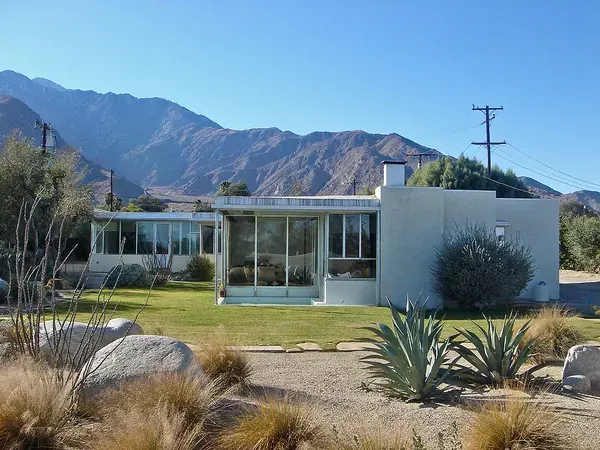
Online listings and specialized real estate agents are key resources for those seeking mid-century modern homes, known for their open spaces, integration with nature, and clean, geometric lines. These listings provide detailed visuals and insights into how this architectural style manifests in various homes.
Additionally, agents with expertise in mid-century properties offer invaluable knowledge about the unique characteristics and history of these post-war homes. They can highlight aspects like original retro decor and updates that maintain classic charm. Whether through online platforms or through the guidance of a knowledgeable realtor, enthusiasts of this style can explore both vintage and newly inspired examples of mid-century modern architecture, which continues to captivate with its blend of simplicity, functionality, and connection to the outdoors.
This timeless design, exemplified in places like Palm Springs, demonstrates how past designs remain relevant and admired today.

Grasshopper Complete Course
Give your architectural skills a boost with the Grasshopper Complete Course. Get over 50 hours of comprehensive Grasshopper training tailored for architects. Learn to generate and iterate designs faster. Click below for more information and streamline your workflows!