Are you looking for innovative ways to design and construct buildings that are cost-effective, eco-friendly, and flexible? Modular architecture might be the answer. In this article, we'll dive into its many advantages such as energy efficiency, customization potential, flexibility in design, and how it’s revolutionizing the construction industry.
Intrigued? Let’s explore together!
Key Takeaways
- Modular architecture is a smart design style that uses modules. It makes building faster, safer and helps to save money.
- This type of architecture has many benefits. It can be adjusted for each design, cuts waste, and is good for our planet.
- It can be used in different places like houses, offices, schools or hospitals. If planned well it can give great results.
- Examples of this build style are found all over the world. They show how flexible and useful modular designs can be.
What is Modular Architecture?
Modular Architecture is a special design style. It breaks down big things into smaller parts called modules. In software, these are code pieces that can work alone or with other parts.
Building houses or offices can also use this style. We call it modular construction. Workers build parts off-site in places easy to control. This makes building faster and safer. But we should know that some things still have to be done on site, like getting the ground ready for the building.
To further clarify, modular refers to a design where components are functionally de-coupled, meaning each functional element corresponds directly to a design component. This contrasts with integral architecture, where components are interlinked, creating a more complex relationship between the design's function and its elements.
Advantages and Disadvantages of Modular Architecture
Modular architecture offers multiple advantages such as improved construction efficiency, design flexibility and significant cost savings. This approach is also sustainable and eco-friendly.
However, it may limit design options due to the modular nature of its components.
Efficiency in construction
Modular architecture is a time saver. This method builds parts of a structure in a factory. Later, workers move these parts to the work site and put them together. This lessens on-site construction time.
Modular building designs also make smart use of materials. Precise amounts are used for each part made in the factory, cutting down waste. The careful process boosts quality control too.
Compared to old methods, modular building saves money and is more efficient.
Cost savings
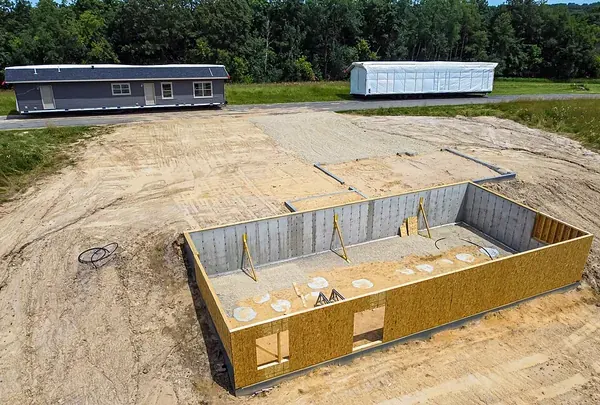
Modular architecture lowers costs in many ways. It's a smart way to save money on building projects. Factories make parts of the work. This is cheaper than doing all the work on-site, which is time and money saving too.
The use of shipping containers as portable buildings also brings down cost way more. In conclusion, this type of construction makes sense for those who want to cut expenses without cutting quality or style.
Sustainable and eco-friendly
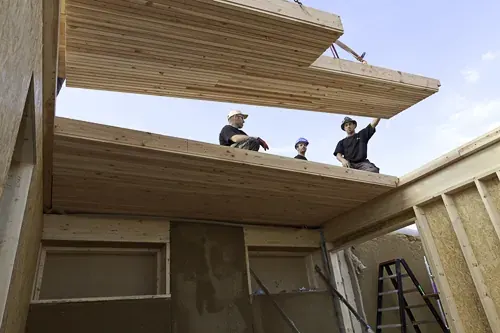
Modular architecture is sustainable and eco-friendly. It uses less material and makes less trash than old building ways. Also, it uses things more than once which is good for the Earth. Some buildings even get made from recycled material.
Limited design options
Modular architecture has its limits. One big limit is design options. You don't get much room to be creative or unique. All pieces need to fit together in a certain way.
This leads to another problem: not being able to customize as much as you want. A building may end up looking the same as others because all pieces are uniform. Also, there are only so many ways modules can be arranged for electronics in the building which limits adaptability too.
Careful planning is needed for modular construction. Architects must think hard about how each piece will work with the other ones. If this is done right, it can lead to a smooth process and great results.
Applications of Modular Architecture
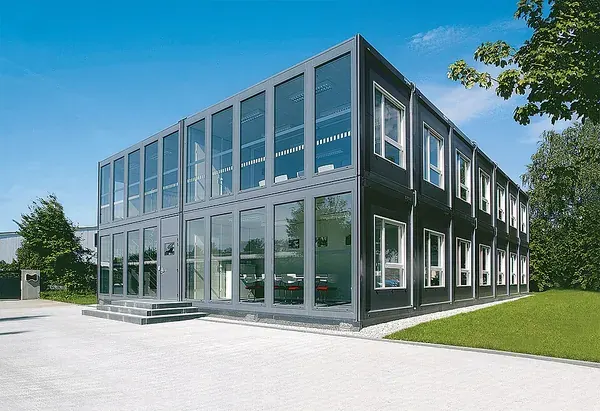
Modular architecture finds its applications in a variety of settings, including residential and commercial establishments. In areas hit by disaster, modular constructions serve as quick and efficient solutions for emergency housing. Educational and healthcare facilities also utilize this architectural style due to its cost-effective nature and expedient construction time.
Residential buildings
Modular architecture is great for homes. Many houses today come from this smart design type. It allows homes to grow as families do. New rooms or blocks can be added easily later on.
With patented tech, comfortable and useful spaces are made fast. Additionally, these prefabricated homes save time in building and cost less.
Commercial and industrial buildings
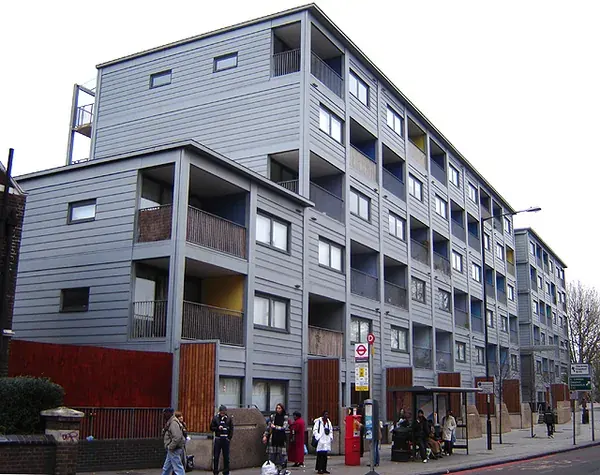
Modular architecture is a good fit for commercial and industrial buildings. These structures can be built in less time with factory-made parts. This method saves valuable time as work at the building site can go on while parts are made in the factory.
The design of these buildings can also be changed to meet specific needs. If there's any need in future, modules from these buildings can be used again somewhere else or given a new look for another use. This way, modular construction helps us keep our environment clean by reducing waste.
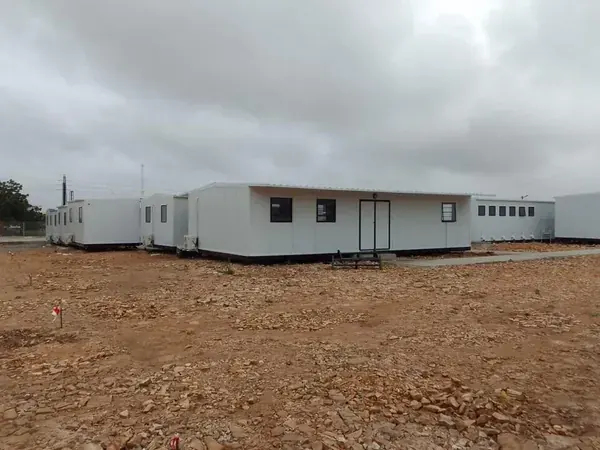
Disaster relief and emergency housing
Modular architecture is key for disaster relief and emergency housing. After a disaster, people need homes fast. Traditional building methods take too long so with modular buildings, we can get there quicker.
These units are flexible and cost-effective. Also, they are ready to go right after the disaster hits or while rebuilding takes place. This type of construction yields high-density housing with better air quality in cities after disasters.
Hence, architects using this method give critical help during bad times.

Education and healthcare facilities
Schools and hospitals use modular architecture a lot. They build rooms in a factory and then place them where they need to be. This is quick and cuts down costs. Schools can make more classrooms if they need them fast, and the design can accommodate to the environment.
Hospitals can do the same for medical areas, too. The rooms are made in a controlled place which makes sure good quality is kept up.
Apart from these emergency use cases, modular design can be used to inspire innovation and creativity, which is the case with the WilkinsonEyre's Dyson Institute modular student housing.

Examples of Innovative Modular Architecture
Innovative examples of modular architecture include the Nakagin Capsule Tower in Japan, offering compact living spaces; Nice Smart Factory in France showcasing adaptable industrial design; Makoko Floating School in Nigeria, engineered for flood-prone areas; Shanghai Nanqiao Academy demonstrating scalability in educational facilities and Adidas Lagos store, employing a box-like structure for retail space.
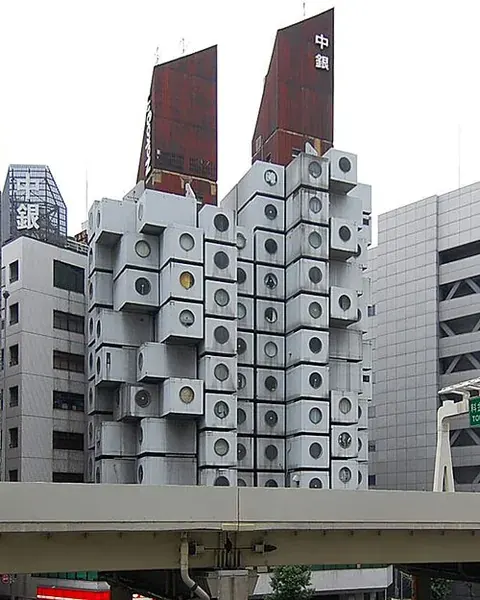
Nakagin Capsule Tower
The Nakagin Capsule Tower stands out in Tokyo's Ginza district. Built in 1972, Kisho Kurokawa designed it. The tower is known as the first mixed-use building worldwide made with a capsule design.
Each capsule works as its own living or work space. This unique style comes from the Metabolism movement in architecture. But sadly, it was torn down in 2023.
Revival Project
Zikzak Architects' Revival project is a transformative modular school design, crafted as a resilient response to the destruction wrought by the Ukraine War.
It features adaptable aluminum modules configured into functional educational spaces, demonstrating scalability and rapid deployability in post-conflict reconstruction.
Makoko Floating School
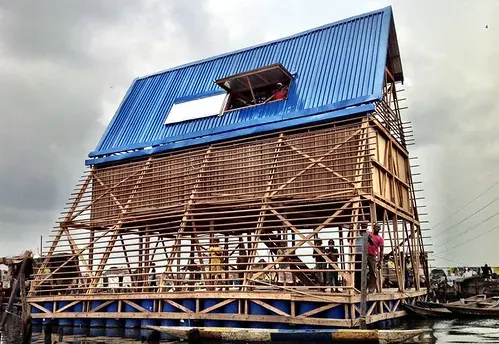
The Makoko Floating School is located in Nigeria. This school is a prototype that floats on water. It was made for the Makoko water community. It takes the shape of a big triangle, like an A-frame.
The second level of the school had classrooms for kids to learn in. Only local materials and resources were used to build the school. Unfortunately, the construction was torn down by weather conditions, but fortunately the school was relocated from the facility a few months earlier.
Similar concepts for schools are developing around the world.
The Tetris Apartments
The Tetris Apartments in Ljubljana, Slovenia, crafted by OFIS arhitekti, exemplify modular architecture's adaptability and efficient use of space. Designed with a focus on social housing and budget-friendly materials, the structure boasts flexible floor plans with non-structural inner walls and a façade reminiscent of the Tetris game, offering privacy and tranquility away from the busy adjacent highway.
Constructed in 2007, this project represents modern modular design in an urban setting.
The Alibaba Offices
The Alibaba Offices in Shanghai, envisioned by Foster + Partners showcase modular architecture's potential for creating dynamic workspaces. Emphasizing efficiency and sustainability, the project features off-site manufactured elements for the gridded structure.
The design prioritizes environmental responsiveness, user comfort, and collaborative spaces bathed in natural light, integrating terraces for panoramic views. This innovative workspace will reflect Alibaba's ethos and foster community engagement, embodying modern design principles.
Wuhan Hospital
The Wuhan Hospital in China shows how well modular architecture works. It was built fast during the COVID-19 crisis. The plan used steel to make small building parts off-site.
These parts are like big toy blocks that got put together at the site. This made building very quick and easy.
This project gave us new ideas for building fast for emergencies. The way this hospital was built will help shape future uses of modular architecture.

The Future of Modular Architecture
Looking forward, the future of modular architecture holds promising potential for growth and evolution, including a substantial impact on the architectural industry with innovative designs and sustainable practices.
The flexible design allows for easy growth and change. Buildings can get bigger or scale down as needs and requirements change. More rooms or blocks can be added over time.
This adaptability makes it a smart choice for companies shifting away from old ways of building. As tech gets better, modular construction does too. It meets the demands of our changing world in fresh and cost-effective ways.
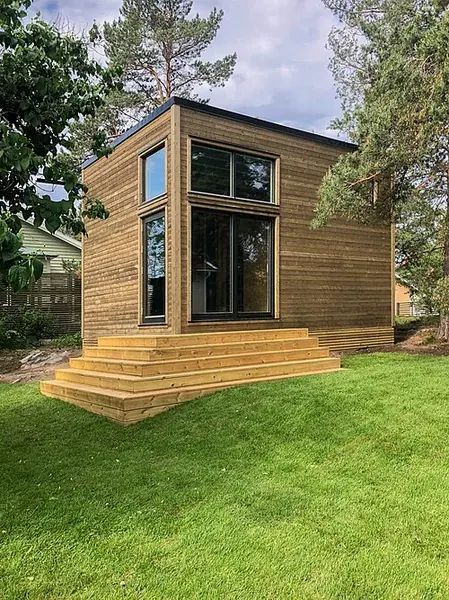
Architects can now plan designs that are easy to repeat. This means less waste and mistakes at the building site. Being able to scale designs up or down could be a big deal for large projects in the future. Plus, saving resources is good for our planet too! With all these changes, the role of an architect may look very different soon.
Innovation thrives in this field, forging a bright path forward.

Rhino for Architects Course
Give your architectural skillset a major boost with the Rhino for Architects Course. Get over 60 hours of focused training tailored specifically for architects. Master commands and techniques to model, render, and animate architectural visualizations at the highest level. Click below for more information and watch your designs come alive!