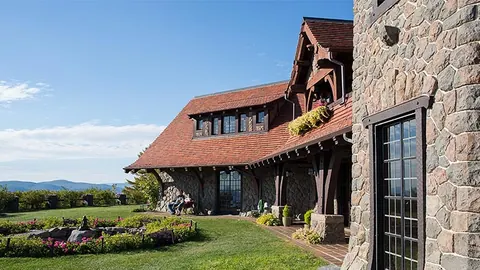
What does organic mean and what is organic architecture?
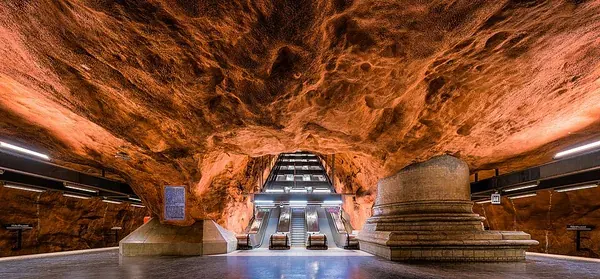
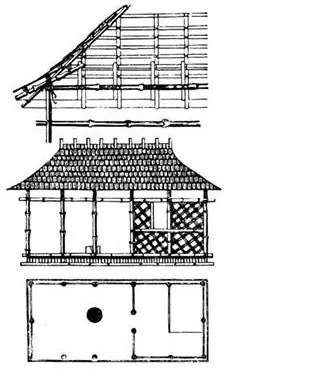
At first glance, ‘organic architecture’ may seem to be an oxymoron – can a man-made building be considered organic, with all its purposes to shield its inhabitants from the outside forces of nature?Whilst these two concepts of nature and building are not mutually exclusive today, German architect Gottfried Semper in his renowned ‘Four Elements of Architecture’ (1851) broke down architecture into four distinctive elements: the hearth, the roof, the enclosure and the mound.The essence of architecture framed the human against the backdrop of a dangerous natural environment:
“Throughout all phases of society the hearth formed that sacred focus around which took order and shape. It is the first and most important element of architecture. Around it were grouped the other three elements: the roof, the enclosure, and the mound. The protecting negations or defenders of the hearths flame against three hostile elements of nature.”
– The Four Elements of Architecture (1851), Gottfried Semper
‘Canons’ of Organic Architecture?
Although the term ‘organic architecture’ is attributed to the writings of the American architect of the late 19th century Frank Lloyd Wright, many buildings that preceded his work had embraced similar organic ideals.Let’s look at some of them.
Architectural Bionics: 19th Century
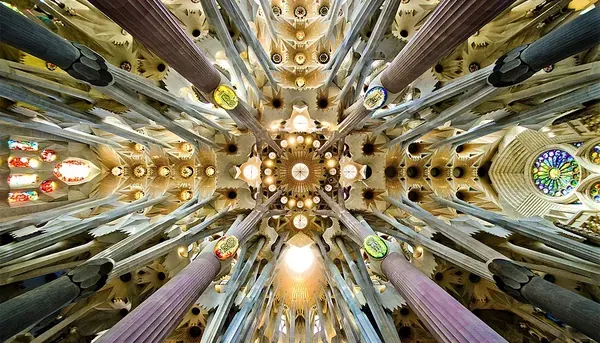
Antoni Gaudi’s work stands for key examples of nature-centric design that found its way into worldwide mainstream admiration and acceptance.His longest-building work is La Sagrada Familia of Barcelona, a basilica the construction of which began in 1882 and is scheduled to be finished within the next 10 years (as of the time of writing), bringing its total construction timespan to be more than 140 years.Although planned within an urban context, the building design is derived from many natural ordering systems and bio-mimetic geometries, such as the biological growth of tree branches and tendrils, reminiscent of the feeling of being surrounded by nature.
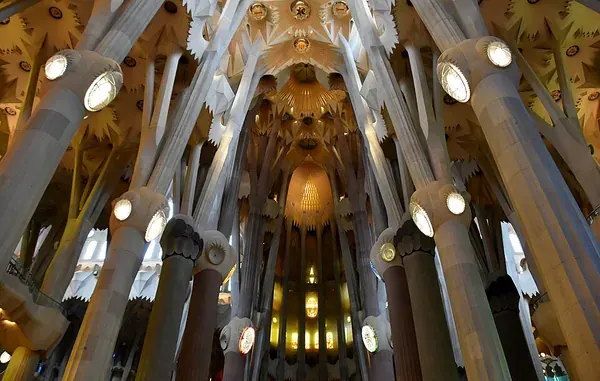
Gaudi’s usage of natural motifs was based on how nature had already revised and refined the structural logic of organisms and was, in that sense, an ideal template for architectural possibilities.The results of Antoni Gaudi’s visionary projects are beautifully-expressed curved surfaces that defy the conventions of architecture and distinguish him from his contemporaries, none of whom were quite the risk-takers as Gaudi was.It remains remarkable how he manifested nature’s complex structural logic long before the time of computer-assisted tools, cementing him as a true visionary of his time.
Architectural Bionics: 20th century and beyond
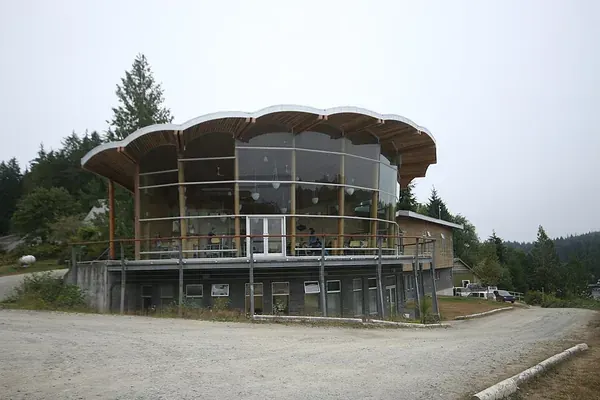
The Modern period did see a growing concern of the Anthropocenic environment, where issues such as global warming and climate change were aggravated by human behaviour and activities.Architectural bionics as a concept was used for harmonising the relationship between humans and nature to support a more sustainable environment.The early 21st century witnessed a rise in high-tech products expressed as architectural tectonics and aesthetics, including the usage of bionic structures inspired by animal spines, skulls, cells, and leaves.Compared to the first iterations of architectural bionics, this was a more elaborate exploration of structural efficiency of biological designs.
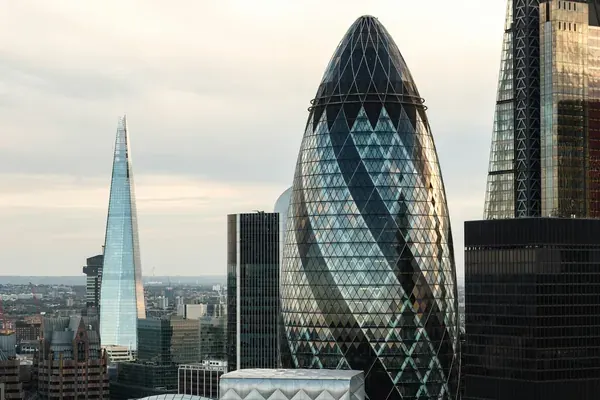
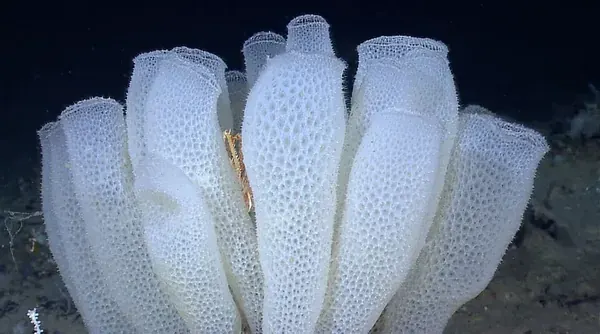
An iconic Modern example would be the 30 St Mary Axe built in 2003, better known as The Gherkin, which was inspired by a sea creature with a lattice-like exoskeleton and round shape that disperses forces from water currents efficiently.
The Metabolists
The Metabolist concept was first presented at the World Design Conference in Tokyo in 1960 by a group of Japanese architects, positing that the architect has a role to rethink the city as a living organism: one that segregated different life-cycle functions into different units that were capable of constant renewal and growth.The Metabolist ideas were inspired heavily by the biological metaphor of the growth of organic bodies: structure, hierarchy, transportation modes, metabolic processes of growth, repair, death.
The Metabolists likened the architectural life-cycle to an organism to rationalise how architecture was allowed to become more adaptable to city-level mobility challenges such as overcrowding and traffic congestion.While the Metabolism movement had a lot of momentum for a decade or two, the ideas had manifested themselves into only a few notable architectural works.
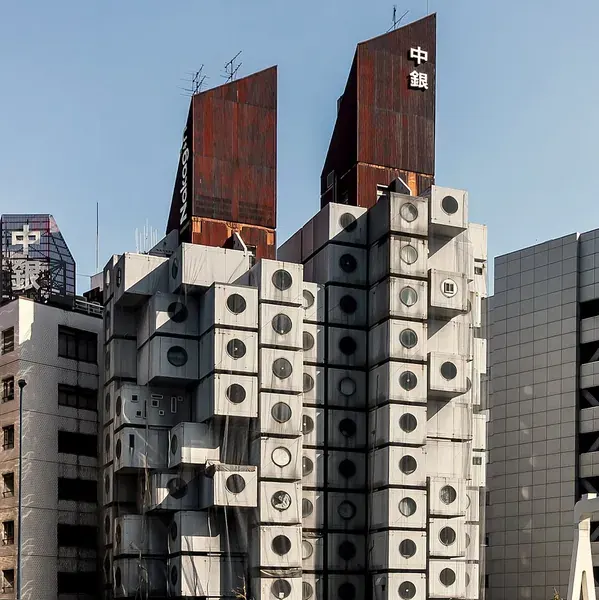
Archigram
Archigram was established by a group of architects in the UK at around the same time as the Metabolist movement, and the two are often compared side-by-side.Their concepts revolved around architectural ‘living modular units’ that could similarly be moved around rather than fixed to a specific location. These concepts were visualised on a large scale such as mega-structures that could move coherently, just like an actual organism.The Archigram’s theories had but a few realised projects or buildings, but are said to have inspired many key works of later architects.
Frank Lloyd Wright
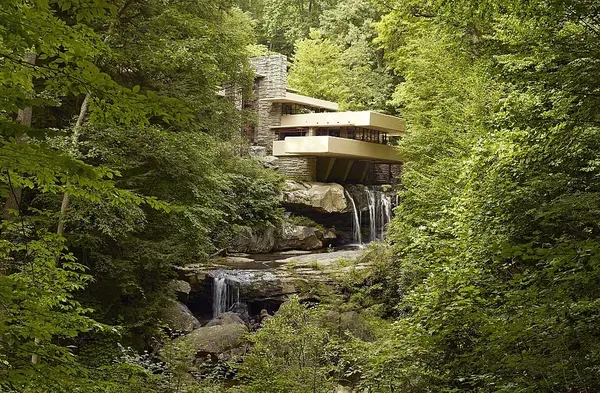
Wright developed his philosophy of organic architecture around the ordering systems and geometries of nature that guided the design processes for building planning, choice of material and even the interior placement of furniture in relation to each other.His most renowned piece of work was the Fallingwater, a residence designed to sit snugly atop a waterfall as if it belonged there, with considerations for the lush waterscape, soundscape, and continuity of natural space into private living quarters.Even with its Modernist look of rectilinear forms and dramatically cantilevered spaces, the Fallingwater set itself apart for paying due attention to its natural surroundings, and its attempt in harmonising the space between the human and the external forces.
Organic Architecture can be formally or functionally inspired by:
- Ordering systems of nature & mathematical properties (Fibonacci series, principles of rational free-form design found in nature)
- Biological metaphors (life-cycle, metabolic processes, structure, hierarchy)
- Environmental context (ecological preservation and sustainability, nature-centricity)
- Environmental economics and logistics (embodied energy of extraction, transport, manufacture, assembly, installation, disassembly, construction, decomposition, labour, resources)
The Most Impressive Organic Architecture Today
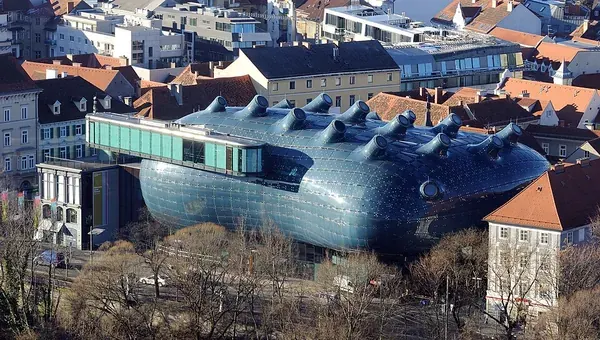
The Kunsthaus Graz was built in 2003 in Graz, Austria, featuring a striking blue alien-like juxtaposition to the idyllic nondescript rows of historic city-scape buildings surrounding it.Designed by Colin Fournier in partnership with Sir Peter Cook, one of the co-founders of Archigram, this provocative design used new technologies and building materials to achieve the free-flowing form.It definitely remains an iconic piece of ‘blobitecture’, architecture that emulates an amoeba-shaped form.
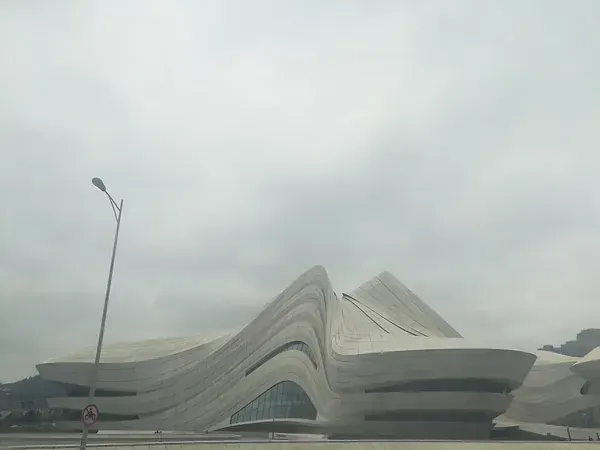
Is it possible to talk about organic architecture without mentioning the world-renowned architect Zaha Hadid?The late Hadid, who had an architectural penchant for blending fluid yet mathematically-precise forms, had already cemented a name for herself as one of the fore-runners of parametric free-flow designs using rigorous digital tools.Her expression of architectural envelope and façade was sculptural yet structural; intuitive yet logical; dramatic yet sensible.
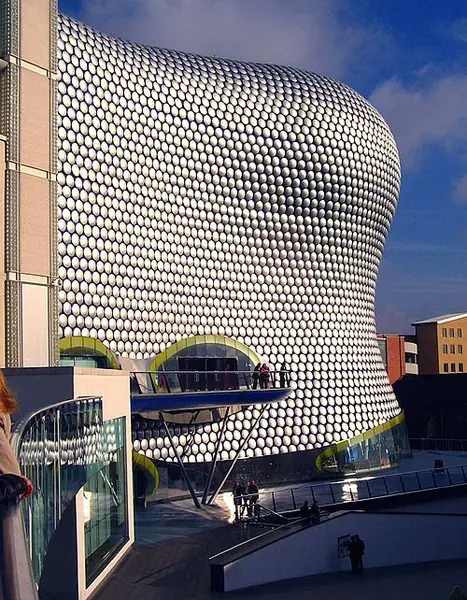
Future Systems, an aptly-named London-based architectural firm formed in 1979, experimented with numerous bionic shell designs that have become synonymous with the ‘blobitecture’ style of resembling amorphous and organic forms.The construction methods adopted are often inspired by the aerodynamics and fluid dynamics of performance-based vehicles such as aircrafts, race-cars and boats, leading to a design that is both organic and highly efficient.
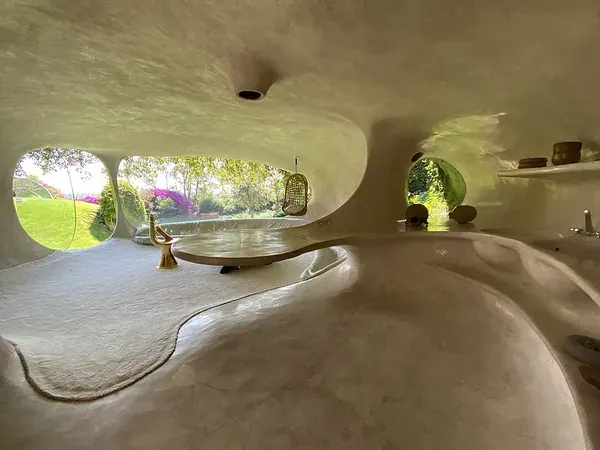
Free-form and nature-inspired architecture and homes continue to be in vogue today, with many up-and-coming architectural firms placing a heavy focus on an organic feel that uses natural textures, materials, and forms to create a playful character.With the growing emphasis placed on work-from-home environments, there is definitely an uptick in the demand for ‘natural aesthetics’ at home – whether through injecting organic elements of water, nature and materiality or landscaping to buffer between the different programmatic functions of a home environment.Organic architecture is no longer a luxury that only high-capital projects like bridges and museums can afford – it is finding its way into the heart and homes of people, where nature can be more intimately experienced.Such organic home projects have been embodied by well-known architects including Javier Senosiain, Kendrick Bangs Kellogg and Shirish Beri and Associates – all with a different spin on organic elements which nevertheless fulfill the need for the integration of nature and living spaces.
Evolution of Biological Design and its connection to Organic Architecture
As major cities become ever more saturated with an increasing number of rural-to-urban migrants, nature-centric design is seen as something highly desirable in large-scale city planning and even in the interior and furniture design; a way to detach from built-up environment of concrete, steel and glass.Fortunately, the bio-centric expression of organic architecture has indeed found its way in incorporating the high-tech and innovative environment of modern city living with the innate human desire to experience nature viscerally, allowing for exciting city-scape experiences and buildings to come.If this piece was interesting to you, make sure to check our our article on Futuristic Architecture and what it will mean for us as architects.
Rhino for Architects Course
Give your architectural skillset a major boost with the Rhino for Architects Course. Get over 60 hours of focused training tailored specifically for architects. Master commands and techniques to model, render, and animate architectural visualizations at the highest level. Click below for more information and watch your designs come alive!