Are you wondering about the changing landscape of architecture with the advent of robotics? It may astonish you to know that robotic applications are already transforming the way architects construct and design buildings.
This informative article will delve into the innovative ways robotics is being integrated into architecture, revolutionizing traditional methods, and reshaping architectural practices for better efficiency and sustainability.
Ready to explore? Let's dive in!
Key Takeaways
- Robots are changing architecture. They help design and build in new ways.
- Robots save time, cut costs, and reduce waste when they build.
- Costs can be high and they take out the human touch from designs.
- Examples of robot work are found at Landesgartenschau Exhibition Hall and DFAB House.
- The future of architecture will use a lot of robot help.
What is Robotics in Architecture?
Robotics in architecture refers to the integration and application of automated machines - or robots - into architectural design processes and construction, fundamentally transforming how architects create and execute their projects.
Definition and scope
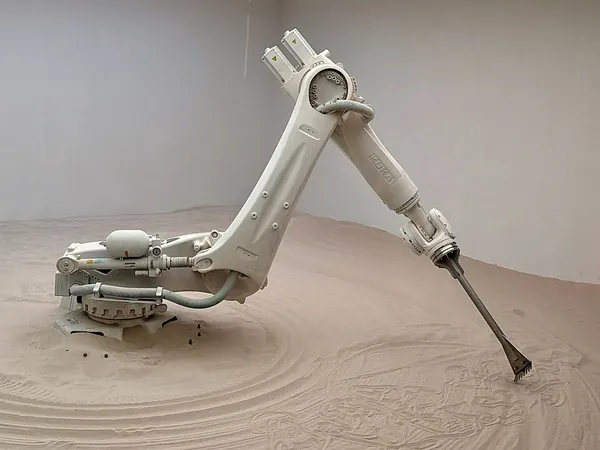
Robotics in architecture is a growing field. It uses machines to design, build, and research. These robots can bring new ideas to how we make buildings. With computer logic and digital skills, they're changing the game for architects.
They help boost work, cut costs and waste less. Robots also made the first large building at Stuttgart University's Landesgartenschau show.
Evolution of robotics in architecture
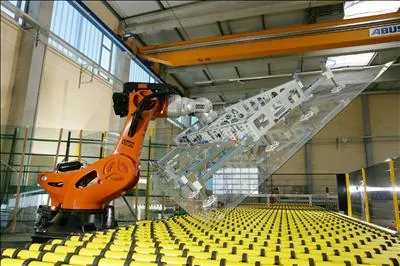
Robots have been part of our lives for a while now. Their use in architecture is not new either. In the early days, they were used for simple tasks like bricklaying. After that, people started using them to build big structures like bridges and buildings.
The Landesgartenschau exhibition hall at the University of Stuttgart stands as one great example of robots at work in a construction site. Over time, robotics engineering and digitalization helped create amazing building designs and systems with high precision levels.
Nowadays, we often find this smart tech tool hand in hand with architects during nearly each project phase such as planning, designing and even constructing complex shapes never seen before! Always on the move, these steel helpers keep pushing architectural boundaries to new heights every day!
Advantages and Disadvantages
This section explores the benefits and potential drawbacks of integrating robotics in architecture, from increased efficiency and precision to challenges with technology adaptation and costs.
Advantages
Robotics bring many perks to the field of architecture.
Disadvantages
Using robots in architecture has some downsides. One big issue is the cost. Buying robots and the tech they need can be very high. Smaller firms might find it hard to pay for these.
Current Trends Influenced by Robotics
The advent of robotics has sparked fresh innovations in architecture, transforming traditional practices to modern marvels. These trends signal a vital shift towards the future where robotic assistance becomes normative, driving the architectural domain to uncharted territories of innovation and creativity.
From Automation to Collaboration
Automation is no longer a distant concept as robots collaborate with humans in the creation process, redefining roles and methods.
This is a big move from when robots did tasks alone. It's called "collaboration". When robots and humans work together, they can do more than either could do alone.
They create buildings faster and with less waste. Also, they make it safer for workers on site because robots can take over risky jobs. The goal is to have the best of both worlds: the speed and accuracy of automation, plus the skill and creativity of human builders.
Robotic Fabrication
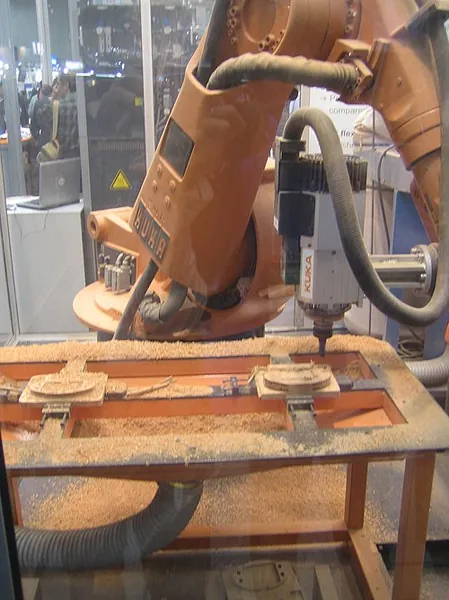
Robotic fabrication now shapes designs into reality with precision and efficiency previously unimaginable. This process uses robots to make parts or whole buildings. These robots can cut, drill and shape materials with great care and speed.
They can do hard jobs without getting tired or making mistakes. Robots also help us use less material and save money. One famous example of their use is at the Landesgartenschau exhibition hall at the University of Stuttgart.
There, robots created a stunning building that shows what they are capable of doing for us in our field.
Educational Shifts
This transformative technology also instigates educational shifts as architects are learning new skills to integrate AI-driven design processes adeptly. Schools are changing the way they teach architects and the new teaching methods make use of digital tools and computer logic. This helps students understand how robots can create better buildings.
By focusing on robot-based building plans, students learn to cut costs, save time, and reduce waste in construction projects.
Application of Robotics in Architecture
This section delves into numerous practical uses of robotics in architecture, showcasing revolutionary projects like the Robot Science Museum, Landesgartenschau Exhibition Hall, ICD/ITKE Research Pavilion, DFAB House, and The MX3D Bridge, all the way to the Moon and Olympus project.
Robot Science Museum
The Robot Science Museum in Seoul, South Korea, will be built using robotic technology and drones. This is a powerful example of robotics in architecture.
This project helps us see the future of building design and construction. The use of robots offers new ways to build and make things safer on-site. You will find unique designs, thanks to robot science here!
ICD Research Pavilion 2011
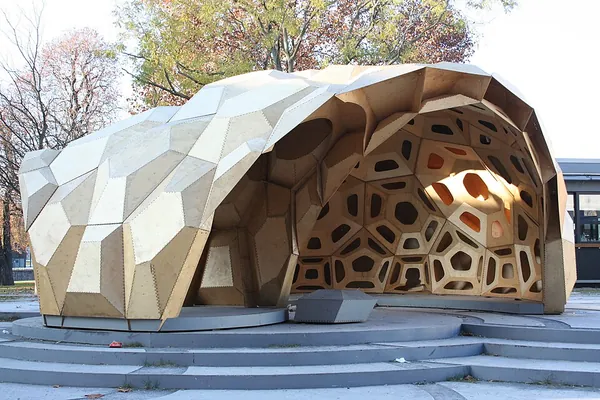
Developed at the University of Stuttgart, this pioneering structure exemplifies how robotic fabrication bridges the gap between complex computational design and physical reality.
Inspired by the biological principles of the sand dollar’s skeletal morphology, the pavilion utilizes thin plywood sheets joined by intricate, custom-milled finger joints. By employing a high-precision 7-axis robotic arm, the project achieved a level of geometric complexity and structural efficiency impossible through traditional manual labor.
This automated manufacturing process allows for the creation of lightweight, high-performance timber shells with minimal material waste. For architects and engineers, the ICD Research Pavilion 2011 serves as a definitive case study in biomimetic design and robotic timber construction.
ICD/ITKE Research Pavilion 2016-17
The ICD/ITKE Research Pavilion stands as a symbol of how robots can help in building. This design came from the Institute for Computational Design and Construction and the Institute of Building Structures and Structural Design at Stuttgart University.
They used ideas from a water spider's nest to build this. It shows new ways to use robots in making buildings that waste less, cost less, and work better. The pavilion also makes good use of robotic fabric-making skills.
This building gives us useful clues about what could be next for robots in architecture.

DFAB House
DFAB House is a great example of robotics in architecture. Located in Dübendorf, Switzerland, it shows how robots can help build houses that look cool and work well. This house was not made the usual way. Instead, it used high-tech robots and computers to create very special shapes and designs.
The builders didn't use any bricks or wooden boards. Robots did all the hard work! They made sure every curve, line, and corner was perfect. The DFAB House proves that robot technology can change building for good.
The MX3D Bridge
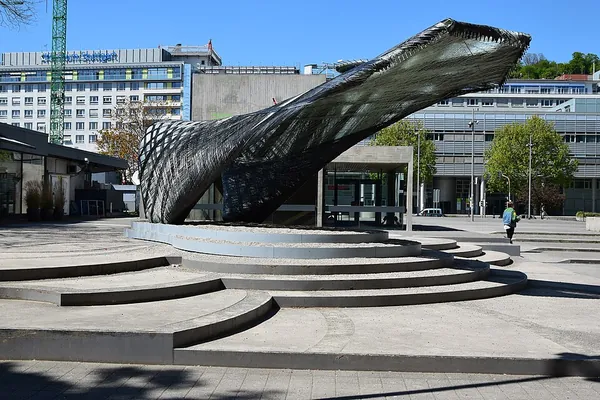
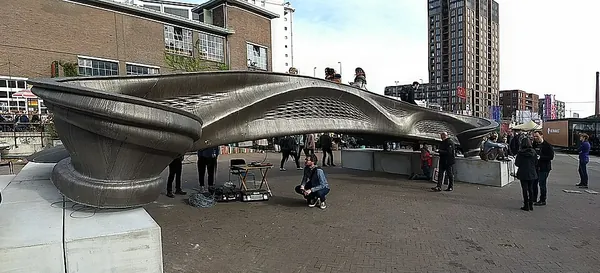
The MX3D Bridge is a bridge in Amsterdam, The Netherlands, made fully by robotic 3D printing tech. This shows the big changes robots can bring to architecture. The use of robots helps architects with their designs.
They help make things more exact and can work faster than humans sometimes!
Olympus project
The Olympus project, a collaboration between BIG and NASA is all about using robots in a new way. The idea is to create a system for building and construction on the Moon, a.k.a.space architecture. This space-based building system uses robotics engineering and artificial intelligence.
Within this project, robots play roles in design, construction, and research. The goal is to come up with fresh ways of making buildings with the help of robotic systems.
The Future
Robots will play a big part in design and building work. Automated construction could become the norm. Robots with tools can make complex shapes with ease, which brings more creative freedom for architects.
Besides shaping and size, robots will help us save materials, too. These machines are very good at using just what they need so there is less waste. Also, they can do jobs that are not safe for workers.
And it doesn't stop there! Robots are learning from each other now as well. They share plans and big data to get tasks done faster and smoother than before.
We also see green benefits coming up soon. Robots use tech like 3D printing to cut down on resources needed for projects without cutting corners on quality or safety.
Taken all together, we can say the future of architecture will be shaped by robot help.

Rhino for Architects Course
Give your architectural skillset a major boost with the Rhino for Architects Course. Get over 60 hours of focused training tailored specifically for architects. Master commands and techniques to model, render, and animate architectural visualizations at the highest level. Click below for more information and watch your designs come alive!