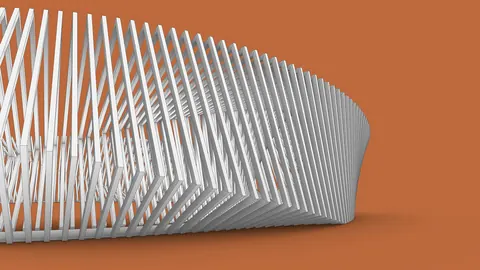
When it comes to advanced architectural modeling in Rhino, Grasshopper has revolutionized the process. One of its captivating applications is the emulation of structures inspired by world-renowned architects, like the Calatrava Train Station.
Introduction to Calatrava Train Station
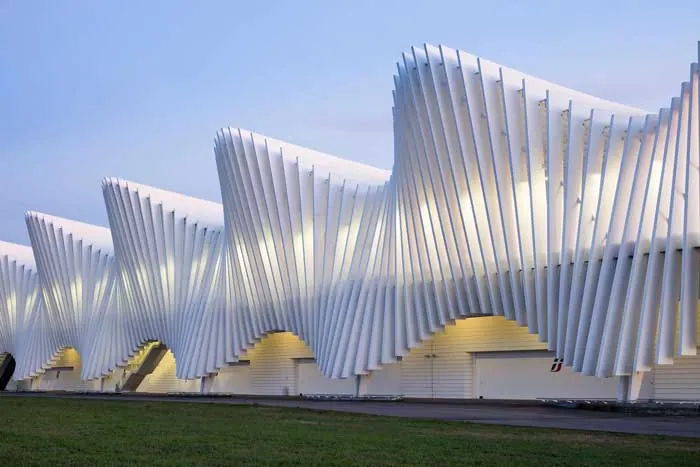
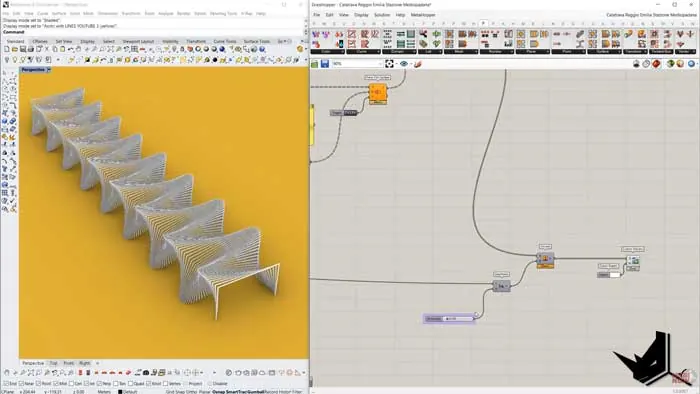
Santiago Calatrava's project Regio Emilia Train Station, popularly referred to as the Calatrava Train Station, is an architectural marvel. This project's signature is its intricate use of sine curves. Through this guide, we aim to replicate the unique architectural elements of this structure using Grasshopper.
Getting Started
Core Concept: Understanding Sine Curves
The Calatrava Train Station’s design is fundamentally rooted in sine curves. In our model, this curve dictates how the structure's frames are generated. By adjusting the parameters of these curves, we can manipulate the shape and the architectural features of the station.
- Generating the Sine Curve: Start by creating a line and evaluating the curve. It's essential to parametrize your line to ensure the components can work with normalized values. Next, depending on the frames you desire, adjust the range.
- Manipulating Curve Amplitude: The amplitude of your sine curve determines the height of the curve peaks. By multiplying your sine values, you can achieve higher or lower amplitudes, adding another dimension of customization to your model.
Moving & Rotating the Lines
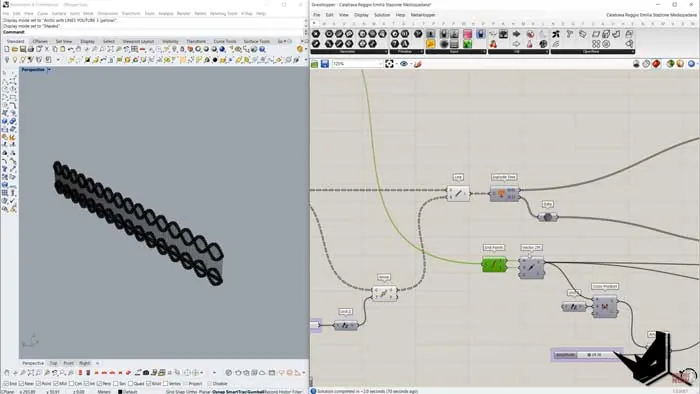
Using the "Move" component and vector, you can shift points, creating two sets of lines. These lines can then be rotated about their center, resembling the actual orientation of the station’s frames.
Constructing the Frame
With both sets of lines in place, you can:
- Locate the endpoints.
- Connect these endpoints to form the top section of the frame.
- Combine the three lines to form the frame’s silhouette.
Building the Surface
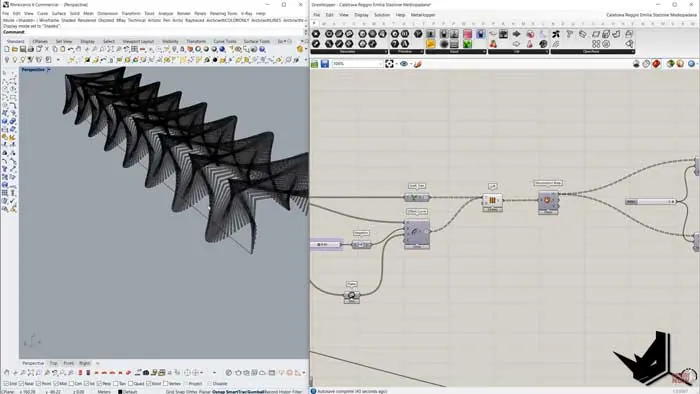
Loft the two curves to get the frame surface. Remember, the original Calatrava design has a horizontal bottom. To replicate this:
- Deconstruct the generated surfaces.
- Extract the relevant surfaces.
- Deconstruct them again to get the essential points for horizontal alignment.
Finalizing the Calatrava Train Station Model
To wrap things up:
- Use the call index to remove unnecessary components.
- Organize the geometry.
- Render your final model.
Conclusion
With Grasshopper's capabilities and your creativity, replicating sophisticated designs like the Calatrava Train Station is within reach. By understanding sine curves and mastering manipulation, there's no design too complex to recreate.
Remember, architecture is not just about buildings. It's about creating timeless pieces that inspire and stand out.
For a more structured learning process, consider checking out our online courses.

Grasshopper Complete Course
Give your architectural skills a boost with the Grasshopper Complete Course. Get over 50 hours of comprehensive Grasshopper training tailored for architects. Learn to generate and iterate designs faster. Click below for more information and streamline your workflows!

![Rhino for Architects Tutorials [Crown Hall with TIPS and TRICKS]](/images/blog/featured/variants/crown-hall-modeling--related-card.webp?cb=seo-meta-20260227-164423)