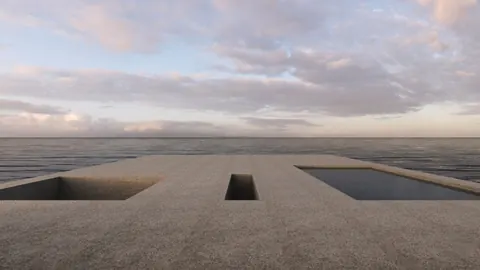
Rhino is a powerful 3D modeling software used widely in architecture and design. With its advanced tools, you can create highly detailed and realistic architectural models. In this tutorial, we will delve into modeling the Solo Houses designed by architects Makoto Takei and Chie Nabeshima using Rhino.
Overview of the Solo Houses Project
The Solo Houses is a conceptual architectural project located in the mountainous terrain of Matarrana, Eastern Spain. Designed by TNA Architects, these isolated houses aim to merge indoor and outdoor living spaces. The striking pyramidal forms act as observatories to take in the dramatic views of the surroundings.
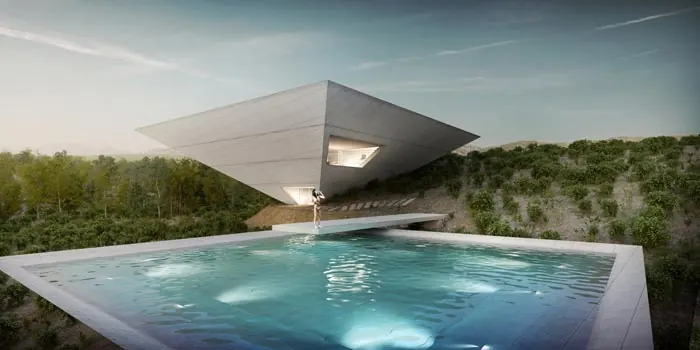
Modeling Solo Houses in Rhino lets us understand the unique geometry and embedded landscapes of this design. With some basic techniques, we can recreate the tranquil scene of these houses nestled within the mountains.
Setting Up the Rhino File
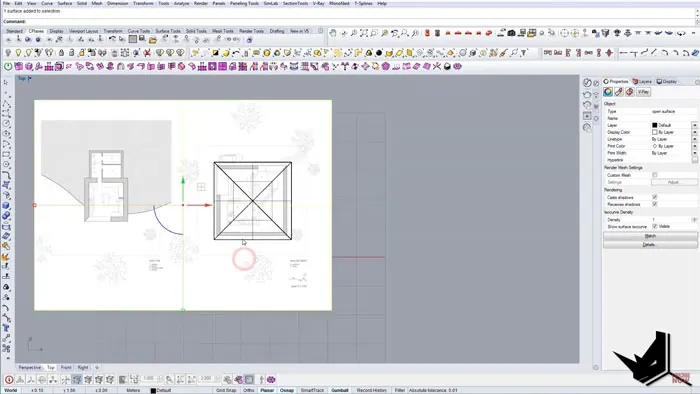
The first step in modeling Solo Houses is to import reference images of the design into Rhino. This gives us the overall perspective and helps plan the modeling approach.
Next, we will draw guidelines to mark the position and orientation of the pyramidal units. The Gumball tool aligns our axes to match the Rhino viewport.
With the images as a reference, we can create and scale a basic pyramid to form the shell of the houses. We use the command to make a 4-sided solid pyramid.
Shaping the Terrain
Now comes the terrain that embeds the structures. We will extrude a curved line to get the overall terrain form.
Importing the site plan helps scale and place the stair landings on the slope. We draw the individual landings and use Orient to align them to the incline.
The main terrain surface is made by converting the guideline to T-Splines. This allows us to sculpt smooth, organic shapes fitting the context.
Cutting Out Spaces
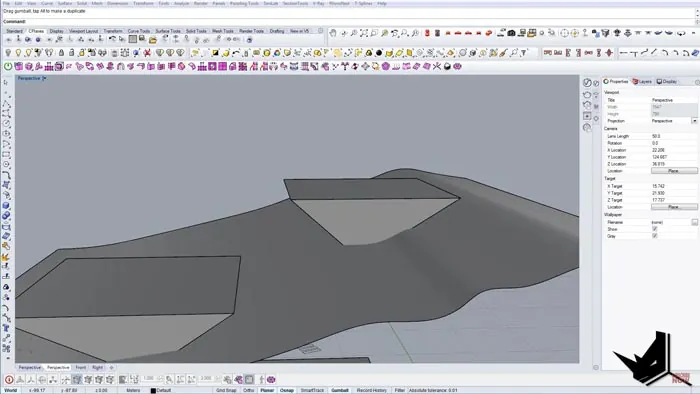
Next, we make voids in the pyramid to create inhabitable spaces within.
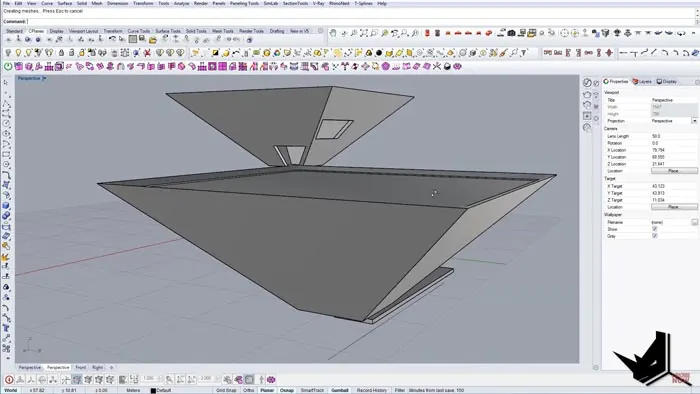
Using Offset Surface, we create a smaller version inside and Boolean Difference the solids. This results in a hollow shell with walls.
The entrance and pool terrace are also cut out using Offset Edges and Boolean operations. We get the openings in precise positions.
The pool is made separately and joined to the main terrain. Its surface is raised to represent water and will get a material.
Adding Stairs
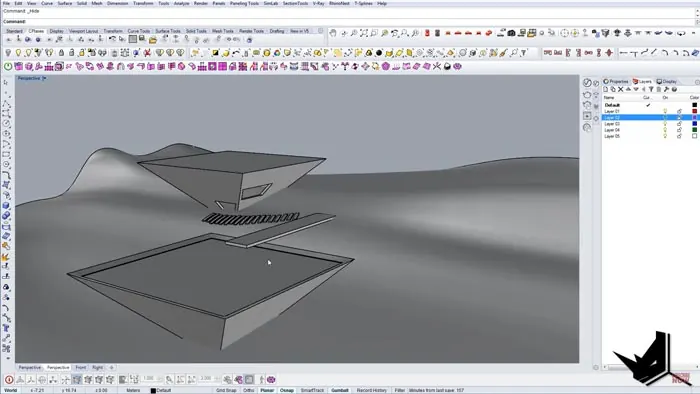
With the terrain shaped, we project and place the stair outlines on it.
After splitting the surface along these lines, we can extrude them to stand out as 3D stairs.
The scene is coming together as we add these final details!
Completing the Architectural Model
Using Rhino's powerful modeling tools, we could recreate the conceptual forms of Solo Houses. The steps cover:
- Importing references
- Building initial solids
- Sculpting organic terrain
- Cutting voids and openings
- Adding stair details
With rendering, the scene will look very close to the original vision! Rhino makes modeling complex landscapes and architecture intuitive. The Solo Houses showcase the software's capabilities for designers.
Let me know if you would like to see more architectural modeling tutorials in Rhino and other programs. Feel free to share this post if you found it useful.
Rhino for Architects Course
Give your architectural skillset a major boost with the Rhino for Architects Course. Get over 60 hours of focused training tailored specifically for architects. Master commands and techniques to model, render, and animate architectural visualizations at the highest level. Click below for more information and watch your designs come alive!