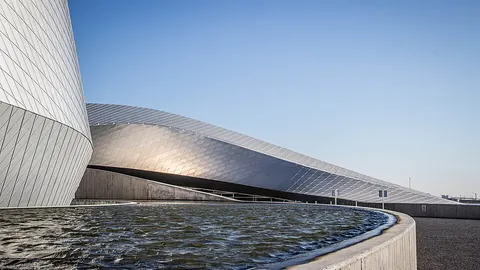
In the world of architecture, creating spaces that inspire and endure is no small feat. Schmidt Hammer Lassen Architects stands as a beacon of design excellence with over three decades in the field.
This article will explore their approach to crafting iconic buildings that blend form with functionsustainably. Dive into a legacy where innovation meets elegance.
Key Takeaways
- Schmidt Hammer Lassen Architects started in Denmark in 1986 and now works worldwide.
- They use Nordic design to make buildings that are simple, full of light, and bring people together.
- The architects focus on making buildings that help our planet by using eco-friendly materials and saving energy.
- Their projects include the Shenzhen Waste-to-Energy Plant and the Halifax Central Library.
- They came up with HeartFelt ceiling system which wins awards for its environmental friendliness.
Company Profile
Schmidt Hammer Lassen Architects, born out of Denmark's rich design tradition, has expanded its visionary expertise across borders. Their journey from a small Danish studio to an international architectural heavyweight reflects a relentless pursuit of creating impactful spaces.
Beginnings and expansion
Back in 1986, three architects had a big idea. They created Schmidt Hammer Lassen Architects in Aarhus, Denmark. Their dream was to make buildings that wow people and last long. The team grew, filled with smart and creative folks who shared the same passion for great design.
Now, over 30 years later, the firm is famous far beyond Scandinavia.
The practice got even bigger with offices popping up in Copenhagen, London, Shanghai, and Singapore. With each new place came more chances to share their style of building around the world.

Architectural Style and Characteristics
Imbued with a distinctly Nordic essence, Schmidt Hammer Lassen’s designs elevate functionality through innovative and sustainable practices—a testament to architectural elegance that beckons enthusiasts to delve deeper into their harmonious blend of light, space, and community integration.
Scandinavian influence
Schmidt Hammer Lassen Architects draw deeply from the well of Scandinavian design. Their work shines with a love for light, open spaces, and simple beauty - key parts of Nordic architectural style, also seen in the works of Snøhetta.
Buildings they create are more than just structures; they are places where democracy and welfare come to life. This means their designs often focus on bringing people together and making everyone feel welcome.
The firm makes sure that every project reflects these values. They use materials and shapes that feel natural in the cold North European climate. Their buildings tell stories about the past, yet always look forward to a better future.
The team works hard to respect nature while building spaces that people will enjoy using for years to come. Their architecture is not only about looking good but also doing good—for people and our planet.

Innovative and sustainable design
Schmidt Hammer Lassen Architects bring buildings to life using eco-friendly materials and smart designs. They make sure each space feels open, full of light, and built for people's needs.
Their work shows a love for Scandinavian style that values simple beauty and helps the environment.
These architects blend their creations into cities in a smooth way. They pick sustainable materials like wood and give lots of thought to saving energy. Plants with big windows let sunshine pour in, making power bills lower and indoor spaces cheerier.
Every building they create is meant to last long into the future.
Using daylight architecture, Schmidt Hammer Lassen makes places where folks enjoy spending time. From libraries that invite you to read all day to courthouses that stand strong for justice – they craft modern spots that inspire everyone who walks through the doors.
Now, let's take a peek at some recent projects.
Recent Projects
Delving into Schmidt Hammer Lassen's recent endeavors unveils a tapestry of architectural innovation—discover how they’re transforming cityscapes and challenging conventional design boundaries.
Shanghai Library East
Redefining the cultural landscape of China, the Shanghai Library East stands as a monumental achievement by Schmidt Hammer Lassen Architects.
Located amidst the lush greenery of the Pudong District’s Century Park, this monolithic structure is one of the largest new libraries in the world. The building’s unique form pays homage to Chinese heritage, inspired by the geometry of a Taihu stone, or ancient scholar’s rock.
It appears to float above the tree canopy, featuring a façade of translucent glass and horizontal louvers that optimize natural light. Inside, visitors are greeted by a breathtaking central atrium lined with bamboo, oak, and terrazzo, connecting seven levels of expansive reading rooms and exhibition spaces.
More than just a repository for books, Shanghai Library East is a modern civic center promoting art, culture, and technology.

Dahlerup's Tower
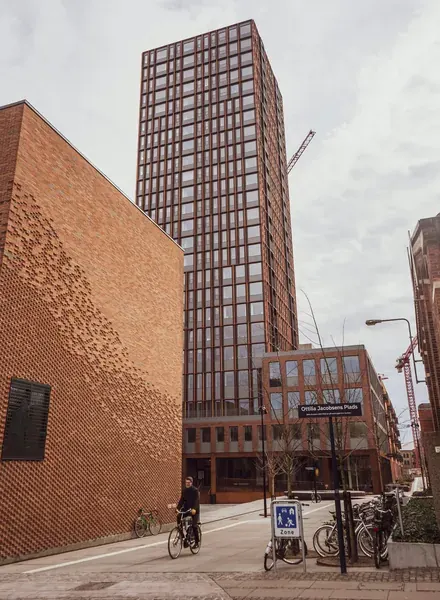
Dahlerup's Tower, a remarkable project by Schmidt Hammer Lassen Architects in collaboration with Perkins & Will, is a testament to their innovative approach in high-rise residential design. Located in the dynamic Carlsberg City District in Copenhagen, this tower stands as a unique fusion of historical respect and modern living.
The design harmoniously blends with the area's rich industrial heritage, yet offers a contemporary twist that speaks to modern urbanites. With mixed-use functions to support vibrant urban life, Dahlerup's Tower is not just a residential building; it's an urban landmark promoting community and sustainability.
The tower's striking appearance, characterized by its distinct façade and elegant proportions, highlights Schmidt Hammer Lassen's commitment to design excellence and urban transformation. Dahlerup's Tower is a prime example of how high-rise architecture can contribute positively to the city's skyline and its community's quality of life.
Ningbo New Central Library
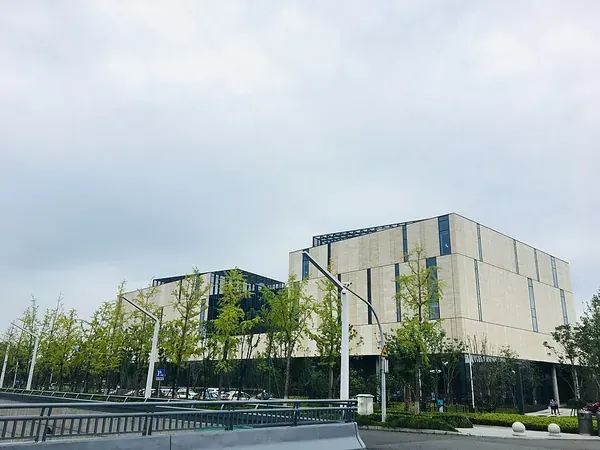
The Ningbo New Central Library serves as a vital cultural hub in the heart of Ningbo, China. Situated on the edge of an ecological wetland, this architectural masterpiece bridges the gap between the bustling urban environment and the serenity of nature.
The design is anchored by an "open marketplace" concept, featuring a permeable ground floor that flows seamlessly into the surrounding landscape. A soaring central atrium acts as a vertical lung for the building, maximizing natural light and ventilation while connecting the library’s varied functions.
The structure is wrapped in a minimalist façade of vertical louvers, which offer sustainable shading and frame views of the water. Housing over two million books, the Ningbo Library is more than a repository for knowledge; it is a dynamic community center.
Notable Projects
Delving into the highlight reel of Schmidt Hammer Lassen Architects, one discovers a tapestry of masterpieces that have not only won accolades but also reshaped skylines and cultural narratives across the globe.
Their portfolio spans from mesmerizing libraries to court buildings, each etching its own unique imprint on the fabric of modern architecture—defining spaces where functionality meets artistic innovation.
Sir Duncan Rice Library, University of Aberdeen
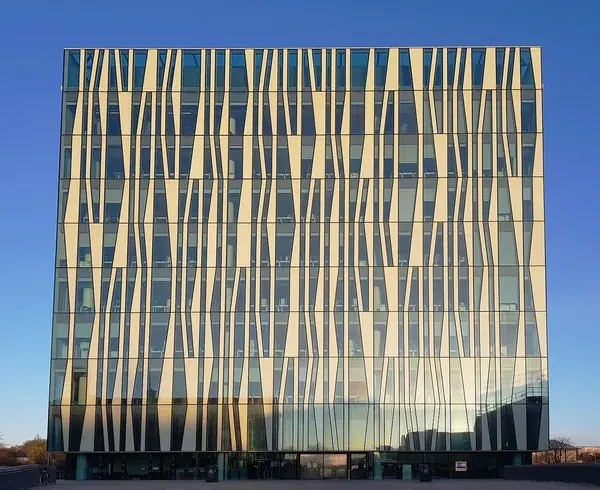
The Sir Duncan Rice Library at the University of Aberdeen is a striking example of contemporary academic architecture. Opened in 2012, this iconic building is more than just a library; it's a nexus of learning, offering a stimulating environment for research and study.
Its distinctive cubic design, enveloped in an irregular pattern of insulated glass panels, not only creates a visually stunning exterior but also floods the interior with natural light, enhancing the ambiance for readers. This library, named after a former university principal, exemplifies sustainable architecture with its energy-efficient features. It represents a bold statement in educational design, blending functionality with an inspiring aesthetic, thereby redefining the traditional concept of a university library.
As part of over 20 iconic projects by these architects, including the International Criminal Court, this edifice in Aberdeen also highlights their dedication to creating structures that blend seamlessly into their purpose and community.
Scania and Blekinge Court of Appeal, Malmö
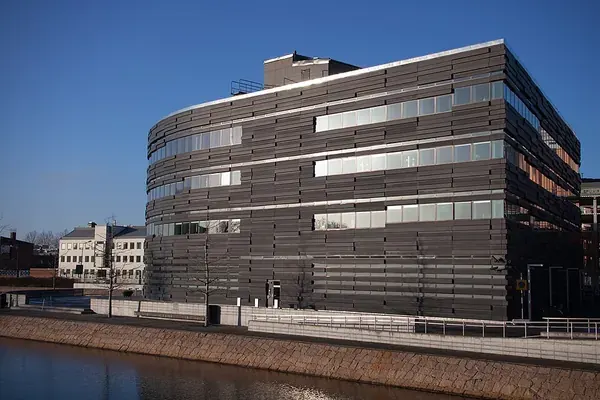
The Scania and Blekinge Court of Appeal in Malmö is a paragon of judicial architecture, merging solemnity with transparency.
This building exemplifies how a legal institution can be both authoritative and approachable. Its modernist design, characterized by clean lines and an emphasis on natural light, creates an environment of clarity and calm, befitting the serious nature of court proceedings.
The thoughtful use of glass not only symbolizes the transparency of the justice system but also connects the interior spaces with the surrounding urban landscape. This project demonstrates the firm's ability to encapsulate the ethos of a public institution in its architecture, making the Court of Appeal a landmark building in Malmö.
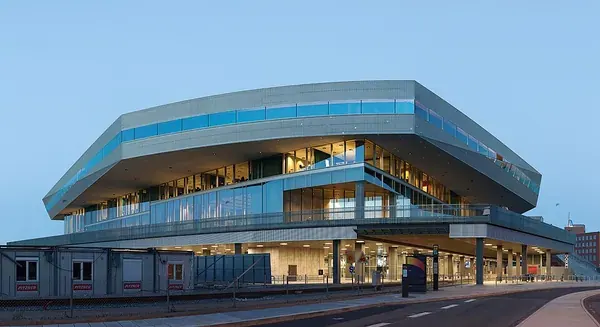
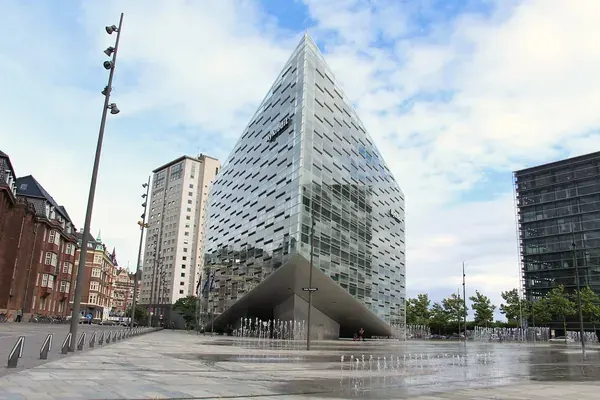
The Crystal, Copenhagen
The Crystal in Copenhagen is a paradigm of sustainable and innovative commercial architecture. Situated on the waterfront, it embodies a transparent and open design philosophy.
The building's angular, crystalline form not only gives it a striking appearance but also maximizes natural light and views, reducing energy consumption. Its floating appearance, achieved by a single-point support structure, adds to its visual lightness and elegance.
The Crystal is a benchmark in environmentally conscious design, featuring green roofs and state-of-the-art energy systems. It represents a harmonious blend of aesthetic appeal, functional efficiency, and ecological responsibility, making it a standout addition to Copenhagen's architectural landscape.
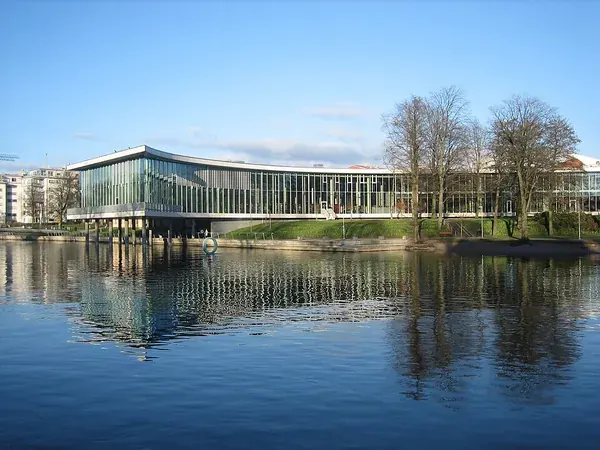
Halifax Central Library
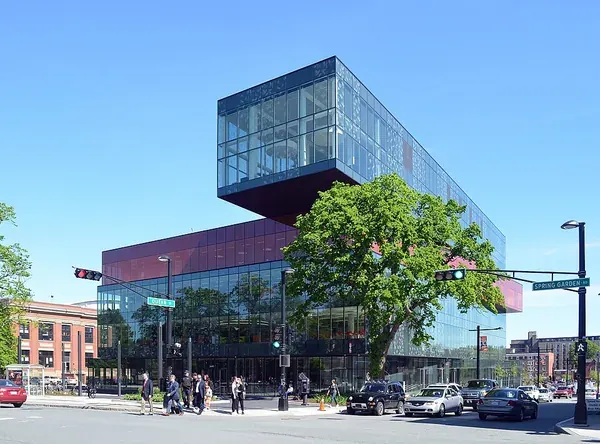
The Halifax Central Library, conceptualized by Schmidt Hammer Lassen Architects, is an architectural gem in the heart of Halifax, Nova Scotia. This library, opened in 2014, is a vibrant public space that redefines the traditional library experience.
Its striking design, featuring a cantilevered rectangular form, makes a bold contemporary statement. The building's transparent glass façade invites the community in, symbolizing openness and accessibility. Inside, the library offers a variety of dynamic, user-friendly spaces, fostering learning and creativity.
Its emphasis on sustainable design and community engagement makes it a true cultural hub and a testament to the firm's commitment to creating public spaces that inspire and connect.
International Criminal Court, The Hague
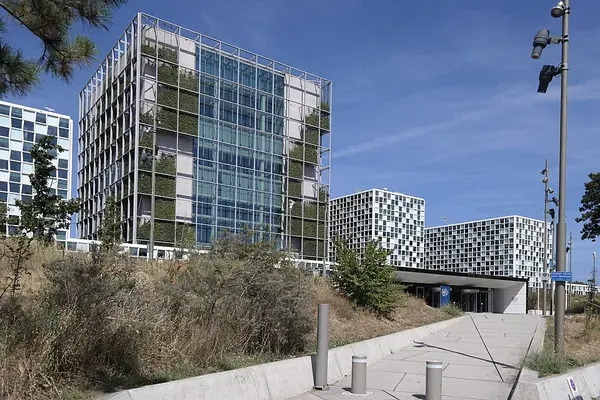
The International Criminal Court in The Hague, designed by Schmidt Hammer Lassen Architects, is a landmark project that symbolizes justice and transparency on an international scale.
Completed in 2015, this building is a fusion of functionality, security, and architectural elegance. Its design, featuring a unique combination of sharp angles and gentle curves, reflects the gravity and importance of the institution. The use of natural light and open spaces within the courtrooms and public areas promotes a sense of transparency and openness, integral to the principles of international justice.
This project showcases the firm's ability to handle complex, high-profile architectural challenges, creating a space that not only serves its critical global function but also stands as an architectural icon.
Sustainable Initiatives and Innovations
Schmidt Hammer Lassen Architects not only pioneer breathtaking aesthetics but also underscore their projects with cutting-edge sustainable initiatives—championing innovations like the HeartFelt ceiling system to redefine eco-friendly design in modern architecture.
Discover their visionary blend of form and function that continues to set new industry standards.
HeartFelt ceiling system
The HeartFelt® ceiling system, a collaborative innovation between Schmidt Hammer Lassen Architects and Hunter Douglas, represents a significant advancement in architectural interior design.
This award-winning product, known for its Red Dot Award in Product Design, is a testament to the fusion of aesthetics, sustainability, and acoustic functionality. The HeartFelt® system is a modular linear felt ceiling solution, notable for its unique design and sustainability qualities, using Cradle to Cradle-certified felt. This material not only provides excellent acoustic properties but also adds a warm, textured appearance to spaces.
Various architectural firms have adopted this ceiling system, appreciating its ability to transform interior environments. The versatility of the HeartFelt® panels allows designers to experiment with panel size, joint width, mounting height, and color, offering endless creative possibilities. The application of the HeartFelt® ceiling system across various projects showcases its adaptability and appeal in contemporary architecture and interior design.
Timber construction
Schmidt Hammer Lassen Architects’ approach to timber construction and adaptive transformation of buildings is a testament to their commitment to sustainability and innovation in architecture.
Their use of timber reflects a deep understanding of the material's ecological and aesthetic benefits. They integrate wood into cultural, civic, commercial, and educational buildings, showcasing its versatility and sustainability.
This approach aligns with the firm's Scandinavian roots, where timber is a traditional building material, and their commitment to reducing the carbon footprint of their constructions.

Rhino for Architects Course
Give your architectural skillset a major boost with the Rhino for Architects Course. Get over 60 hours of focused training tailored specifically for architects. Master commands and techniques to model, render, and animate architectural visualizations at the highest level. Click below for more information and watch your designs come alive!