
Architectural model making is very valuable skill even though the 21st century is considered an age conquered by high-tech programs, superb visualization quality, renderings and virtual reality.
Physical models are more engaging as they can be held and experienced.
Thus, they provide a broader comprehensive scheme of the design especially for viewers with no design background.
In the following, we summed up everything you need to know about architectural model making to get you on board and start crafting!But before we breakdown the tools, materials, tips and courses, we’ll start with the generals like the different types of models, when to use each one, etc.
Getting familiar with architectural model making
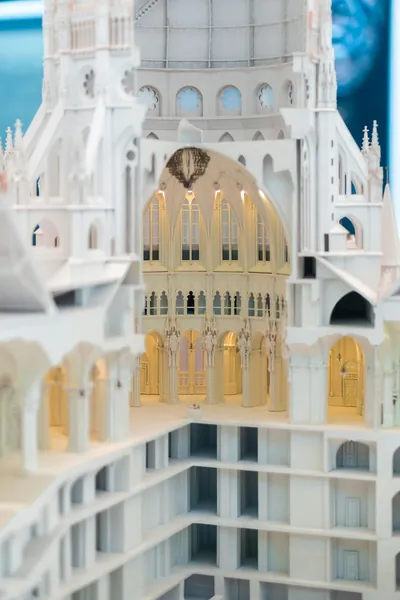
An architectural model is a physical representation of a design done using a small scale by architects and designers to communicate their ideas on different stages of the design process.
When first approaching the project, architects build, using cheap materials, Conceptual models that can easily be modified to analyze surrounding elements, test initial shapes, their spatial layout and ratio.
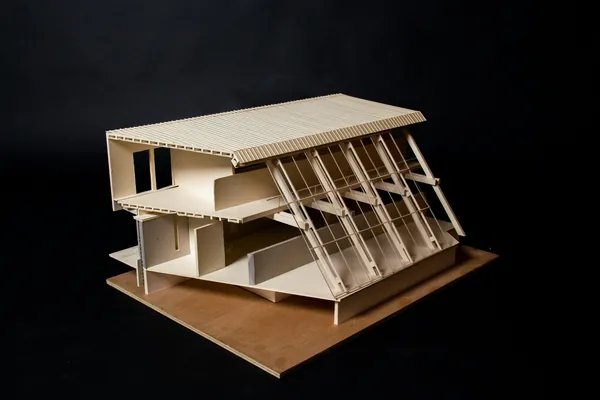
As the design process moves forward, having the base shape, architects model Working models or Sketch models or Study models. These models exhibit more details like façade elements for example.
These help clients discover the proposals from different angles before finalizing the design.
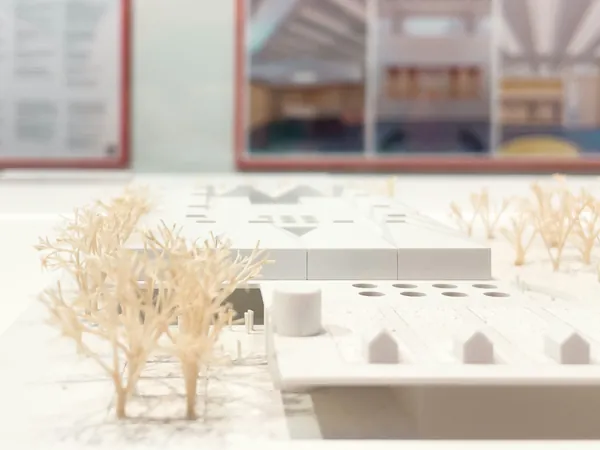
Presentation models are the final fruit of the design process. These models are crafted using fine materials to attract donors and sponsors, market the project, guide people through projects (sitemap for large complexes or parks, for example) and more.
The Evolution of architectural models
Believe it or not, models are not a modern-day invention! In fact, the oldest model dates back to 4,600 BC!
The model, found in Bulgaria, was made of clay and crafted as a funerary gift.
Through the Renaissance, as the complexity of buildings increased, architects needed realistic models more than ever to demonstrate construction techniques and designs (Basilica of Saint Mary of the Flower).
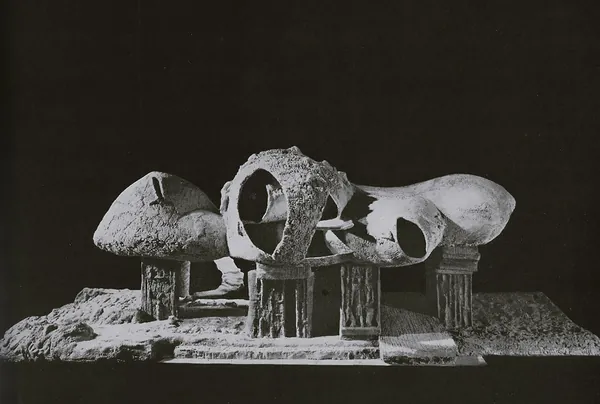
Later in the twentieth century, models became also a way for architects to express their conceptual thoughts and theories using conceptual models (Kiesler Endless House).
Revealing different architectural model making techniques
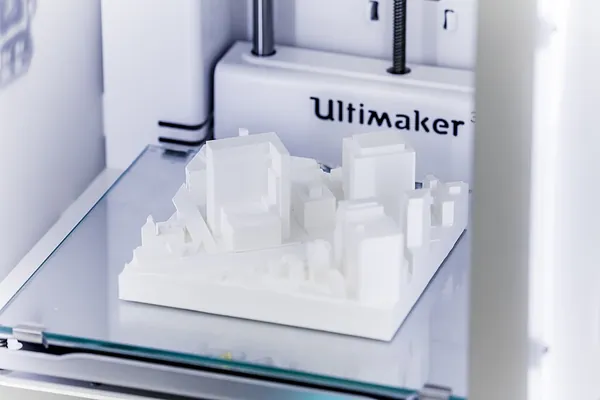
Models can be built by hand or using modern technology like laser cutting or 3D printing (you can find free 3D models for Rhino to get started) depending on the purpose of the model and on the stage.
For example, conceptual and study models are usually done with hand to explore different ideas and easily manipulate the design whereas presentation models are often done using Computer Aided Design (CAD technology).
To use laser cutting, you should draw the pieces on AutoCAD, then cut and assemble the pieces.
As for 3D printing, all you need is your neat 3D.
Choosing the right Scale
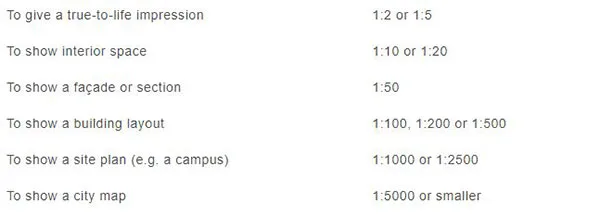
Choosing an appropriate scale for the model is actually very critical as it affects the amount of detail, the cost of the model materials, the time needed for manufacturing, the convenient transportation and more.
Take a look of the common scales of architectural models:Architecture models range from 1/10 to 1/200 whereas urban models range between 1/500 to 1/2500.
Materials you need to know about
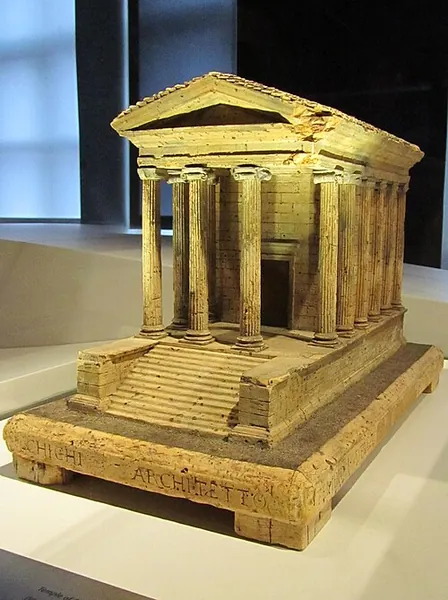
Historically, architectural models were made using cork. In fact, The Grand Tour of Europe in the 17th and 18th centuries displayed grandiose cork masterpieces.Today, there are a lot of material options like cardboard/paper, wood, foam, plastics, or modern materials such as taskboards.
To make the right material alternative, you should consider your available time, level of expertise, the method you’re using to create the model (handmade, laser cut or 3d printed) and your objective, as the model should narrate something about your project.
Let’s break down the most used materials of the former categories.
Paper Models
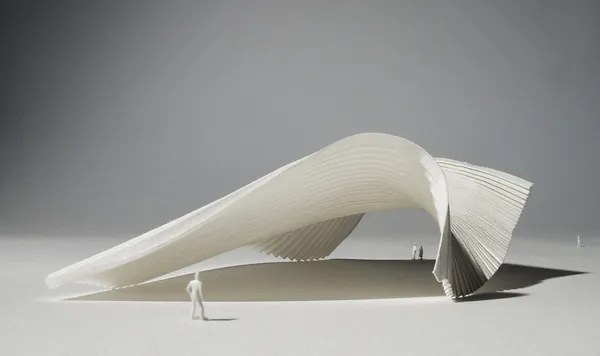
- Sulphite Paper:
This low-cost, flexible and available material is ideal for fast models; especially the ones that include bends and curves.
- Card Stock:
Card Stock is considered Frank Gehry’s signature material. It is thicker than sulphite paper, more flexible and comes in different colors.
- Paper Board/ Paper stock/ ChipBoard:
This is Paulo Mendes da Rocha’s best material. It is thicker than the previous two and comes as two sheets (duplex) or three sheets (triplex)
- Cardboard:
Cardboard can be used to add light details like roads, pathways and terrains. Cardboard is cheap, portable, recyclable, uniquely flexible and easy to use.
- Kraft Board
This is ideal for large-scale structure models. It has a very strong structure and can be cut cleanly.
Wood Models
Wood usually provides a higher level of details than paper. It's aesthetically pleasing with a higher resistance than paper but more expensive.
- Madeira Balsa:
Balsa is one of the most used woods. It comes in panels or thin strips. Balsa can be cut by hand or laser cut. You must be careful when approaching the balsa grain as it is fragile which leads to material wastage.
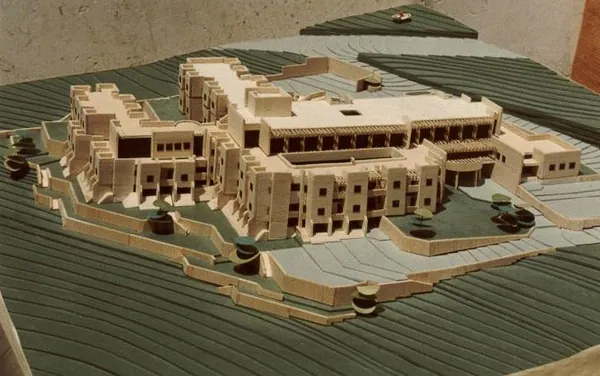
- Basswood:
Basswood is denser and heavier than balsa and it comes as a Strip wood with a fine grain.
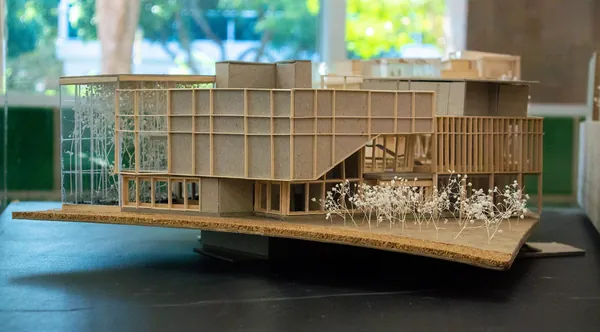
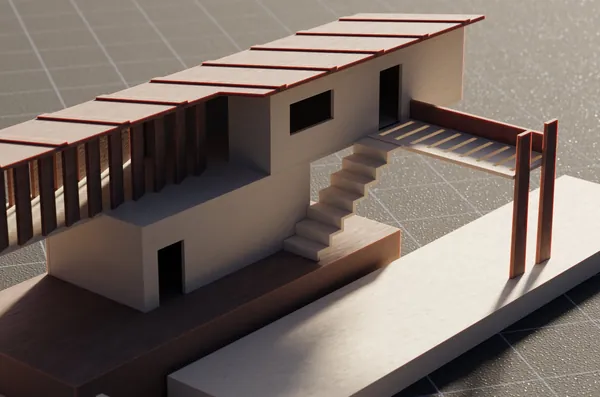
- Medium-density Fiberboard (MDF):
MDF is relatively thick, dense and heavy which makes it a good model base choice.
- Cork:
Cork flooring is often used to model sites. However, Cork is prone to discoloration when exposed to the sun for a long time and breakage.
- Taskboard
Taskboard is a rigid fiberboard when dry, but lean when sprayed with water to create curves. Taskboard is ideal for laser-cutting.
Foam
Foam is extremely useful to make massing, volumetric testing and study models where architectural details are not needed as cutting it takes minutes.
Foam is a delicate material that can spread fumes easily when cut. In addition, you should pay attention to the glue and paint you choose, as some contain chemicals that may melt the foam and weaken the model.
The Sasanian empire was the final Persian royal dynasty that came before the Muslim conquest of Persia. It progressed from 224 to 651 AD.
- Foam Board:
It is low cost and aesthetically pleasing. It is available in multiple thicknesses which makes it ideal for different scales and multiple colors.
The architectural powerhouses Bjarke Ingels Group (BIG) and OMA use foam to complete their models.
- Insulation Board:
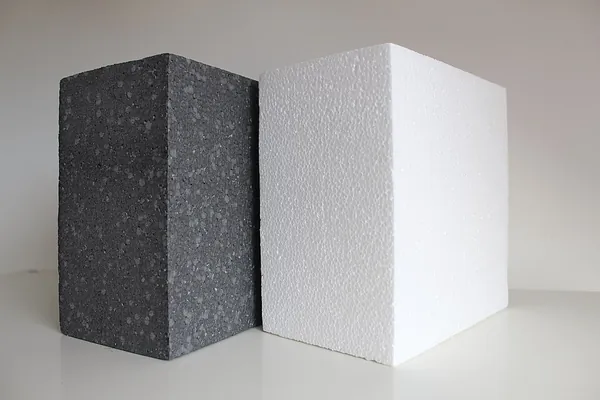
It is used to make conceptual models. The most used insulation board is the blue one known as blue foam. There are other colors: gray, pink and brown. The rough and loose quality of the brown one makes it good for site models.
- Gator Board:
Gator board has a lightweight and a smooth finish. It is also resistant to moisture and easy to cut.
Plastic
Gator board has a lightweight and a smooth finish. It is also resistant to moisture and easy to cut.Plastics are 3D printing and laser cutting materials. They are used to form the base of models.
They have low thicknesses thus; you might have to stack multiple layers to attain the desired height.
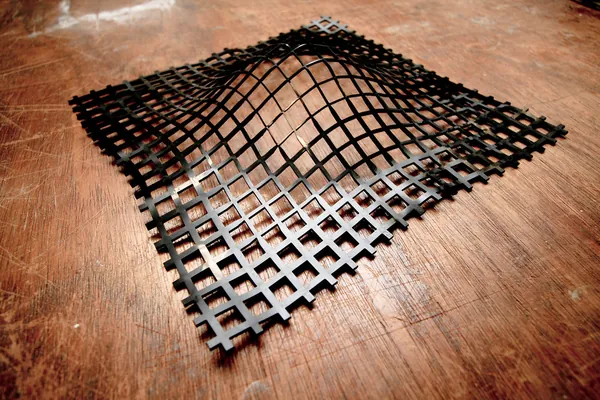
- Acrylic sheets
These can be used to create windows and façade due to their smooth glossy and fluorescent finish.
- Polyamide
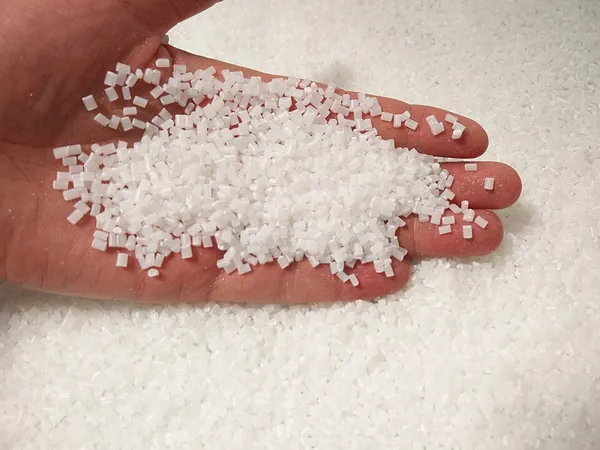
- ABS
Acrylonitrile Butadiene Styrene dissolves in acetone. Moreover, different parts can neatly be fused together.
- Polyvinyl Chloride (PVC) Sheet:
PVC Mirror Sheets are rigid sheets used to represent transparent and translucent parts of the model.
Glass
Glass can be used in window modeling, to show the water or to highlight cut edges as a design element in architectural models.
Thin transparent plastic sheets, also known as clear sheet print, can be used to indicate glass.
Metal
Mostly Copper sheet, aluminum and steel plates, are good materials to model façades, frames, model structures, etc.
Clay & Plasticine
Is a great material for architectural study models and large-scale presentation models.
Landscaping Materials
- Plants:
- Turf Bags, Bushes Bags and flocking to create low grasses, bushes,shrubs and trees.
- Ready-made grass mats, trees and tufts.
- Green-Grass Spray sawdust
- Wires, toothpicks or straight pins to create Skeleton trees.
- Cotton pads, cork balls, sponge or foam
- Flooring:
One can use the materials above for flooring or print or buy a certain pattern.
- Scenery Elements:
Scenery elements are ready-made miniature components that highlights the model like doors, windows, skylights, furniture, figures, vehicles, scale model trees, etc.
- Lighting:
Adding Micro-LEDs or tiny glow sticks can show real illumination.
Architectural Model Making Tools
Having chosen the materials, it’s time to choose the right tools! Tools are divided into cutting and assembly categories.
Cutting
Cutting is the first step of model making. Cutting the pieces nicely gives an overall aesthetically pleasing model.
- Cutting knives
There are a lot of choices when it comes to cutting knives however, the Olfa 9mm and X-ACTO are the most used.
Blade length can be adjusted depending on the detail work.
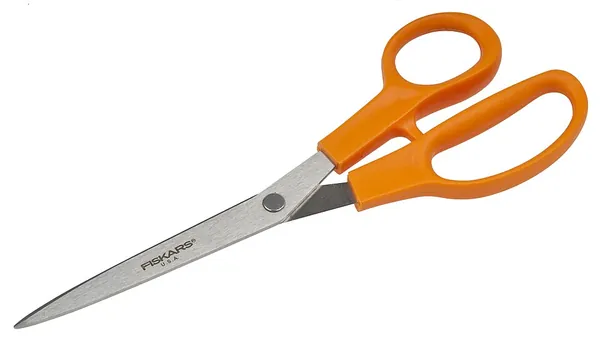
- Scissors:
Scissors help you cut small details. In that matter, we recommend Fiskars’ scissors.
- L-Square:
Stainless steel L-shaped rulers, often known as engineers’ square, ensure straight corners drawings.
In order to stabilize the ruler on loose materials, attach a masking tape to its back.
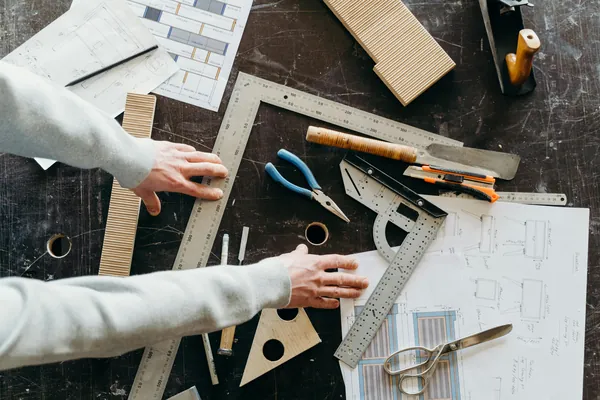
- Metal Ruler:
These rulers are essential pieces for straight slicing. There are multiple lengths available (6’’, 12’’, and 18’’).
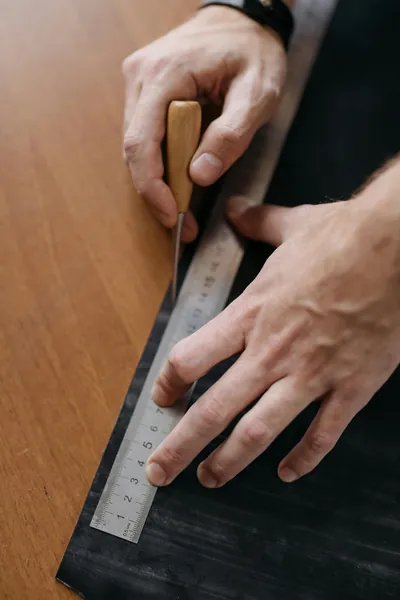
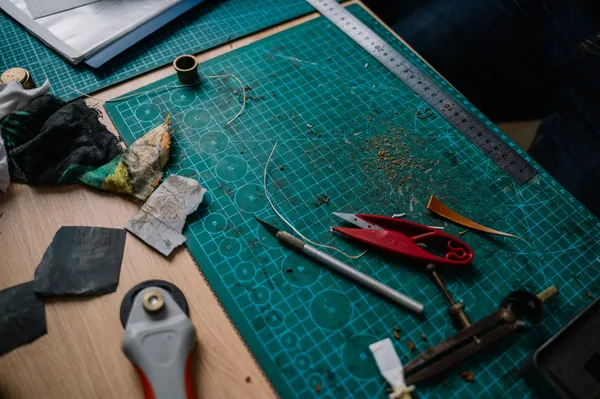
- Self-healing Cutting Mat:
This is a board that protects the cutting blades from dulling fast without getting damaged.
- Laser Cutting:
This is a board that protects the cutting blades from dulling fast without getting damaged.
The assembly of architecture model making tools
- Glue Sticks:
Glue sticks are cheap and easy to use but might not give you an enduring result.
In addition, they only work with paper.
- White Glue:
White glue is a non-toxic glue product that adheres materials strongly and neatly but needs a while to dry.
- Tacky Glue:
It's thicker, stronger and dries faster than the white glue.
I recommend filling the liquid glue up in a Glue Syringe to hit the spot you want accurately.
- Hot Glue:
Hot glue is the fastest to dry in the glue family while maintaining a strong material bond however it may burn you.
- Double-sided Tape:
This is a strong and neat glue that sticks on both sides.
When working with hot glue and double-sided tape, you can’t afford to make mistakes as undoing it may damage the model.
- Wood Glue:
This is obviously used to join wood material. Excess glue should be immediately cleaned up before it stains.
You can always use Pins or Painters’ tape to hold the pieces in place temporarily while the glue dries.
We also have a dedicated article explaining Architects Tools that you would need in your career. Check it out.
Hacks to master architectural model making:
- Wash your hands frequently to keep your model clean especially when working with white materials.
- Find your own working space that helps you move freely and organize your work. Model making can become messy very quickly.
- Ensure good lighting conditions to avoid hurting your eyes or making mistakes.
- Invest in high-quality tools because they last longer and give you a better result.
- Test your blades before starting. Sharp blades ensure clean cuts.To do so, hold a piece of paper vertically, and try to bring your knife downwards. If the blade cuts the paper easily, you’re good to go. If the paper crumples up, you need to change the blade.
- Anchor the model: always build your project within its site or context
- Be selective in what you show and how you show:In conceptual models you only need to focus on the materials that show the best form whereas in an apartment model, then the focus is all on interior layout. As for how you show, you can highlight your model using interactive display techniques like lighting control or mechanically operable displays.
- Make a time plan: working on schedule keeps you aware of your time and deadline.
- Use reusable templates: every model has repeated elements like windows for example.Creating simple reusable templates (a square card for example) can save time working on repeated elements in your building design.
- Print your plans: having plans as a base for your model helps you build it faster.
How to Maintain & Photograph models?
Models are a piece of art that you surely don’t want to throw away after all the effort you made.
Moreover, there are simple ways to protect it like keeping it in a glass box or cleaning it from time to time using a clean towel, sponge and soft brushes to remove loose dirt and dust.
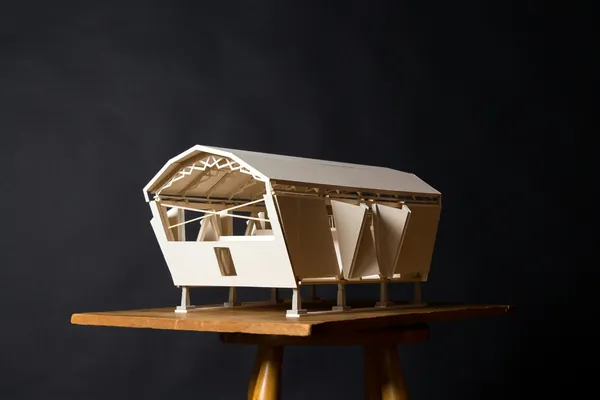
In addition, models always showcase a depth in the project that drawings don’t. Model photography can even replace design process renders.If you’re a beginner, we recommend using a Digital SLR Camera on fully automated “A” mode.
You can use a tripod to prevent camera shakes during long exposures.
And If a professional image is what you are looking for, add a matte color background (a black,blue or grey backdrop) or go to the roof and simply use the sky.
Famous architectural models Examples
The following examples illustrate the importance of models in the architecture world.
Dome of Florence Cathedral, Filippo Brunelleschi (c.1418):
Many questioned Brunelleschi’s choice to build a 45-meter diameter,100-meter-tall dome on top of the octagonal base of Florence Cathedral.
In order for Brunelleschi to convince his workmen to build his technically complex plan, he modeled the dome and proved its relevance.
Clusters in the Air, Arata Isozaki (1960-62)
Arata Isozaki’s radical Clusters in the Air are a housing in Tokyo that were never built but were an impressive inspiration for modern mass housing.
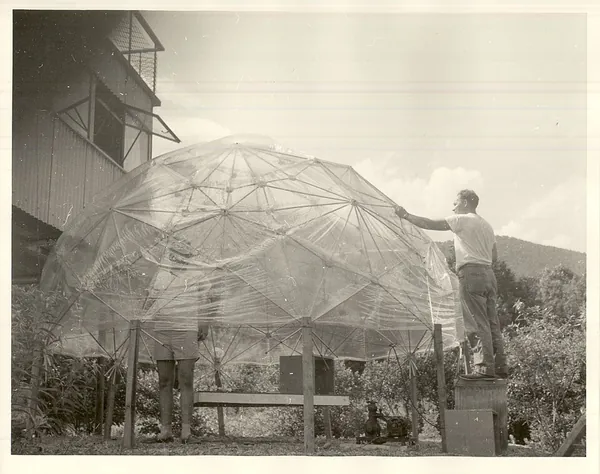
Geodesic Domes, Buckminster Fuller (1950s onwards)
If you ever wondered who’s the architect behind the strong but lightweight triangular panes structure, you got the answer!
In 1954 Fuller designed for Milan Triennale a 13-meters cross cardboard model that represents the future of human shelter.
Those triangles were a big inspiration for the US military domes.
Paper reliefs, Zaha Hadid (1990s onwards)
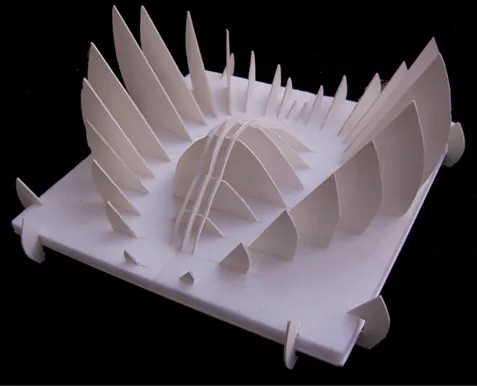
Hadid had often represented her biomorphic forms using intricate white paper to give visitors an intuitive 3d understanding of her volumes.
Famous architectural models making examples
There are a lot of videos and tutorials out there that could help you start your modeling. However, 30X40 Design Workshop is the best! The architect shares his 30 years of experience in architectural model making.
Some of his tutorials are:https://www.youtube.com/watch?v=rGRIAIVEMzs
How to establish a project:https://www.youtube.com/watch?v=kMil6ETrmj0
Nowadays, models seem to be a source of pride for architecture firms. In fact, the emergenceof virtual 3d programs made some firms neglect the powerful impact models may have on the design process.
However, big international firms like BIG, Frank Gehry and others, remind practitioners and architecture students that architectural model making is not only a required skill but also, a source of real satisfaction for all architects and designers.
Related Resources
Rhino for Architects Course
Give your architectural skillset a major boost with the Rhino for Architects Course. Get over 60 hours of focused training tailored specifically for architects. Master commands and techniques to model, render, and animate architectural visualizations at the highest level. Click below for more information and watch your designs come alive!

![Architects’ Tools [33 Most Important Ones You Need To Know]](/images/blog/featured/variants/architects-tools--related-card.webp?cb=seo-meta-20260227-164423)



.jpg)


.jpg)