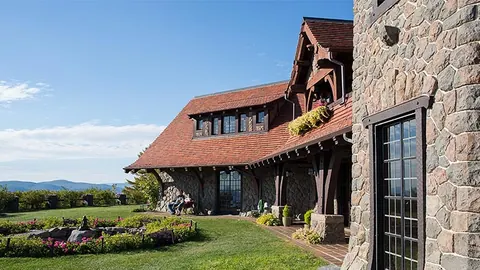
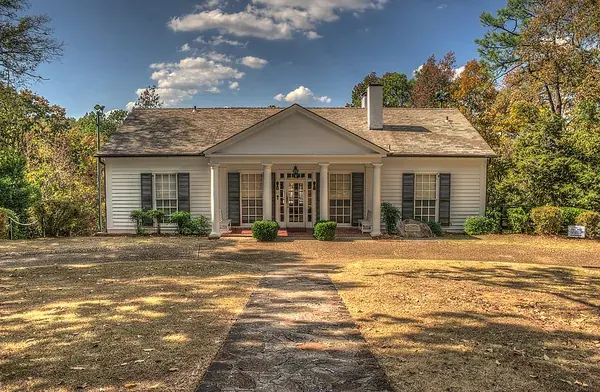
If you have ever watched an American TV show or a movie where the plot is set in a suburban neighborhood, then you have probably already seen this kind of house.
You know the type - the picture-perfect home with the green lawn and the white picket fence. In case you were wondering, this architectural style is called American colonial architecture.
But where does this architectural type come from? Was it conceived in early America or does it have roots buried deep in another culture?
To learn the truth about American colonial architecture, we must first go back in time, to the period of the colonization of the United States of America.
Let’s take a look at the starting points of this type of architecture, how it developed through history and what it looks like today.
Without further ado, here’s our definitive guide to American colonial architecture!
The roots of American Colonial Architecture
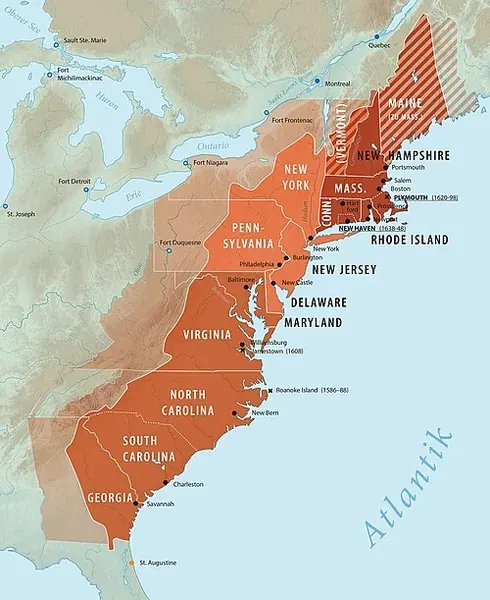
Not long after Christopher Columbus discovered America in 1492, people from all over Europe started to occupy territories all across the New World. The period of American colonization spans the entire 17th century, back when the United States consisted of only 13 colonies, all of them situated on the east coast of the mainland.
Even though it was Christopher Columbus who technically discovered America, the continent was named after Amerigo Vespucci, an Italian explorer, who arrived there in 1501. He was the first person to proclaim that America was a new continent, that is “the New World.”
Back then, the population was extremely diverse, since the majority of the colonists came from England, Spain, France, Portugal, the Netherlands and other European countries.
Many of the settlers came to expand power in Europe, looking for religious freedom, while others pursued gold, spices and other goods.
The first American colony was called Virginia, and it was founded in 1607. It was named after the Queen of England, Elizabeth the First, otherwise known as the Virgin Queen.
Eventually, new colonies were formed, such as New Hampshire, New York, North Carolina, South Carolina, Georgia, Massachusetts, and so on.
New York was formerly known as New Amsterdam and Massachusetts as New England.
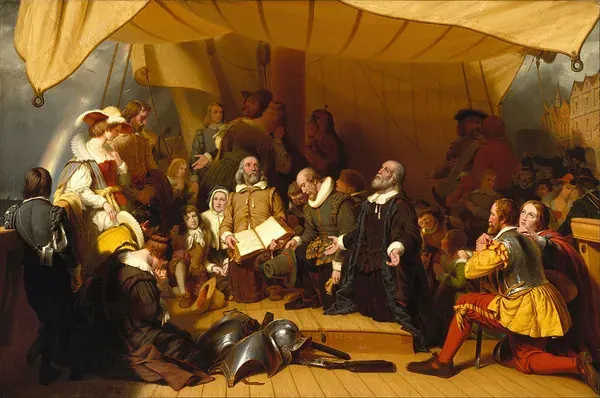
Pilgrims arrived in Massachusetts on the Mayflower in 1620, and founded a colony named Plymouth. During the first year of colonization, half of the colonists died due to the harsh climate and lack of food. In fact, only 20% of the settlers survived.
The reason most of them didn’t make it was because of the aid of the local Indians, who taught them how to grow corn and where to hunt for food. The Pilgrims were so grateful to the Indians that a year later, in 1621, they held a feast - the first Thanksgivings.
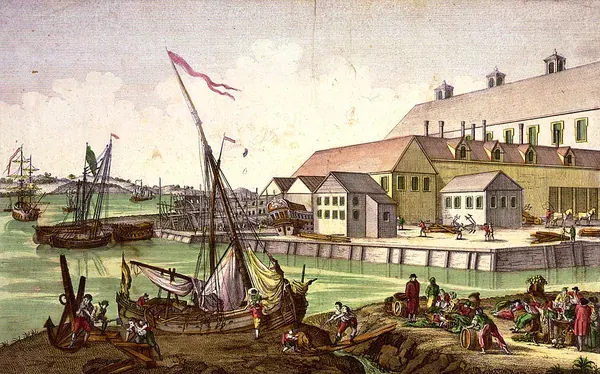
Marked by periods of slavery, rebellions and civil wars, battles for freedom and finally independence, one can certainly say that America has a rich diverse history. Different kingdoms and civilizations left their footprints and produced different architectural styles, depending on the prevalence of the ruling nation. The very first emergence of American colonial architecture can be traced back to these times. To be more precise, to the foundation of Jamestown, Virginia. In order to increase the number of settlers, the Virginian company began offering 50 acres of land to each new settler who was paid to come.
Thus numerous large estates mushroomed all over the colonies.
Different Architectural Styles
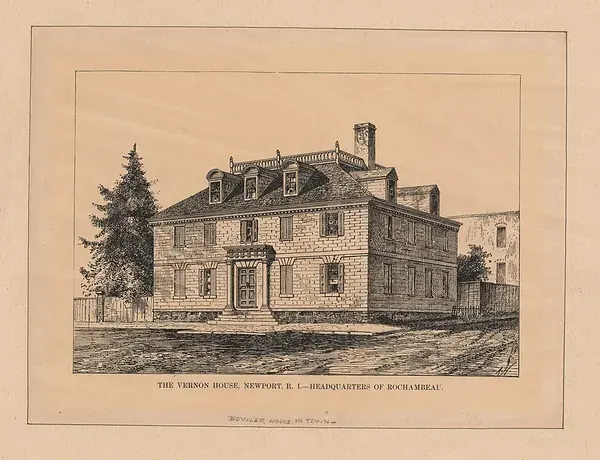
From the period of early colonization to the 19th century, American or Western architecture signified a reflection of styles and techniques of that time. Depending on the location and the ruling European power, each colony was impacted in a different manner.
Settlers brought along materials and building customs representative of their homeland, leaving their mark on the new land.
First Period architecture
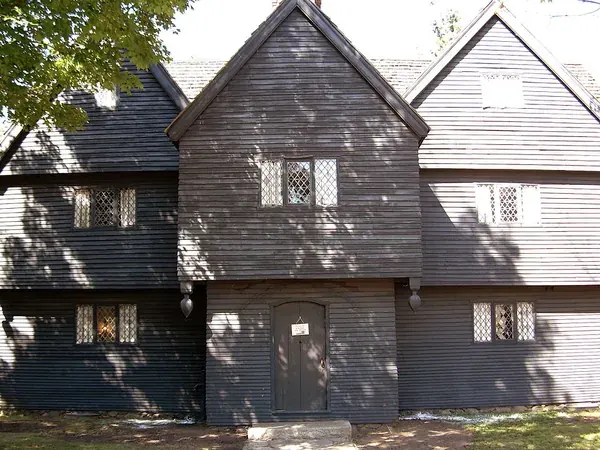
The First Period is an American architectural style that evolved in New England - firstly Massachusetts bay and Plymouth, and Virginia, Vermont, New Hampshire and Maine later.
It comprised the period between 1626 and 1725, when non-separatist Puritans migrated to New England in order to reconstruct the Church of England. Since the migrants weren’t real architects, but farmers and salesmen, the First Period did not resemble the traditional English medieval style. Since the climate on the east coast tended to be harsh and unwelcoming, the settlers had the idea that their houses should always face south, in order to utilize as much sunlight as possible. Some other exterior features included a central chimney, an asymmetrical roof and small windows. If you are looking to find First Period architecture today, Massachusetts offers the biggest number of preserved houses, especially Essex County.
- Saltbox House
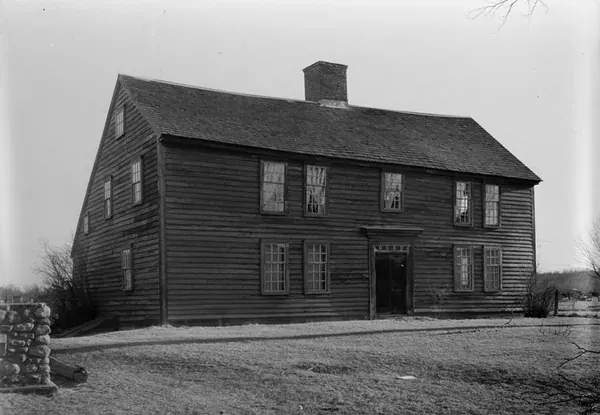
One of the first examples of American colonial architecture, this type of house is representative of New England style.
It got its name after its compact size and similar features of a saltbox. Namely, one side of the house consists of only one story, and the other of two. The reason these houses were constructed in such a way is due to Queen Anne’s taxation, which applied to houses with more than one story.
Some other distinctive features are a sloping roof, timber framing and an additional lean-to. Today, you can spot saltbox houses in regions of Newfoundland and Labrador.
- Cape Cod House
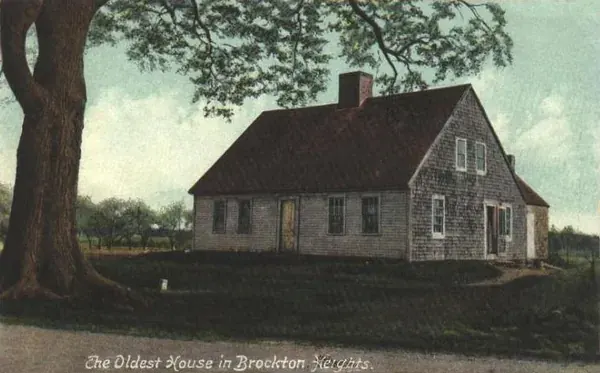
This traditional type of house can be traced back to the 17th century, when Puritan carpenters first carried over this architectural trend to New England. The cold weather was a major factor that impacted the construction of Cape Cod homes; that’s why central chimneys and rooms with low ceilings were often used. There was usually only one floor. Interestingly enough, this architectural style became popular once again in the 1930s, during the period of American Colonial Revival. Nowadays, you can find lots of Cape Cod houses, although adapted to modern needs, all across the States.
French colonial architecture
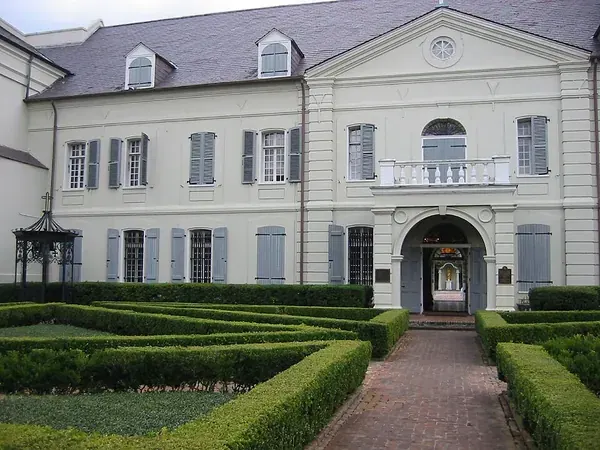
Taking into account that France had developed colonies all over the globe, examples of French colonial architecture can not only be found in America, but Canada, Southeast Asia and the Caribbean as well. Namely, French colonial style started with the onset of French colonization in America in 1604. The birthplace of French colonial architecture in the States were the Illinois Country and French Louisiana.
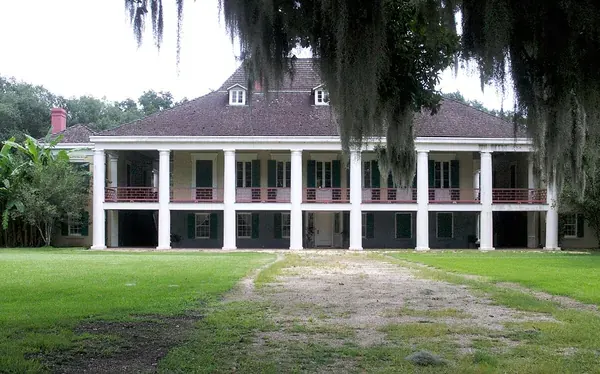
This style is especially representative of the American Southeast, and some of the most identifying features are spacious front and back porches, high basements to prevent flooding, as well as high ceilings, adapted to extreme heat that Americans usually come across in the South. What’s more, hipped steeped rooftops were built to extend over the porches and double-louvred doors were a common feature of this architectural style.
Spanish colonial architecture
The Spaniards were one of the first nations to invade America, previously conquering the Mexican Gulf and the Caribbean Islands. The Spanish footprint expanded to such an extent, that remnants of their architecture can be found all over the States. The hot-spot of Spanish colonial architecture is Mexico City, which is home to 29 UNESCO World Heritage Sites.
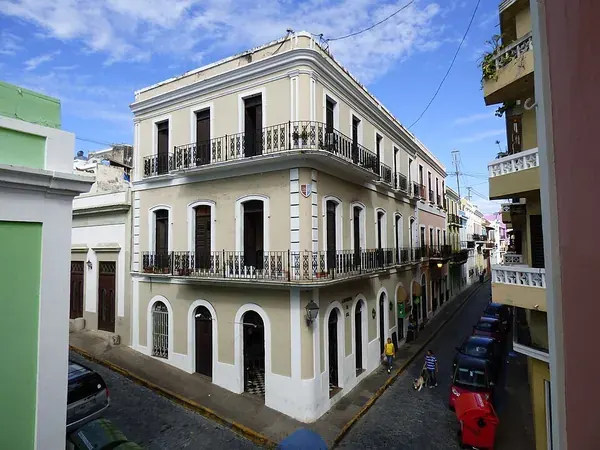
Some of the most common characteristics of Spanish colonial architecture are city planning in grid patterns, churches, mission architecture and a central plaza or main square.
Elements we would usually find in these types of houses are white stucco walls, small windows and red clay tiles. If you are wondering where you can find instances of Spanish colonial architecture, the answer is California, Florida, Arizona and of course, Mexico.
Dutch colonial architecture
This architectural style boomed in New York, formerly known as New Amsterdam, in the 17th century. Even though remaining instances of Dutch colonial can rarely be found today, the architectural style came back under the spotlight in the 20th century, when it became known as Dutch Colonial Revival. Apart from New York, Dutch colonial was popular in New Jersey, Pennsylvania, Delaware and Connecticut.
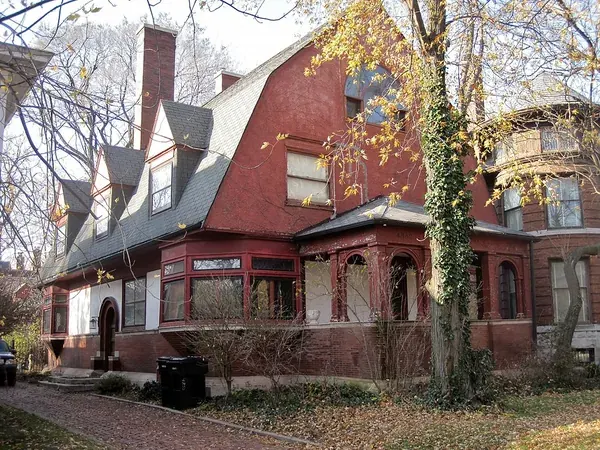
The main element of this American colonial architecture that differentiates it from other styles is definitely the so-called gambrel roof - the centerpiece of Dutch colonial.
One more feature that makes Dutch colonial special is the fact that it was only incorporated into house-building, meanwhile other colonial styles weren’t only used for residential architecture.
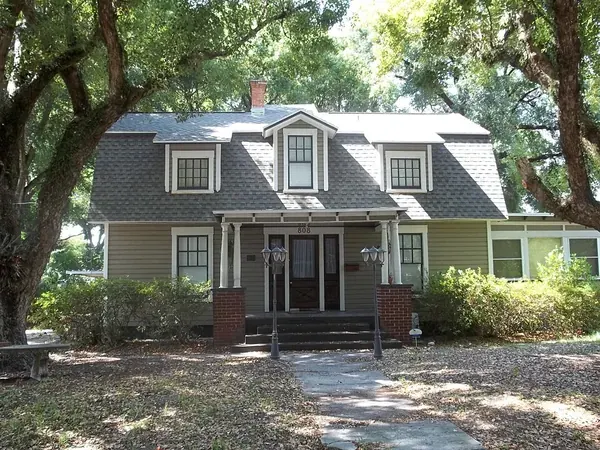
Dutch colonial houses were generally made from bricks, and not wood, due to the brick masonry skills of the Dutch settlers.
Another common characteristic you would find on these houses is the flared eaves, which usually extended over the porch.
Georgian colonial architecture
Georgian colonial architecture made its mark on all English colonies in the Georgian Era, a period of English history spanning from the early 18th century to the beginning of the 19th century.
The name is associated with the Hanoverian Kings - George I, George II, George III and George IV. The best instances of Georgian colonial architecture are Dartmouth College, Harvard University and the College of William and Mary.
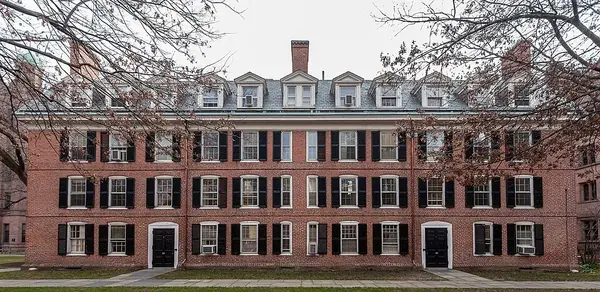
Typical Georgian colonial architecture could be found on churches and palaces. It was utilized until the end of the 18th century, when American Federal architecture took over, following the Revolutionary War.
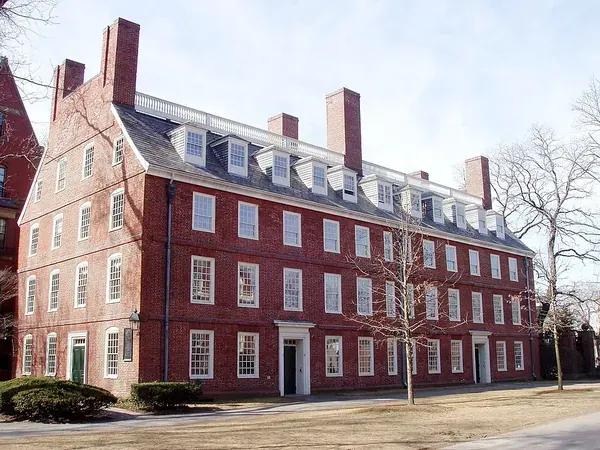
Most common features of Dutch colonial style are wood and timber, terraced houses, cornice, brick, a portico and white wooden columns. A typical Georgian colonial house consisted of a living room, a dining room and a family room.
German colonial architecture
This period of American colonial architecture wasn’t just a reflection of German settlers in America, but colonists from Sweden, Finland, Scotland, Ireland and many other northern European countries.
All these architectural influences fall under the same category - German colonial architecture.
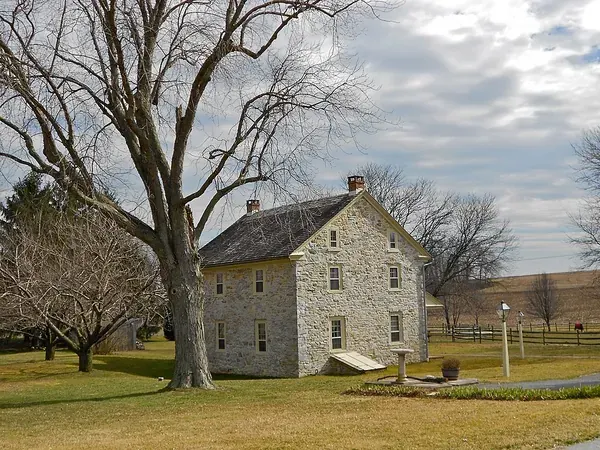
Its roots go back to 1675, the year immigrants from these nations settled the Delaware River Valley area, which comprised Pennsylvania, New Jersey and Delaware. Some of the most identifying traits of this architectural style are brick and thick walls, built to endure cold winters and isolate heat in the summer months. Other features included stone, exposed timbering or “half-timber,” and hand hewn beams.
Mid-Atlantic colonial architecture
Finally, we come to our last architectural style of American colonial - the Mid-Atlantic colonial. Even though it wasn’t as widespread as the other colonial styles, traces of Mid-Atlantic colonial architecture can still be found on the east coast, especially Maryland. This colonial trend can be traced back to the Chesapeake Bay that was occupied by immigrants from the British Isles, during the period between 1607 and 1776, the year marked by the American Revolutionary War and the end of British authority on the continent.
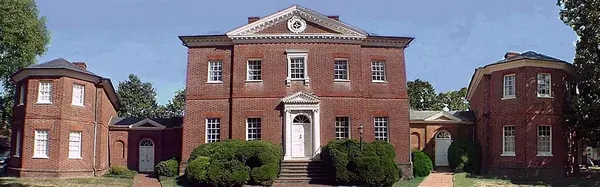
These types of houses usually had only one floor, gable chimneys and prevalent materials were wood and brick. One instance of this era of architecture that can still be seen is the 1774 Hammond–Harwood House, which is in Annapolis, Maryland.
Modern Times

As we mentioned before, most of the American colonial architecture styles got a second chance, during the period of Colonial Revival. This trend started to appeal to the masses once again in 1876, after the Centennial International Exhibition.
In fact, at the beginning of the 20th century, approximately 40% of homes in America were designed during the Revival period. Even today, you can find modernized versions of colonial style all over the United States.

The colonial style that got the most attention was the decorative Georgian style, however, other architectural trends were also brought back under the spotlight.
What’s more, the majority of these new homes were built using a combination of different periods and elements of American colonial architecture.
Most common features that have been revived are:
- the trend of two or three floors
- using bricks or wood for the walls in a simple and clean manner
- large doors
- white decorative pillars and columns
- the gable rooftop
- symmetrical facade
Well there you have it! We hope you enjoyed going through time to see the different phases American architecture lived through. Witnessing the dramatic changes the United States underwent, architecturally and politically, we can only agree that these two spheres of life are intricately connected. Where foreign policy and the struggle for power go, culture and architecture follow. But no matter how much the world changes, we will always have architecture to remind us of what it used to look like before. After you learned about this style, you may want to check out one of our most visited article on Medieval Architecture. Check it out!

Rhino for Architects Course
Give your architectural skillset a major boost with the Rhino for Architects Course. Get over 60 hours of focused training tailored specifically for architects. Master commands and techniques to model, render, and animate architectural visualizations at the highest level. Click below for more information and watch your designs come alive!