Have you ever wondered about the majestic ruins of ancient Greece and their awe-inspiring architecture? Ancient Greek architecture is a testament to human artistry, defined by its harmonious lines and intricate detailing.
This blog will serve as your definitive guide in exploring these spectacular structures and uncovering stories etched into timeless stone. Ready for a journey back through time? Let's dive into Greek architectural history!
Key Takeaways
- Ancient Greek architecture shows a love for balance and order.
- Geographic features like mountains and seas greatly shaped it.
- The use of art, religion, and philosophy made their buildings special.
- Famous examples include the Acropolis of Athens and the Temple of Zeus at Olympia.
- Three unique styles known as Doric, Ionic, and Corinthian orders were born in this era.
- Buildings had decorations that told important stories about their beliefs.
Influences on Ancient Greek Architecture
The architecture of Ancient Greece was shaped profoundly by its unique geography, rich history, vibrant art traditions, and deeply rooted religious beliefs blended with a philosophical lens.
The distinct architectural character sprang from these influences creating structures that radiated simplicity, proportionality, and harmony in their design elements.
Geography
Mountains and seas shaped ancient Greece. These landforms split the area into small regions. Each region had its own style of buildings. The sea played a big part too. Greeks lived near the coast or on islands.
They built their cities around ports to support trade with other lands across the Mediterranean Sea. Ancient Greeks were good at sailing, which helped them set up new cities far away from home.
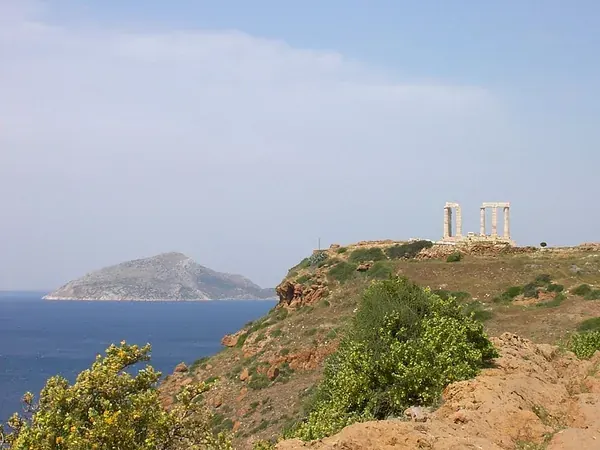
The weather was more than just hot summers and mild winters for them! It made farming hard in some places but easy in others, changing what they could grow and where they could live.
This led to different building styles based on available resources.
For example, sun-loving vines grew best along sunny coasts; this became popular spots for open-style homes that let cool breezes flow through rooms reducing heat indoors during summer months while providing ample shade outside under lush vine-covered patios with mosaic floors; making life enjoyable even when it got really hot!
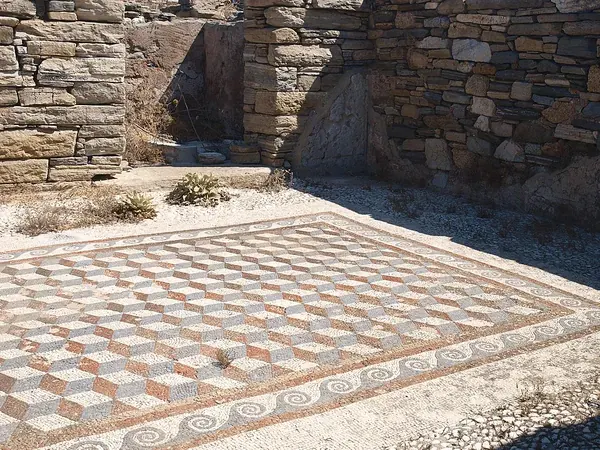
In all, Greek vibrant coastal cities, cozy farmsteads, formidable hilltop forts, or inventive island homes stemmed from using what was closest hand - whether that be the sun-drenched plains bordering the Mediterranean Sea or rugged mountainsides high above fertile valleys below!
History
Long ago, Greek people started to build amazing things. They made new ways to design buildings. This happened around the sixth century BC. These new designs changed how we think about buildings even today.
The Greeks learned from older cultures too. They used ideas from old styles like Egyptian and Babylonian architecture. Then they made them better with their own changes and ideas. This mix of old and new styles made Greek architecture famous throughout the world.
Art
Art had a big role in the way Ancient Greeks built things. They loved to show off their skills in sculpture and columns. Temple walls were full of carvings that told stories about gods or battles.
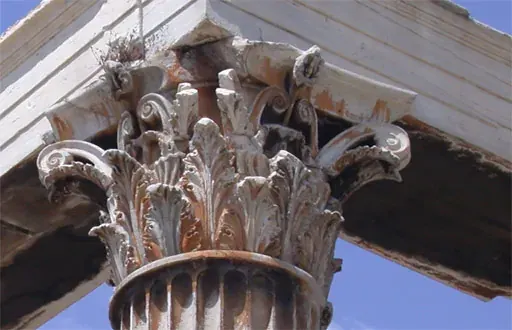
Even the tops of columns had careful designs called capitals, showing three styles: Doric, Ionic, and Corinthian. Each style was more fancy than the last one! The buildings were like huge pieces of classical art you could walk into or sit under.
This love for detail has kept many artsy folks hooked on Greek work till today.
Religion and Philosophy
Gods and beliefs had a big hand in Greek styles and design. Temples were built for gods and goddesses. Each one was unique. The way they looked showed what Greeks thought of their gods.
They saw them as part of every person's life. This belief made temples very important in towns and cities all over Greece. Harmony and order also mattered a lot to the Greeks. These ideas came from how they saw the world around them, from nature to stars in the sky! These thoughts shaped how they built things too - like homes, city squares, temples, and theaters! So you see, philosophy and religion truly marked Greek art!
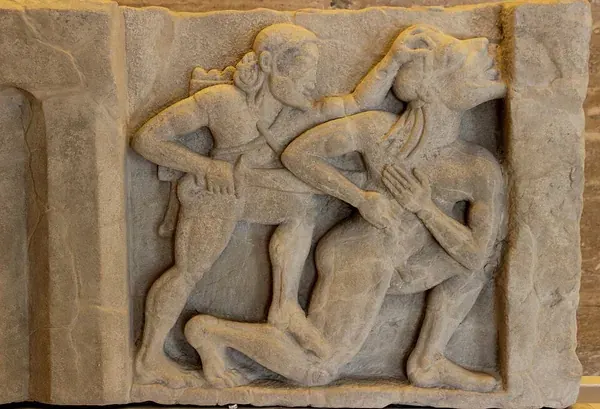
Architectural character
Ancient Greek architecture has a special type of charm. It shows a deep love for balance and order. This is the architectural character that makes it so unique. A look at Greek temples will show this clearly.
The Doric, Ionic, and Corinthian orders are key parts of these temples. They help keep everything in place and pleasing to the eye. This is not by accident but by design. Ancient Greek architects aimed for high skill in their work.
They wanted every column and stone to be just right. The aim was to make sure all parts worked together well. This gave buildings a strong sense of harmony and balance.
So, the Greeks have left their mark on Western civilization with this approach to making buildings look good. Other civilizations like the Roman Empire have also felt its impact.
A walk through modern cities will show how much we still use ideas from ancient Greece today!
Early Developments in Ancient Greek Architecture
The earliest developments in Ancient Greek architecture display a refined sense of simplicity, proportion, and harmony. The architectural character evolved significantly, showcasing the Greeks' aptitude for combining aesthetics and functionality with various types of buildings such as temples, stoas, and theatres.
From basic structures to intricate designs, these early forms paved the way for sophisticated architectural styles known today as the "Orders," boasting Greek columns and pillars symbolic of power and stability.
Decorations such as friezes were not just adornments but also served symbolic purposes, contributing to their overall grandeur.
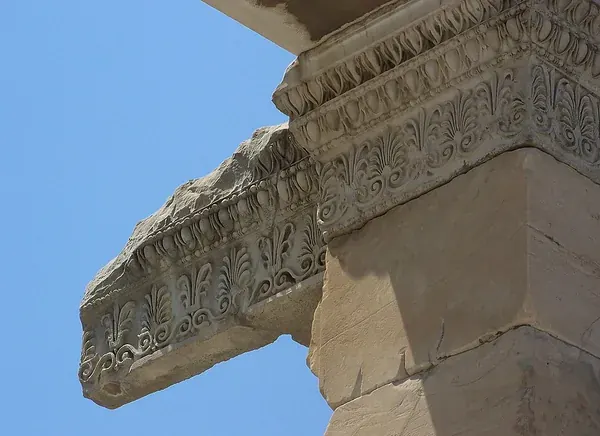
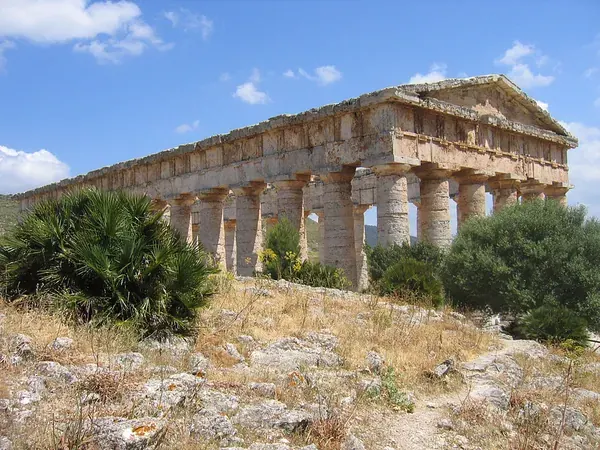
Types of buildings (temples, stoas, theatres, etc.)
Ancient Greece gave us many types of buildings. We see them today in our cities and towns.
- First are the temples. These were used as storage for religious statues. They were very common in ancient Greece.
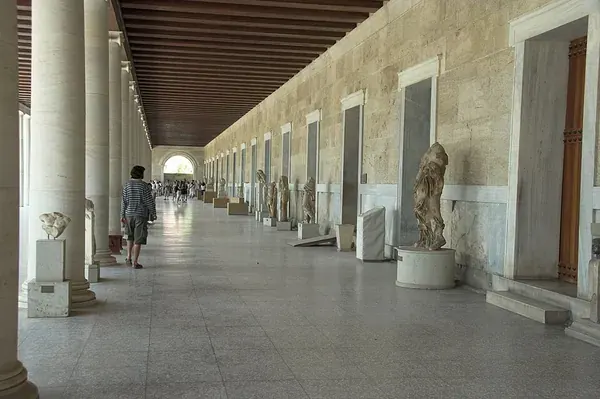
- Next are the stoas. They were covered walkways made for people to use. You could walk under them to stay out of the sun or rain.
- Theatres also played a big part in Greek life. They were built across Greek towns and cities.
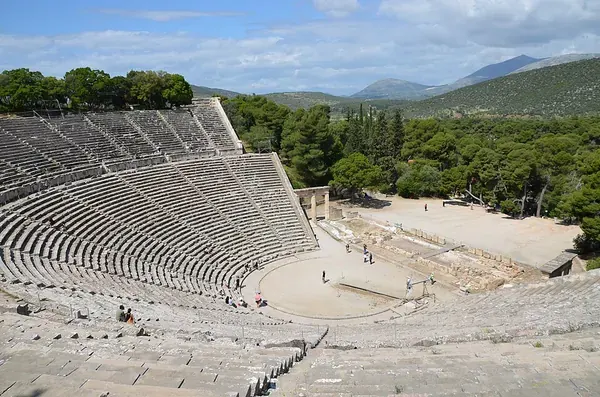
- Even today, we can see examples of these types of buildings. An example is the Parthenon, a famous ancient Greek temple that still stands now.
Structure
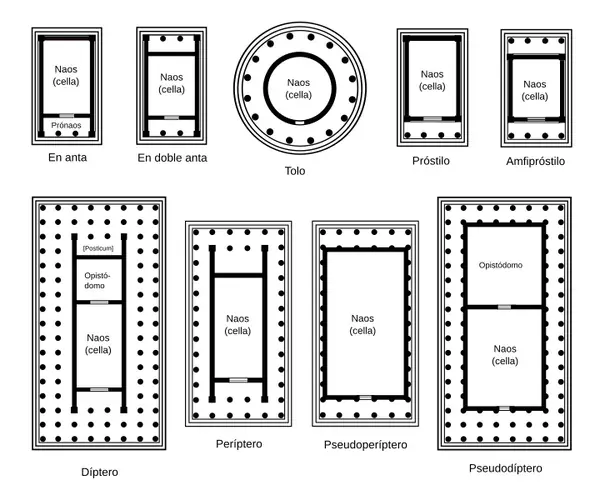
Greek buildings are strong and beautiful. Every part is important for the whole structure. They used columns, pediments, and entablatures to make their buildings stand tall and look grand.
Special layouts made Greek temples unique. Often, pieces of molding can help us build the whole building again from scratch! This shows how clever and careful ancient Greeks were in making their incredible structures stand out.
Today, we still use ideas from Greek architecture in our own designs.
Style
The style of ancient Greek buildings is unique and clear. They used specific orders in their design, which are the Doric, Ionic, and Corinthian. These orders made each building simple but beautiful.
The architects gave a lot of focus to details and precision. This was shown by how neat their work was. The style not only showed skill but also artistic beauty. Each part of the building would be done with care and intent to make it perfect.
In this way, Greek architecture stood out for its excellence and artistry.
Orders
In the Classical period, Greek architecture saw big changes. Three unique styles were born. They are called Doric, Ionic, and Corinthian orders.
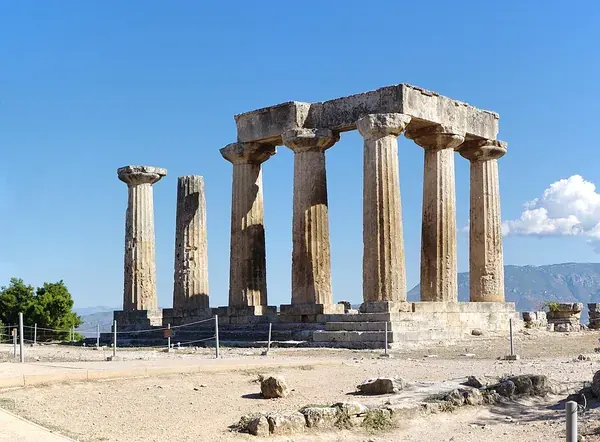
The Doric style is strong and simple. It uses columns with no base. These columns have lines running from top to bottom, also known as fluted shafts. The tops of these columns are basic, without fancy designs.
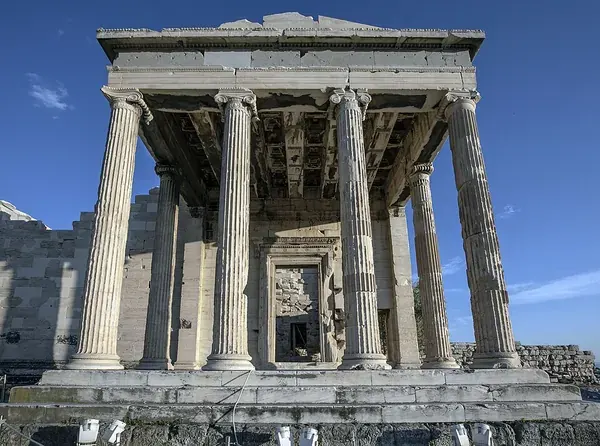
The Ionic order is fancier than the Doric one. Its columns stand on a base and have scroll-like carvings at the top - which we call volutes. These buildings often show art pieces that tell stories on their friezes.
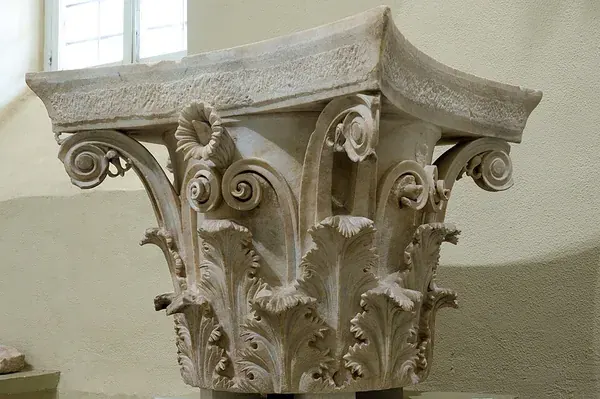
Lastly comes the Corinthian style - the most detailed of all three! It takes inspiration from plants, showing leaves and small volutes on its column capitals.
Decoration
The look of Greek buildings was no simple thing. Craftsmen took time to make each part special. They used carvings, designs, and other art forms a lot in the decoration of their buildings.
Stone slabs with pictures cut into them, called relief sculptures, were put between lines that looked like three bars, or triglyphs, on the building's edge called a frieze. Columns and the top parts of buildings had careful carvings too.
These showed leaves, flowers, and even scenes from wars or stories about gods. The tops of many Greek buildings had a triangle shape filled with decorations like plants and curls drawn out long to look fancy.
A popular plant design was from an acanthus plant which meant never dying for Greeks back then. All these ornaments made Greek architecture beautiful but also told important meanings linked to their beliefs.
Famous Examples of Ancient Greek Architecture and Architects
Exploring notable Greek architectural marvels, we delve into the Acropolis of Athens, a signature representation of ancient Greece. The Temple of Zeus at Olympia commands attention with its ornate details and grandeur.
Discover the mystical aura surrounding the Temple of Neptune. Marvel at the innovative design and precision in construction at the Temple of Apollo. Experience history coming alive at the Terrace of Naxian Lions and appreciate ancient theatre in its true sense by visiting an authentic Greek Theatre steeped in antiquity.
The Acropolis of Athens
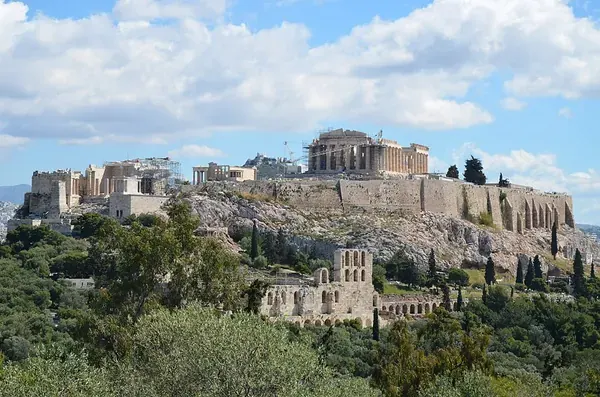
The Acropolis of Athens sits atop a high limestone hill. This ancient Greek site is renowned worldwide. Many see its monuments as signs of the classical spirit and civilization. The Parthenon, a temple for the goddess Athena, is the most known structure here.
The Acropolis towers 156 meters above sea level. It marks Athens' skyline and holds a special place in world history.
Temple of Zeus at Olympia
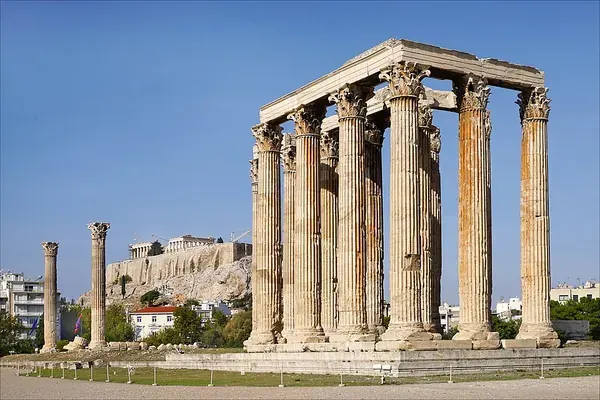
The Temple of Zeus at Olympia stood tall in Ancient Greece. Built between 470 and 456 BCE, it showed the world the best of Greek architecture. Libon of Elis was the creative mind behind its design.
He used the Doric order, a style known for its powerful yet simple look.
Inside this grand temple lived a huge statue of Zeus. The famed artist Phidias made it from gold and ivory. Sadly, a fire in the 5th century CE turned both temple and statue to ashes.
Yet though gone, their memory lives on as shining examples of Ancient Greek beauty and skill.
Temple of Hera II
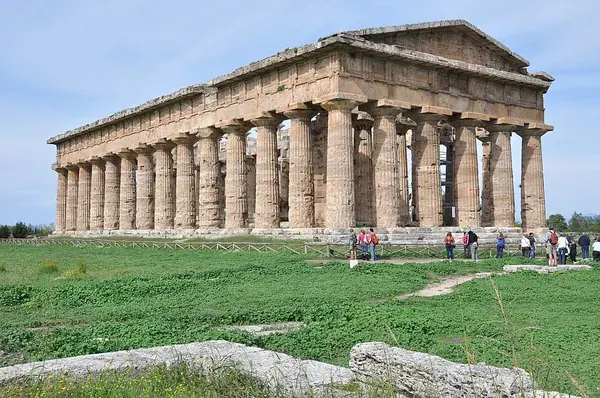
The Second Temple of Hera, mistakenly called the temple of Neptune, stands proud in Paestum, an ancient Greel city. Of the three grand temples here, this is seen as the best. It captures old Greek design at its finest. Made for Hera, the goddess protector of women, it still carries a strong Greek feel.
The sandstone used to build it comes from near by spots. This gives the temple a look you won't see anywhere else.
Temple of Apollo
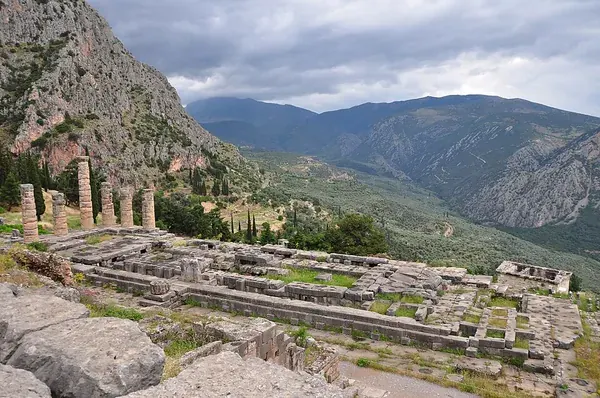
The Temple of Apollo stood tall as a symbol of ancient Greek architecture. It is placed in Delphi and is known for its magnificence. It is thought that the temple was built by Xenodoros and Agathon.
It pays respect to Apollo, the god of many things like music, healing, and art. Surrounded by mountains in Greece's Peloponnese region lies another site named the Temple of Apollo Epicurius.
This beauty also adds value to classic Greek architecture with its strong columns and detailed design work. Farther away, in what we now call Turkey, sits yet another example - The Temple of Apollo at Didyma.
Terrace of the Naxian Lions
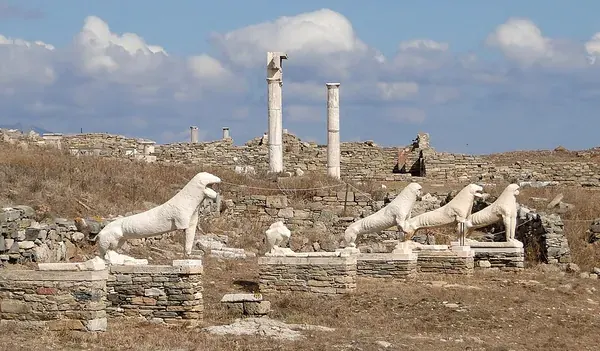
The Terrace of the Naxian Lions is on Delos Island in Greece. This spot shows off grand Greek architecture. Five marble lions remain on the terrace today. They all face east toward the Sacred Lake of Delos.
You can see them from the Sacred Way that starts at Skardana Bay. The size and skill used to make these lions show us how great ancient Greek architects were.
Greek Theatre
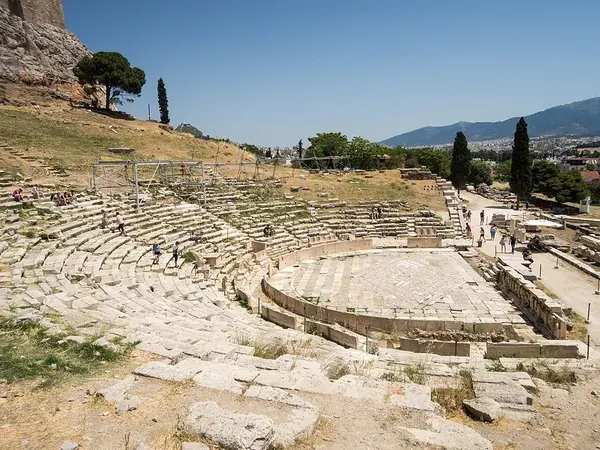
The Greek theatre stands as a key part of ancient art. Greeks built open-air theatres for comedy, tragedy, and satyr plays. These shows found their start around 700 BC and are still loved today.
Most times, the land itself became the stage. Hillsides and sloping ground were used to set up performances.
Ancient Greek playwrights crafted stories that spoke to human life and values often using heroes from Greek mythology like Dionysus. There was also an important role for the chorus in these shows.
They helped tell the story by singing odes on stage with masks on their faces! Not just plays, musical events were held too at places called Odeon- a smaller version of amphitheaters.
Legacy of Ancient Greek Architecture
The influence of Ancient Greek architecture is unmistakable in Western design, shaping the aesthetic of countless structures that followed. Its principles continue to inspire architects today, seen in both monumental buildings and residential homes.
The preservation and restoration efforts work relentlessly to maintain the grandeur of these ancient sites for future generations to appreciate. As we delve into the magnificence of Greek architecture, we can glean key takeaways that help us better understand and admire its enduring legacy.
Impact on Western architecture
Ancient Greek architecture left a deep mark on the design of Western buildings. It led to simple, clean lines and an eye for balance. Greeks cared about how buildings looked from all sides.
They brought harmony to their work. This came into view in both large city spaces and small details.
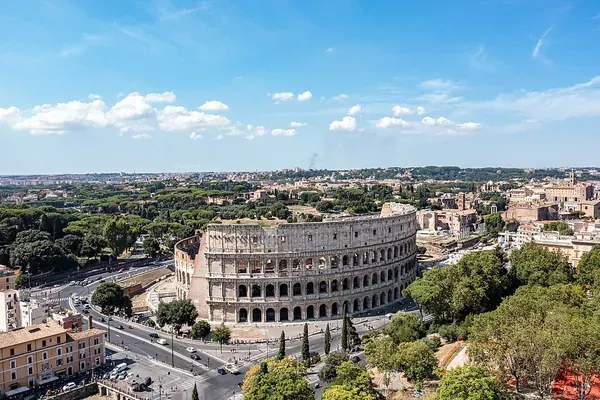
The Roman architects learned a lot from the Greeks. They used Greek ideas when they built their towns and cities. This spread across Europe as the Roman Empire grew larger. Architects use principles of proportion that come straight from ancient Greece even today, in contemporary architecture.
Even the famous Colosseum has elements clearly influenced by Greek architecture, from arches and columns, to ornamentation.
Modern-day influence
Ancient Greek builders left a lasting mark. We still use their ideas today. You can see this in modern buildings around the world. The Greeks made rules in design that we still follow now.
Their work has shaped how we build for over two thousand years. Look at columns and balance, they are all part of our designs too! A lot of famous spots in Greece stand tall even today. They show us how great Greek architecture really is. We still use their ideas today. You can see this in modern buildings around the world.
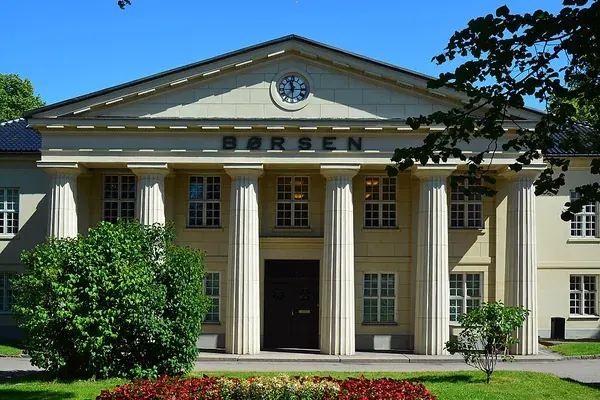
For example, one of the buildings clearly influenced by the Ancient Greek Style is the Oslo Trading Building:
Preservation and restoration efforts
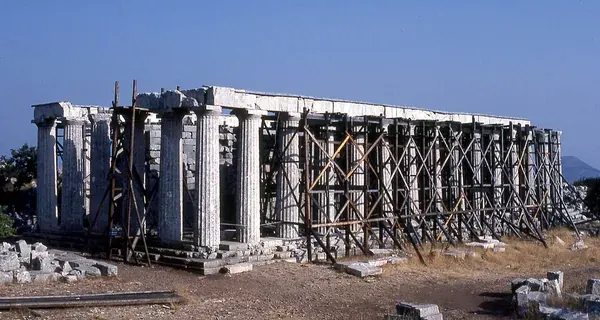
People put in a lot of work to keep Ancient Greek buildings safe. These steps are known as preservation and restoration efforts.
- They look at old ruins. These ruins may fall down if no one cares for them.
- They make plans for the work that needs to be done.
- The workers use their skills to fix up the old stone buildings.
- Everything has to be just right so the old beauty shows again.
- Sometimes, this means using new ways to do things, like building with cranes or other big tools.
- But sometimes, it means doing things the old way, just like the artists did long ago.
- This helps us see how good they were at making beautiful buildings.
- When people come from all over to see these places, they can understand better why the Ancient Greek style is special.
- Depending on how bad the ruin is, they could spend years getting it back in shape.
Key Takeaways
Greek architecture is a wonder to behold. The buildings are simple yet grand. They show great skill in balance and symmetry. Look at the Parthenon or the Temple of Hephaestus, for example.
These iconic structures carry on the legacy of ancient Greece. Their beauty can stun any viewer today, just as it did thousands of years ago. The Greeks wanted their work to be perfect in every way, so they focused on the right size and shape. Columns and flat pieces at the top of columns were used a lot, which we still see now in new buildings. This shows us how Greek building styles have had a big role in shaping our world today.
FAQs
1. What makes ancient Greek architecture special?
Ancient Greek architecture is known for its grand structures, precise designs, and pillars which have influenced many other styles of buildings.
2. What are some examples of ancient Greek architecture?
Famous examples of ancient Greek architecture include the Parthenon, Theatre of Dionysus, and Temple of Apollo.
3. What was the main material used in ancient Greek buildings?
Marble was a key material used in creating most ancient Greek buildings due to its strength and beauty.
4. How old is Ancient Greek Architecture?
Ancient Greek Architecture dates back to around 700 BC and made a significant impact on world history through its influence on later styles.
5. Can I see Ancient Greek architecture today?
Yes, there are numerous preserved sites across Greece where you can explore the remains of these impressive constructions from thousands of years ago.

Rhino for Architects Course
Give your architectural skillset a major boost with the Rhino for Architects Course. Get over 60 hours of focused training tailored specifically for architects. Master commands and techniques to model, render, and animate architectural visualizations at the highest level. Click below for more information and watch your designs come alive!