Understanding and practicing carbon-negative architecture is crucial in today's fight against climate change. Shockingly, buildings account for roughly 40% of global carbon dioxide emissions.
This insightful blog post walks you through the advantages, innovations, and challenges linked to carbon-negative architecture design—offering a roadmap toward a more sustainable future.
Discover how you can play your part – read on!
Key Takeaways
- Carbon-negative architecture is a new way to build. The buildings take out more carbon from the air than they put in.
- These buildings can save energy and money. They use less water and power, cut down on waste, and give us clean air.
- Building with carbon-negative plans can be hard. There are few materials to pick from and costs may be high at first.
- Designers must follow set rules which might limit their ideas for how the building will look.
- Some buildings are already using these smart designs like Powerhouse Telemark Office in Norway or Kendeda Building in America.
- For carbon-negative architecture to grow, we need better tools, policies that reward green designs, and industry standards that push for cleaner practices during building.
Understanding the Concept
To recognize the significant potential of carbon-negative architecture, it's essential first to understand its fundamentals.
Definition
Carbon-negative architecture is a new way of making buildings. This innovative design approach revolves around creating structures that not only produce less carbon during their lifecycles but actively remove more atmospheric carbon than they emit, traversing from the construction phase to eventual demolition.
Principles of Carbon-Negative Architecture
Carbon-negative architecture is a big step in the fight against climate change. It aims to take away more carbon dioxide from the air than it lets out. This means that buildings should make more energy than they use. The guiding principle is a careful balance between embodied and operational carbon with the ultimate aim of negative net emissions—a transformative stride in sustainable building practices.
These structures store carbon in their parts and don't use a lot of fossil fuel during building or when people live or work there. To do this, architects pick materials that have low levels of embodied carbon.
These buildings are also designed to be strong even in bad weather conditions. Buildings like this are good for our world and can help us stop damaging changes in nature's balance.
Advantages
Now let’s look into the advantages of this approach to architecture and design.
Positive environmental impact
Carbon-negative architecture greatly contributes to the reduction of greenhouse gas emissions. It optimizes energy efficiency, lowering utility costs and reducing dependence on non-renewable energy sources.
This lowers the harmful greenhouse gases that lead to climate change. Buildings can even clean the air! They can take in carbon and give out fresh, clean air. The design of these buildings also saves energy. Instead of using lights all day, they make use of natural sunlight. Instead of turning up heat or cooling systems, they keep rooms comfy on their own. All these steps cut down on power use and lessen harm to our environment, which is why many architects follow them in their work, like Faulkner Browns Architects, GBBN or Atkins.
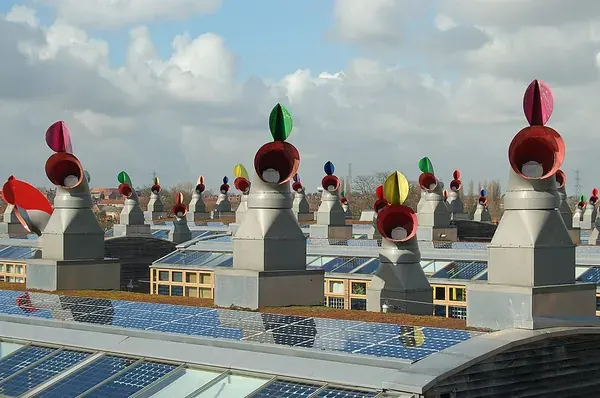
Efficiency and Resource Management
Using less and making more is a big part of carbon-negative architecture. It means buildings use fewer resources like energy and water. They still do everything other buildings do, but they do it in smarter ways.
Green building materials make this possible. These materials are made using methods that cut down on pollution. For example, some bricks can be produced with less heat or by using waste from other industries.
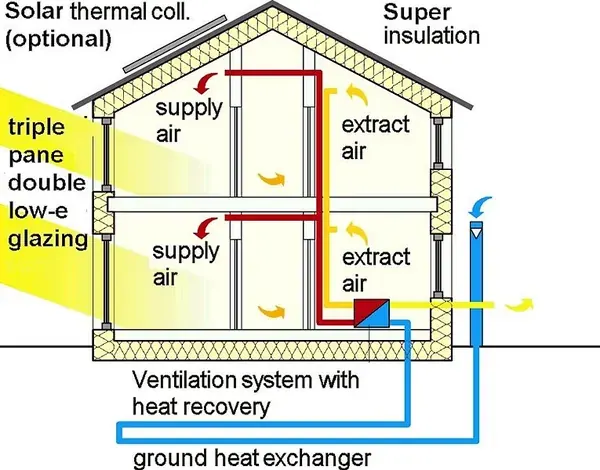
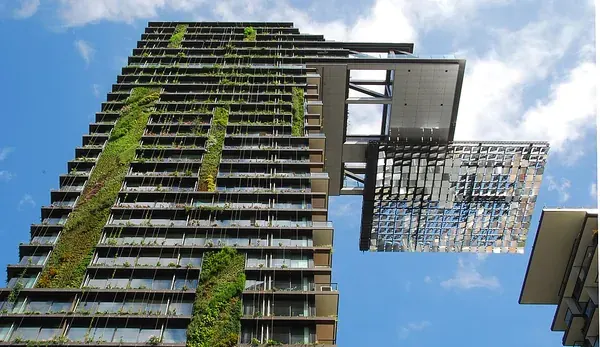
Green spaces integrated into designs enhance biodiversity and improve the mental well-being of those using the buildings. Ultimately, carbon-negative architecture presents not only environmental benefits but also economic advantages in the long run through lower operational costs.
Smart designs also play a role in resource management. Passive design techniques allow buildings to use sunlight for warmth and natural breezes for cooling. This way, the need for heaters and air conditioners goes down.
Recycling helps too! Old building parts can find new life instead of going to waste dump sites. Surplus materials get used up as well instead of being thrown away. In short, managing resources efficiently cuts down on emissions and saves money at the same time.
Disadvantages and Challenges
While carbon-negative architecture offers significant benefits, it does face certain challenges. Overcoming these hurdles can pave the way towards a more sustainable design in architecture in the future.
Limitations
Finding carbon-negative materials can be hard. Right now, not many options are out there. Even when you find them, they may not fit your project's needs. On top of that, using these materials might need new ways to work. That could cause problems at the building site.
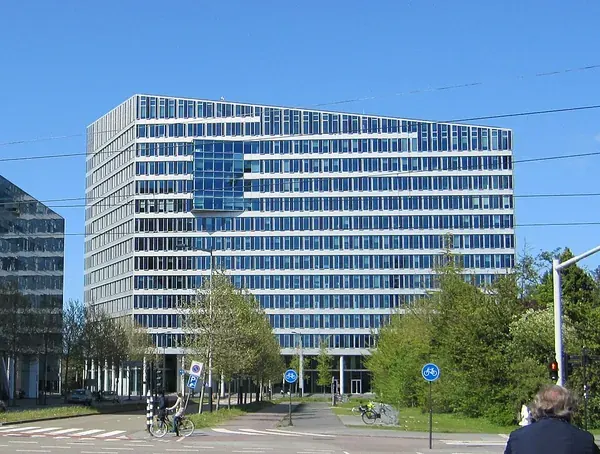
Another issue is tech limits. We do have tools to help make buildings carbon-negative. But they don't always work as we want them to. They may restrict architects' creativity due to specific guidelines that need to be followed and some tools might only work in certain types of weather or places.
Cost implications
Making buildings that take away more carbon than they give off can cost a lot at first. Special skills and design work are needed to build these places. Using new ways like carbon negative architecture raises the start cost. But on the other hand, it brings big gains in the future.
Cutting down on energy use means less money spent over time. It is true, you will need to put more cash into the building at first. Yet, lower bills for heat and light come later on.
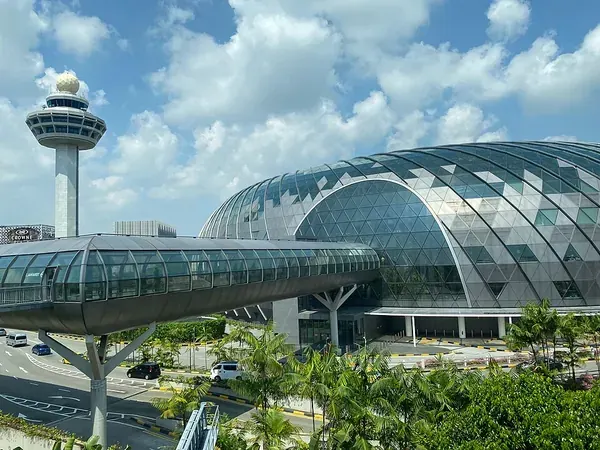
Examples
From the dynamic, energy-efficient Powerhouse Telemark Office in Norway to the innovative, 3D printed Tecla House composed entirely of raw earth materials, let’s dive into some of the great examples of carbon-negative architecture.
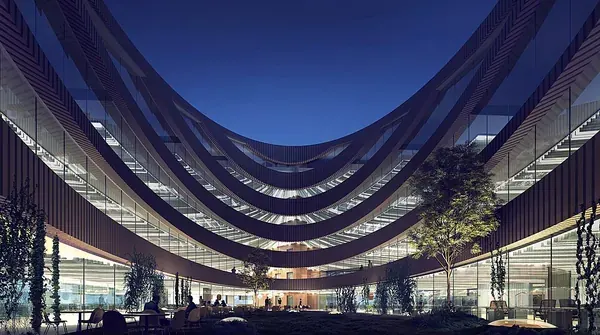
Powerhouse Brattørkaia
Designed by the internationally acclaimed firm Snøhetta, Powerhouse Brattørkaia is an 18,000-square-meter office building that sets a new standard for energy-positive structures.
Located in Trondheim, Norway, it produces more than twice the amount of electricity it consumes daily. Over its 60-year lifespan, the building is projected to generate enough surplus renewable energy to compensate for the carbon emitted during its construction, operation, and even its eventual demolition.
This remarkable feat is achieved through a massive solar array covering its roof and parts of its upper facade, which harvests solar energy in a region with limited sunlight.
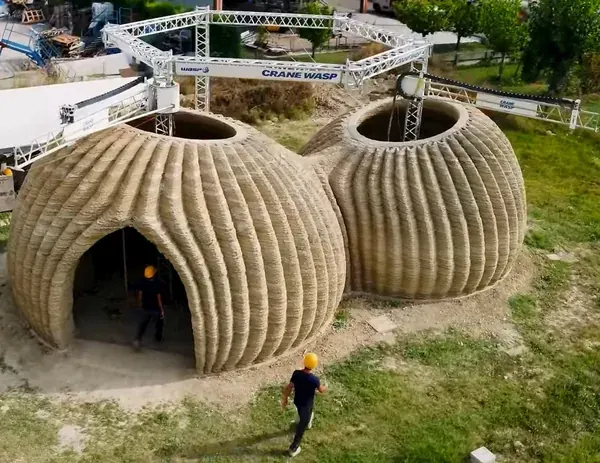
Tecla House
The Tecla House, a pioneering example of carbon-negative architecture by Mario Cucinella Architects and WASP, utilizes 3D printing to craft a 60-square-meter dwelling from local clay.
This innovative technique not only expedites construction but also significantly cuts energy usage and waste.
The structure's domed design and clay composition provide natural insulation, with skylights for illumination, creating a sustainable, low-carbon habitat responsive to climate emergencies and housing crises.
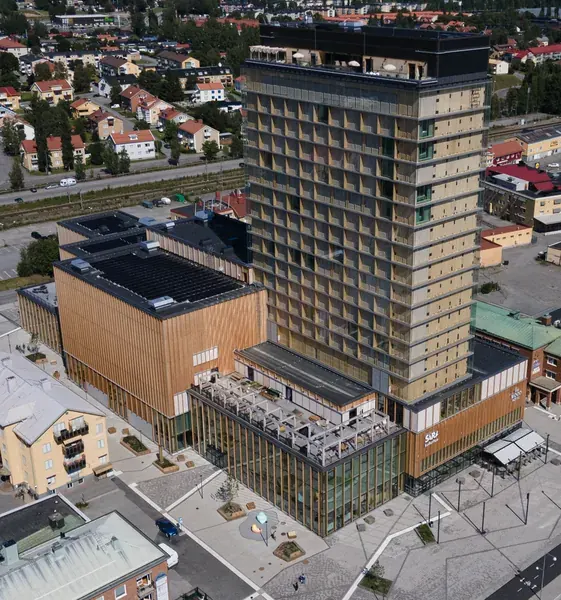
Sara Kulturhus Centre
The Sara Kulturhus Centre in Skellefteå, designed by White Arkitekter, is a beacon of carbon-negative development, boasting the world's second-tallest wooden tower.
Constructed from cross-laminated timber and glued laminated timber, it houses cultural venues and a hotel, and is expected to sequester more carbon than it emits over its lifespan.
This ambitious project reflects White Arkitekter's commitment to carbon neutrality, aiming for all their designs to be carbon neutral by 2030.
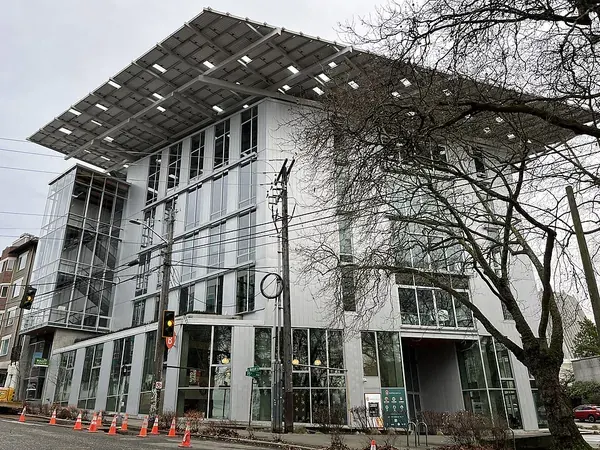
The Bullitt Center by The Miller Hull Partnership
Considered one of the greenest commercial buildings in the world, the Bullitt Center in Seattle, designed by The Miller Hull Partnership, is a landmark achievement in regenerative architecture.
It is a certified "Living Building," a standard far more rigorous than LEED, requiring it to be net-zero energy, net-zero water, and non-toxic. The building's primary structure is made from heavy timber, sequestering a significant amount of carbon. Its most prominent feature is the massive, cantilevered solar panel array on its roof, which generates more electricity annually than the building consumes, making it net-positive energy. This surplus power is fed back into the city's grid, offsetting the carbon footprint of its construction over time.
The Bullitt Center serves as a living prototype, proving that large-scale urban architecture can operate in harmony with nature and function as a net-positive contributor to the environment.
The Kendeda Building
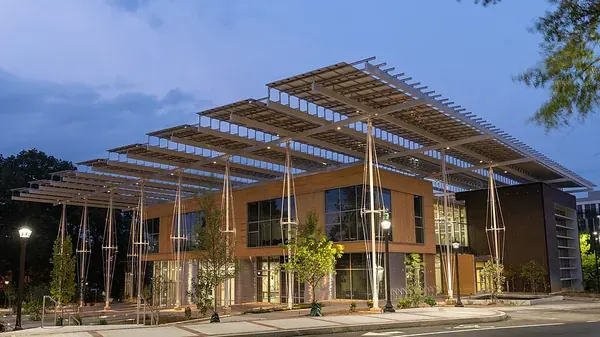
The Kendeda Building for Innovative Sustainable Design, a creation of Miller Hull Partnership and Lord Aeck Sargent, embodies a new standard for sustainable architecture in the Southeast United States with its full Living Building Certification.
Drawing inspiration from the southern porch, it features a regenerative design, producing more than 100% of its energy needs and capturing all its water use from rainwater.
The building also showcases a commitment to repurposed materials, incorporating salvaged wood and rainwater systems, and serves as a model for intelligent stormwater management and sustainability in the built environment.
The Future
Looking ahead, the future of carbon-negative architecture relies heavily on policy adjustments and incentive structures that encourage sustainable building practices. Innovations in technology and design will continue to play a crucial role in facilitating low-carbon construction while making it more manageable and efficient.
The role of policy and incentives
The government can shape how things work with industry standards. Industry standards tell you what a good building should be like so everyone knows what to aim for. A game-changer would be an industry standard that promotes carbon-negative practices. There are more than a few worldwide companies that strive to carbon-negative designs, including Snøhetta from Norway.
Overall, policy and incentives play a big role in pushing low-carbon engineering forward. It is through collaborative, innovative efforts across geographical and professional boundaries that carbon-negative architecture can transition from an aspirational goal to a global reality. This transformation will not only reduce the industry’s environmental impact but also enhance the quality of life through thoughtful design and operation of the built environment.
Innovation and technology
The development of advanced carbon removal technologies is expected to drastically decrease both embodied and operational carbon emissions within the architectural landscape. Meanwhile, net-zero buildings are predicted to become more prevalent as architects strive towards creating designs that have zero-net energy consumption.
In this light, passive design strategies will be increasingly utilized to lower ecological footprints by maximizing energy efficiency through natural climate control measures such as sun shading or thermal insulation. One example of a passive design building is the Sheikh Khalifa Medical City in Abu Dhabi by SOM.
The growth trajectory for sustainable architecture looks promising with the ongoing advancements in environmentally friendly construction materials and methods aiming at reducing our collective carbon footprint significantly.
FAQs
1. What is carbon-negative architecture?
Carbon-negative architecture is a type of design that helps to take more carbon out of the atmosphere than it puts in.
2. How does carbon-negative architecture help the environment?
Carbon-negative architecture lessens harmful gas in the air, slowing down changes that harm our planet.
3. Can any building be made into a carbon-negative one?
With good planning and the use of special materials, most buildings can be turned into carbon-negative ones.
4. What are some examples of innovative carbon-negative designs?
Green roofs, walls that hold plants and trees, and the use of low-carbon or no-carbon materials are examples of new designs.
5. Is it costly to create a building with this design?
The initial cost might be higher but savings from lower energy bills over time make up for it.
Rhino for Architects Course
Give your architectural skillset a major boost with the Rhino for Architects Course. Get over 60 hours of focused training tailored specifically for architects. Master commands and techniques to model, render, and animate architectural visualizations at the highest level. Click below for more information and watch your designs come alive!