
The first step of landing the job you want is creating the perfect architecture resume.At first glance, the whole process seems overwhelming and the pressure of having to impress the employer within the first 15 seconds is enormous.Even though resumes are major game changers in any employment process, for people who get to express their creativity through their work, like artists, designers, and of course architects, making an outstanding CV is even more paramount.
In this article we will show you how to design an eye-catching resume that will leave the employers impressed and your inbox full of job offers.
Welcome to our definitive guide to the best architecture resume!
Writing an architecture resume 101 - Things to keep in mind

Before we dig into the specifics of writing architecture resumes, let's take a moment to outline some basic guidelines for any resume.It's common knowledge that the HR team has to go through tons of CVs before choosing the right one. Along with a cover letter, your resume has to stand out, because recruiters will glance at it for no more than half a minute.That's why even the smallest details, like an unprofessional email address, or illegible fonts can pose as a distraction, and tank your chances even before you're given a moment to shine.We will go into the details later, but for now, the key is to stick to the following categories: experience, education, skills and certifications.Think of your resume as your work story, one you should make as presentable as possible.But at the same time, try to stay original - your resume is about you, not anyone else.
Design of Architecture Resume
As we mentioned before, your resume's appearance plays a pivotal part in the employment process. You can find hundreds of different layouts and templates online, where you can adjust each section to your liking. But be careful, a lot of mistakes tend to be made here.Let's take a look at a few steps you should follow when writing your resume:
- Don't overdo it - Yes, we do like a resume that stands out, but remember, it's a professional document, not a coloring book. Try to keep the color palette simple and monochrome, and the overall appearance of the CV minimalistic. Also, avoid overusing distracting items like stickers, symbols and similar icons that just stick out.
- Beware of stylized fonts - This might be one of those moments when you think that utilizing fancy fonts in your resume is a good idea. Think again.In these types of situations, you want to keep it simple - Arial, Times New Roman and Calibri are your best friends.
- Make sure to proofread - Nobody wants to spot a spelling mistake on your resume, or anywhere else for that matter. Submitting a resume that is full of errors shows the recruiters that you are irresponsible, or even uneducated. So read it carefully, a thousand times if you have to.
- Pictures - to add or not to add? - This question has been debated for a long time, and while some companies highly encourage doing this, others firmly claim that adding a picture on your resume is a bad idea. On the one hand, it can ensure that employers remember you, but on the other, it can invoke discrimination. If you do decide to use a picture, make sure it's professional, and not a selfie.
- How long should my resume be? - Recruiters recommend keeping your resume one page long, simply because they don't have the time to go through a three-page list of every single thing you've ever done. Even if you do possess a lengthy list of achievements, pick out the most essential ones and accentuate them.
Here are some of our favorite architecture resume templates:
Although this resume might seem simple and dull, it's actually quite detailed, but at the same time not too condensed.All the important segments (practice experience, academic background, software skills, publications and achievements) are clearly divided, and this architecture resume tells us a story in an innovative way.
Even though we encourage keeping your resume one page long, here's a great example of how to make a two-paged resume work.In some resumes, people like to add a short bio, which helps the employer get to know you a little bit better.
Here's another example of an unpretentious and intriguing architecture resume. Keep in mind that the experience should always be listed in a reverse-chronological order (from the newest to the oldest).It's also very important to list accurate and valid information.
This resume perfectly portrays all of the person's strengths and skills. We can also see a list of technical skills, which is important to include when you're an architect.The design is simple, but not overwhelming for the reader.
This resume also includes a certification section, which we highly recommend adding to your CV.If possible, add a link to your portfolio or website.
Making an architecture resume - step by step
Let's take a closer look at each segment a resume should and must have, and go through some of the things you should definitely not be doing.The basic resume sections every resume needs are:
- Contact Information
- Resume summary (optional)
- Experience
- Academic education
- Skills
- Certifications/Licenses
Contact Information
This section should be easy enough, just make sure you write down correct information. Basic contact information is usually found at the top of a resume, and it consists of your name, surname, occupation, phone number, address and email.Make sure you use your business email, and not the one you made in high school with a funny username.If you have a website, go on ahead and add the link too. You can also add your social media, for example your LinkedIn or Twitter profiles, if you want.
Architecture Resume Summary
This part is optional, but it can definitely make a difference.A resume summary is a short paragraph found at the beginning of a resume, and it's used to emphasize your greatest achievements, skills and something that makes you stand out from the crowd.For architects, it can be an architecture firm you worked for, a project that you spearheaded, or an internship that shaped your goals. Whatever you opt for, make sure it's something that represents who you are as an architect.
Experience
The centerpiece of any resume is always the work experience section. If you don't have any real full-time experience, don't worry. Internships or any type of freelance projects you participated in still count. On the other hand, if you have worked in multiple companies, choose the top five jobs, and list them from the newest to the oldest.Don't write down every single thing you've done since you graduated from high school.Below each job position, include the full name of the company, followed by the time period in which you worked there.This following step is key - make sure to describe just which responsibilities those jobs came with.To be more precise, you can add a few bullet points beneath each job title, where you state your accomplishments, specific things you did, throw in some statistics too. Basically anything you contributed to. It will boost your chances of getting hired for sure.Another thing to keep in mind is to tailor your resume to the job you are applying for. Do your research and find out exactly what the company is about, and then showcase how your experience and knowledge is exactly what they're looking for.
Education
The academic education section is also quite important.Recruiters want to see where you studied, your degrees and majors, the year you graduated and so on.Therefore, making this resume section shine is equally vital as the work experience segment.
Just like in the experience section, start from the newest and work your way to the oldest points.Including your high school is not mandatory, but you can if you want to. Apart from your Bachelor's degree, add your Master's degree, and a PhD, if you have it.What's essential is that your highest degree is at the top of your list.Make sure to put in the information correctly - first the most recent degree, then the name of the institution, the year you enrolled and graduated, your field of study and finally your GPA.
Skills
As an architect, it's crucial to demonstrate a desired set of skills that recruiters tend to scout for. Highlight your strong points and most importantly, find out exactly what the employers are looking for in the first place. When it comes to skills you should have as an architect, there are two groups - soft and hard skills.
Soft Skills
Soft skills demonstrate how you work in a professional environment.Owing to the fact that architects work with different people on a daily basis, from contractors and civil engineers, to interior designers and various clients, communication and teamwork skills play a pivotal role.So for example, consider using some of these soft skills:
- Negotiation
- Problem Solving
- Collaboration
- Intercultural competence
- Patience
Apart from communication skills, it's desirable for an architect to be well-versed in time organization, critical thinking, creativity and project management.
Hard Skills
Hard and technical skills play an even greater role in the hiring process. This part is where you show off your vast knowledge of drafting, 3D modelling, designing and many more.Remember, don't be shy and humble.Here are some hard skills recruiters will want to see on an architecture resume:
- Sketching
- Design
- Computer Skills
- Drawing
- Painting
- Urban planning
- Model building
When it comes to specific technical skills, it would be great if you had any of these skills on your resume:
- Drafting (AutoCad, DraftSide, TurboCad, LibreCad…)
- 3D modelling (Sketchup, 3Ds Max, Maya, Rhino 3D)
- BIM software (BIM 360, Revit, Bluebeam Revu, ArchiCAD…)
- Graphic design (Photoshop, Illustrator, InDesign…)
- Basic Web development
- Microsoft Office
- Google Drive/Docs
If you want to go a step further, instead of just making a plain list of all your skills, try choosing a couple skills that represent you the best, and add some examples where you used those skills.It makes your resume much more interesting, and it will prove to the recruiter that you actually do possess those skills.
Certifications / Licenses
At the very end, you should include a section for the certifications and / or licenses you've gained. After all, you worked so hard to get them, the moment has finally come to put them to good use.If you're wondering how to list your certifications properly, we've got you. First, write the official title and then the institution where you got your license, for example:Registered Architect, American Institute of Architects (AIA)Here are some of the best and most sought out architecture certifications:
- National Council of Architectural Registration Boards - NCARB
- National Architectural Accrediting Board - NAAB
- American Institute of Architects - AIA
- Leadership in Energy and Environmental Design - LEED - USGBC
Additional segments in Architecture Resume
To top it all off, you can make a few additional steps to ensure that employers will take your job application into consideration.
- Consider adding a link to your portfolio - if recruiters are impressed with your resume and they want to see more, they can easily do that by viewing your architecture portfolio. Also, make sure that your portfolio has the same aesthetic as your resume.
- Attach a cover letter - in almost all cases, recruiters require cover letters anyway, since it helps them make the decision whether to hire you or not. Even so, by attaching a cover letter in any case, you will amplify your chances.
- Attach any type of references - Employers sometimes ask for reference letters as well, so it would be great if you prepare them beforehand.
To put it in a nutshell, research the job you are applying for and tailor your resume to their requirements.
Follow all these steps and you will be sure to land an interview in no time. Good luck!We hope you enjoyed our ultimate guide to writing the perfect architecture resume and if you'd like to know a bit more about what you can expect in terms of compensation for work, here's our guide on architects' salary.
Related Resources
If you found this resume guide helpful, explore more career resources:
- Architecture Internships: How to find and land the best architecture internships
- Architects' Salary Guide: What architects earn at different career stages
- Best Architecture Schools: Find the right school for your architectural education
Stand out from other candidates by mastering Rhino. The Rhino for Architects Course gives you the 3D skills employers are looking for.
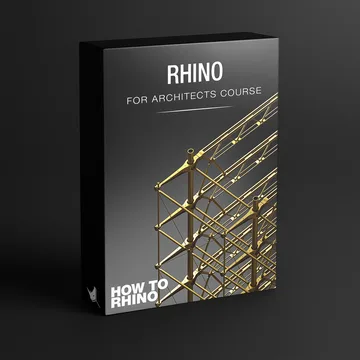
Rhino for Architects Course
Give your architectural skillset a major boost with the Rhino for Architects Course. Get over 60 hours of focused training tailored specifically for architects. Master commands and techniques to model, render, and animate architectural visualizations at the highest level. Click below for more information and watch your designs come alive!



![Architecture Internships: The Complete Guide [2026]](/images/blog/featured/variants/architecture-internships--related-card.webp?cb=seo-meta-20260227-164423)