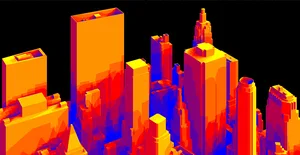
Design with Climate
Discover the power of environmental simulations in sustainable design with this introductory workshop on Ladybug Tools for Grasshopper3D. Tailored for architects, engineers, landscape designers, and other professionals, this hands-on session equips participants with the skills to analyze daylight, wind, and outdoor comfort effectively.

Discover the power of environmental simulations in sustainable design with this introductory workshop on Ladybug Tools for Grasshopper3D. Tailored for architects, engineers, landscape designers, and other professionals, this hands-on session equips participants with the skills to analyze daylight, wind, and outdoor comfort effectively.
You'll learn to set up and run simulations, visualize environmental data, and interpret results to inform climate-responsive design decisions. Focused exclusively on Ladybug Tools, the workshop offers a structured and accessible approach to mastering fundamental analysis techniques. By the end, participants will have a solid foundation to apply these tools in real-world projects, enhancing both design quality and environmental performance.
- Import and interpret EPW weather data files to understand local climate conditions for your project site
- Create sun path diagrams, wind roses, and monthly climate charts using Ladybug components in Grasshopper
- Run cumulative radiation analysis on building surfaces to evaluate solar exposure throughout the year
- Perform direct sun hours analysis to understand shadow patterns and sunlight access for facades and windows
- Analyze solar benefit radiation to balance heating gains and cooling loads for optimal facade orientation
- Calculate outdoor thermal comfort using the UTCI model and visualize results on building massing
- Set up and run massing-level environmental studies including view analysis and radiation mapping
- Use Galapagos optimization in Grasshopper to find design solutions that improve environmental performance
Session 1: Climate Data, Sun Paths, and Radiation Analysis
- Introduction to Ladybug Tools ecosystem and its role in sustainable architectural design
- Importing and parsing EPW weather data files into Grasshopper for site-specific analysis
- Creating sun path diagrams, wind roses, and monthly average climate charts
- Setting up cumulative sky matrices for radiation analysis on building geometry
- Running direct sun hours studies on facades and windows to evaluate sunlight access
- Analyzing solar benefit radiation to understand heating and cooling implications
Session 2: Massing Analysis, Outdoor Comfort, and Optimization
- Continuing massing-level environmental studies with radiation and sun hours analysis
- Implementing UTCI outdoor thermal comfort calculations on building massing models
- Visualizing comfort results with color-mapped meshes and interpreting thermal stress levels
- Running view analysis studies to evaluate sight lines and visual exposure
- Introduction to Galapagos optimization for environmental performance improvement
- Combining multiple environmental criteria to inform climate-responsive design decisions
Ricardo Ruiter Kanamori
Ricardo Ruiter Kanamori is a BIM architect and computational designer with a Master of Science in Architecture from Delft University of Technology. Throughout his academic journey, he discovered his passion for environmental analysis and design efficiency in BIM. He has since continued to explore these areas in his work at Schmidt Hammer Lassen Architects and, currently, at Daiwa House Modular Europe.
Ricardo shares his expertise through workshops focused on Ladybug Tools, helping architects and designers understand how to use environmental simulations to inform their design decisions. His experience bridges the gap between computational design and practical sustainability applications in architecture.