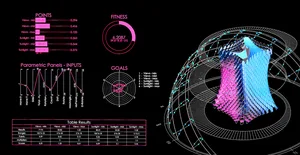
Optimization in Grasshopper
A four-day workshop introducing optimization techniques in Grasshopper. You will learn the theory of Genetic Algorithms, create Grasshopper scripts that generate design variations, run optimizations for urban design and high-rise buildings, and include daylight analysis using the Ladybug plugin.

On the first two days of the workshop, you will be introduced to optimization techniques in Grasshopper. You will learn the basic theory of Genetic Algorithms, see interesting Grasshopper examples for creating complex architectural shapes, and create a script that generates a large number of design variations related to urban design to find solutions that align with your objectives.
On the third day, we will create a more complex Grasshopper script for intermediate-level users, focusing on the parametric design of a high-rise building with daylight analysis using Ladybug. The final day brings together everything with an overview, next steps in your learning journey, and a live quiz with prizes.
- Understand the basic theory of Genetic Algorithms and how they apply to architectural design optimization
- Set up Grasshopper scripts that generate large numbers of design variations for urban design scenarios
- Define and configure design objectives properly for running meaningful optimization studies
- Run multiple optimizations using Galapagos to find solutions that meet specific design criteria
- Create parametric high-rise building definitions suitable for optimization workflows
- Integrate Ladybug daylight analysis into optimization loops for performance-driven design
- Interpret optimization results and understand how to evaluate trade-offs between competing objectives
- Apply optimization techniques to real architectural projects from massing to facade design
Session 1: What is Optimization
- Introduction to optimization in architectural design and its practical applications
- Basic theory of Genetic Algorithms and how they search for optimal solutions
- Interesting Grasshopper examples for creating complex architectural shapes
- Live demo of two simple Grasshopper optimizations using Galapagos
- Understanding fitness functions and how to define design objectives
- Setting up your first optimization-ready Grasshopper definition
Session 2: How Does Optimization Work
- Creating a Grasshopper script that generates a large number of urban design variations
- Setting up multiple design objectives and learning to configure them properly
- Running several different optimizations and comparing results
- Understanding how parameter ranges affect the optimization search space
- Evaluating trade-offs between competing design objectives
- Practical tips for improving optimization performance and convergence
Session 3: Optimization Applied
- Creating a more complex Grasshopper script for parametric high-rise building design
- Integrating Ladybug daylight analysis into the optimization workflow
- Running performance-driven optimization combining geometry and environmental simulation
- Understanding how simulation feedback improves optimization outcomes
- Intermediate-level Grasshopper techniques for optimization-ready definitions
- Analyzing and comparing optimization results across multiple criteria
Dusan Cvetkovic & Lazar Djuric
Dusan Cvetkovic and Lazar Djuric are the founders of How to Rhino, an educational platform dedicated to teaching architects computational design skills. With over 86,000 YouTube subscribers and a thriving premium community of 850+ members, they have built one of the largest Rhino and Grasshopper learning communities in the world.
Together, they bring over 15 years of experience in architectural design and computational workflows. Their teaching approach focuses on making complex tools accessible to architects at all skill levels, from beginners learning optimization basics to advanced users exploring performance-driven design.