
Parametric design skills show up in a surprising number of architecture and engineering job ads right now. The catch is that if you search job boards for the exact phrase "parametric design," you will barely find anything. When we went through 1,448 listings on nine firm career pages in October 2026, not one had "parametric" in its title, yet 121 of them named Grasshopper. The work is real, but the jobs hide under a dozen different titles.
That gap between demand and visibility is exactly why people who know how to find these roles, and how to present themselves for them, have such an advantage. Firms are actively looking, but they describe the role in their own language.
This guide is the practical companion to the career path itself. If you want the full breakdown of the skills and learning roadmap, read our guide on how to become a computational designer first. Here, we focus on the job hunt: what these roles are called, who is hiring, where they were advertised in October 2026, what the postings pay, and how to actually land one.
Key Takeaways
- Parametric design jobs rarely use the words "parametric design" in the title. You have to search for the right alternative titles to find them.
- Grasshopper is asked for far more often than it appears in a title. Of 1,448 firm listings we checked in October 2026, 121 named it, including structural, mechanical, facade and lighting roles, while only 6 had "computational" in the title and none had "parametric."
- The employers are more varied than most people expect, spanning architecture firms, engineering and facade consultancies, fabrication companies, and product design.
- A targeted portfolio is the single most important asset for landing these roles, more than any specific degree.
- Networking inside the community through forums, the McNeel Forum's job board, and events puts you in front of the people who do the hiring.
- A computational title does not guarantee a premium. The US postings we opened paid $65,000 to $160,000 for these roles, overlapping with the same firms' designer pay.
What Are Parametric Design Jobs?

Parametric design jobs are roles where you use logic, parameters, and often code to generate and control design, rather than drawing every outcome by hand. In practice this means building the systems behind complex facades, structures, and geometry, automating repetitive work, and connecting design to analysis and fabrication. It is the applied, employed version of parametric design.
These roles exist because modern projects demand complexity and efficiency that manual workflows cannot deliver. A firm that wins a project with a performance-driven facade needs someone who can build the system that makes it buildable. That someone is filling a parametric design job, whatever the title on their contract says.
Job Titles to Search For
This is the most important section for your search. Because "parametric design" is a skill rather than a standard job title, you need to search for the titles firms actually use. Look for:
- Computational Designer, Computational Design Specialist and Computational Design Manager
- Design Technologist, Design Technology Specialist and Head of Design Technology
- Design Systems Analyst, the title Foster + Partners used for a role where advanced Rhino and Grasshopper were essential
- Facade Specialist or Facade Designer (often heavily parametric)
- BIM and Computation Specialist, BIM and Computational Designer, or BIM Technologist
- Digital Design Specialist
- Geometry Specialist or Geometry Engineer
- Parametric Designer and Parametric Modeler, although we found no October 2026 openings with "parametric" in the title
Set up job alerts for several of these at once. The same underlying skill set, Rhino, Grasshopper, and some scripting, applies across all of them, so do not narrow your search to a single title.
Search for the tools as well as the titles. On Archinect, Grasshopper returned 31 postings against 15 for "computational," and most were general architecture, interior design and project management roles.
Who Is Hiring for Parametric Design Roles?

One of the best things about this field is how varied the employers are. You are not limited to a handful of famous architecture offices. Roles show up across:
- Large architecture firms with dedicated computational design or design technology teams.
- Engineering and facade consultancies, which often have the deepest need for parametric and geometry expertise.
- Fabrication and construction companies that bridge design and manufacturing and need geometry prepared for production.
- Specialized computational design studios that consult to other firms on complex projects.
- Product and industrial design, where parametric thinking applies just as well to objects as to buildings.
Casting a wide net across these categories dramatically increases the number of opportunities you will see. Engineering consultancies stood out in our October 2026 check. Arup had 62 openings that mentioned Grasshopper, from structural and facade engineers to lighting designers and graduate mechanical engineers, and Buro Happold had 24.
Where to Find Parametric Design Jobs
Once you know the titles and the employers, here is where to actually look:
- LinkedIn, searching the alternative titles above and following firms known for computational work so their postings reach you.
- Firm career pages directly. Computational roles are not always cross-posted to the big job boards. In our check, Grimshaw's computational design specialist opening was on its own careers site but not on Archinect, where Grimshaw was advertising other roles.
- Specialized communities and forums. The computational design community is tight-knit, and roles are shared in forums and social channels.
- The McNeel Forum's Jobs & Portfolios category, where Rhino and Grasshopper users post and find work. In September 2026 it carried five new posts from people hiring, from a sculpture and feature art company to a yacht canvas and upholstery shop.
- Events, workshops, and conferences, both in person and online, which are among the best places to meet the people who do the hiring.
Being visible in the community is not optional. It is one of the most effective things you can do.
Where the Jobs Were Advertised in October 2026
At the start of October 2026 we checked two job boards, the McNeel Forum and nine firm career pages. On the boards we ran keyword searches. On the firm pages we went through every listing, counted the ones that named Grasshopper (Arup's count comes from its own site search), and noted the specialist titles.
| Where we looked | Listings checked | Naming Grasshopper | Specialist titles in use |
|---|---|---|---|
| Archinect Jobs | Keyword searches | 31 | Computational Design & Automation Consultant, Junior Computational Designer, Design Technology Specialist, BIM & Design Technology Specialist |
| Dezeen Jobs | Keyword searches | 1 | Computational designer (landscape architecture) |
| McNeel Forum, Jobs & Portfolios | 8 new threads in September, 5 of them hiring | 3 | In-House Computational Designer (sculptures and feature art), Rhino/Grasshopper Detailer |
| Arup | 1,061 | 62 | Junior Computational Designer, Graduate Computational Urban Designer |
| Buro Happold | 206 | 24 | Graduate BIM & Computational Designer, BIM & Computational Intern, BIM Modeller |
| SOM | 64 | 10 | Firmwide BIM Lead, BIM Technologist, Senior BIM Specialist |
| Foster + Partners | 38 | 4 | Design Systems Analyst, BIM & Design Systems Coordinator |
| BIG | 29 | 1 | Head of Design Technology |
| Grimshaw | 18 | 5 | Computational Design Specialist, Computational Design Manager |
| UNStudio | 18 | 10 | Design Technologist |
| KPF | 14 | 5 | Design Technology Software Specialist, BIM Coordinator |
| Zaha Hadid Architects | 0 | 0 | No openings listed that day |
Two things stood out. First, Grasshopper shows up far more often as a requirement than computational design shows up as a title. Across the nine firm career pages, 121 of 1,448 listings named Grasshopper, 86 of them at Arup and Buro Happold, but only 6 had "computational" in the title. SOM named Grasshopper in 10 listings and Rhino in 36 but used BIM titles, not computational ones. Second, the famous names are not always hiring. Zaha Hadid Architects' careers page listed no openings when we checked, so treat any single firm as one source among many.
What Do Parametric Design Jobs Pay?
Exact figures vary widely by region, firm type, and seniority, so treat any single number with caution. The most reliable numbers are the ranges employers publish in their own postings. These are the ones we found in October 2026, all from US postings:
- Design Technology Software Specialist at KPF in New York, $65,000 to $90,000
- BIM & Design Technology Specialist at Dattner Architects in New York, $70,000 to $95,000
- Graduate BIM & Computational Designer at Buro Happold in Los Angeles, $80,000 to $83,000
- Computational Design Specialist at Grimshaw in Los Angeles, $95,000 to $115,000
- Computational Design & Automation Consultant at GT-BIM in Los Angeles, $100,000 to $130,000
- Firmwide BIM Lead at SOM in New York, $140,000 to $160,000
A computational title does not automatically pay more than a design role at the same firm. KPF's design technology range topped out at the same $90,000 as its designer posting for 2 to 7 years of experience, which started higher at $79,000. Grimshaw's computational design specialist range sat above its intermediate architect range in Los Angeles of $80,000 to $105,000, but the two overlapped.
For a regional baseline to build on, see our breakdown of architect salaries.
How to Land a Parametric Design Job

Finding the openings is half the battle. Here is how to actually win the role.
Build a Targeted Portfolio
Your portfolio matters more than anything else, including your degree. Show the logic behind your projects, not just the final renders. Include diagrams of your Grasshopper definitions, explain the problem each project solves, and demonstrate range across facades, structure, optimization, and a custom tool or two. Three to five well-documented projects beat twenty shallow ones. For presentation fundamentals, our guide on the architecture resume and portfolio applies directly.
The postings say so too. 47 of SOM's 64 postings stated that a portfolio is required for all design and project management positions, and the computational designer opening on Dezeen Jobs asked for examples of Grasshopper work.
Optimize Your Resume and LinkedIn
Use the alternative job titles in your headline and summary so recruiters searching for "computational designer" or "design technologist" actually find you. List your tools explicitly: Rhino, Grasshopper, Python, and any analysis or optimization plugins you know. Recruiters often filter by these exact keywords.
Network in the Community
Becoming a visible, contributing member of the computational design community is one of the highest-leverage things you can do. Share your work, help others in forums, and show up to events. Familiar names get referred.
Prepare for the Technical Interview
Expect to be tested on real ability. Many firms will ask you to walk through a definition you built, solve a small parametric problem live, or discuss how you would approach a specific geometry challenge. Be ready to explain your thinking, not just show a finished result. Practicing by rebuilding complex definitions and being able to narrate your logic is excellent preparation.
Skills Employers Look For
Employers hiring for parametric design jobs consistently look for the same core skills: strong Grasshopper ability, solid Rhino modeling, some scripting in Python or C#, and increasingly, fluency with AI tools that are reshaping the field, which we cover in our AI in architecture guide. For the complete skill set and a step-by-step plan to build it, our full guide on how to become a computational designer walks through everything from first steps to job-ready.
The October 2026 postings bear this out. Foster + Partners called advanced proficiency in Rhino and Grasshopper essential for its design systems analyst. Grimshaw's computational design manager posting asked for Python, a second language and familiarity with generative AI, and BIG tied its head of design technology role to becoming an AI-enabled practice. For the tools themselves, our guide to RhinoAI for architects covers setup and limits, and our Grasshopper 2 vs Grasshopper 1 comparison explains what changed and when to switch.
If you are starting from the beginning, our free training shows how architects move from manual modeling into the parametric workflows these jobs require, and where to focus first.
Frequently Asked Questions
Are parametric design jobs in demand?
Yes, though mostly as a skill rather than a job title. In October 2026, 121 of the 1,448 firm listings we checked named Grasshopper, but none had "parametric" in the title.
What qualifications do I need for a parametric design job?
A degree in architecture or engineering helps, but it is not strictly required. Firms care far more about demonstrated ability than credentials, so a strong portfolio of real parametric work is the most important qualification you can have. Grimshaw's computational design specialist posting, for example, accepted equivalent professional experience in place of a degree.
What job titles should I search for?
Search beyond "parametric designer." The titles we saw in October 2026 included computational designer, computational design specialist, design technologist, design technology specialist, design systems analyst, and BIM and computational designer. They all draw on the same Rhino, Grasshopper, and scripting skill set.
How much do parametric designers earn?
Published ranges in the US postings we found in October 2026 ran from $65,000 at KPF to $160,000 for SOM's firmwide BIM lead. A computational title did not always pay more than the same firm's designer roles, so compare offers role by role.
Can I get a parametric design job without an architecture degree?
Yes. Grimshaw's computational design manager posting accepted degrees in engineering and computer science as well as architecture. What gets you hired is a portfolio that proves you can solve real problems with parametric systems, regardless of your background.
Related Resources
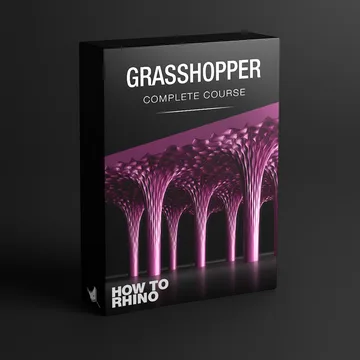
Grasshopper Complete Course
Give your architectural skills a boost with the Grasshopper Complete Course. Get over 50 hours of comprehensive Grasshopper training tailored for architects. Learn to generate and iterate designs faster. Click below for more information and streamline your workflows!


![Architecture Internships: The Complete Guide [2026]](/images/blog/featured/variants/architecture-internships--related-card.webp?cb=seo-meta-20260227-164423)
![Gifts for Architects [33 Best Ideas in 2026] for Every Budget](/images/blog/featured/variants/gifts-for-architects--related-card.webp?cb=seo-meta-20260227-164423)