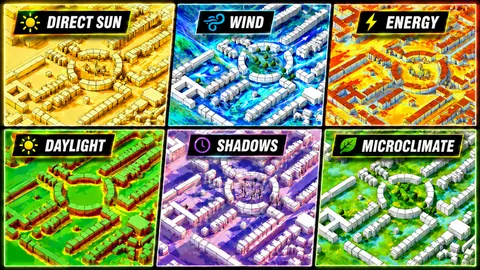
Designing With Microclimate
Join Mariusz Hermansdorfer for a hands-on masterclass that starts with the big picture: thermal comfort as a design objective. What makes an outdoor space feel pleasant or hostile? Working backwards through the environmental forces that shape that experience, sunlight, shadow, wind, and radiant heat, you will explore the levers designers have to influence them, from site orientation and massing to vegetation, materials, and seasonal strategies.

Comfortable outdoor spaces do not happen by accident. In this session we start with the big picture, thermal comfort as a design objective, and ask a simple question: what makes an outdoor space feel pleasant or hostile? From there we work backwards through the environmental forces that shape that experience, and the design decisions that quietly control them.
You will learn to read sunlight, shadow, wind, and radiant heat as design material, and to use the levers you already have, orientation, massing, vegetation, material choices, and seasonal strategies, to steer the microclimate of a site. The workshop grounds each idea in real climate data (weather files, sky conditions, and future projections) and shows how these factors feed back into iterative design decisions, illustrated with case studies where microclimate strategies shaped the final outcome.
- Treat thermal comfort as a design driver for the quality of outdoor space.
- Shape microclimate through site strategy: orientation, massing, vegetation, and material choices.
- Run sunlight analysis for sun hours and seasonal patterns to inform early design decisions.
- Use shadow as a tool to shape comfort, protect public space, and reduce heat stress.
- Assess wind at ground level: pedestrian comfort, speed thresholds, and the role of urban form.
- Integrate climate factors into an iterative, feedback-driven design workflow.
- Work with real climate data: weather files, sky conditions, and future projections.
- Learn from case studies where microclimate strategies shaped real design outcomes.
Session 1: Thermal Comfort, Sun and Shadow
- Thermal comfort as a design objective and what makes outdoor space feel pleasant or hostile
- Site strategy: how orientation, massing, vegetation, and materials shape the microclimate
- Sunlight analysis: sun hours and seasonal patterns that drive early design decisions
- Shadow as a tool: shaping comfort, protecting public space, and reducing heat stress
Session 2: Wind, Real Climate Data and Case Studies
- Wind at ground level: pedestrian comfort, speed thresholds, and the influence of urban form
- Integrating climate factors into iterative, feedback-driven design decisions
- Using real climate data: weather files, sky conditions, and future projections
- Case studies: projects where microclimate strategies shaped design outcomes
Mariusz Hermansdorfer
Mariusz Hermansdorfer is on a mission to democratize sustainability. Previously Head of Computational Design at Henning Larsen and backed by a PhD in the field, he has spent his career turning environmental analysis into an everyday part of the design process rather than a late-stage check.
Today he is the founder of Nflection, the team behind jifto, a personal sustainability assistant built to fit any project, any budget, and any scale. In this workshop he brings that practical, data-informed approach directly to the How to Rhino community.